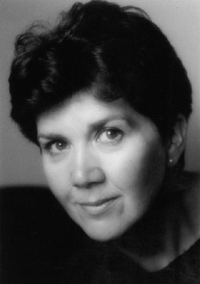
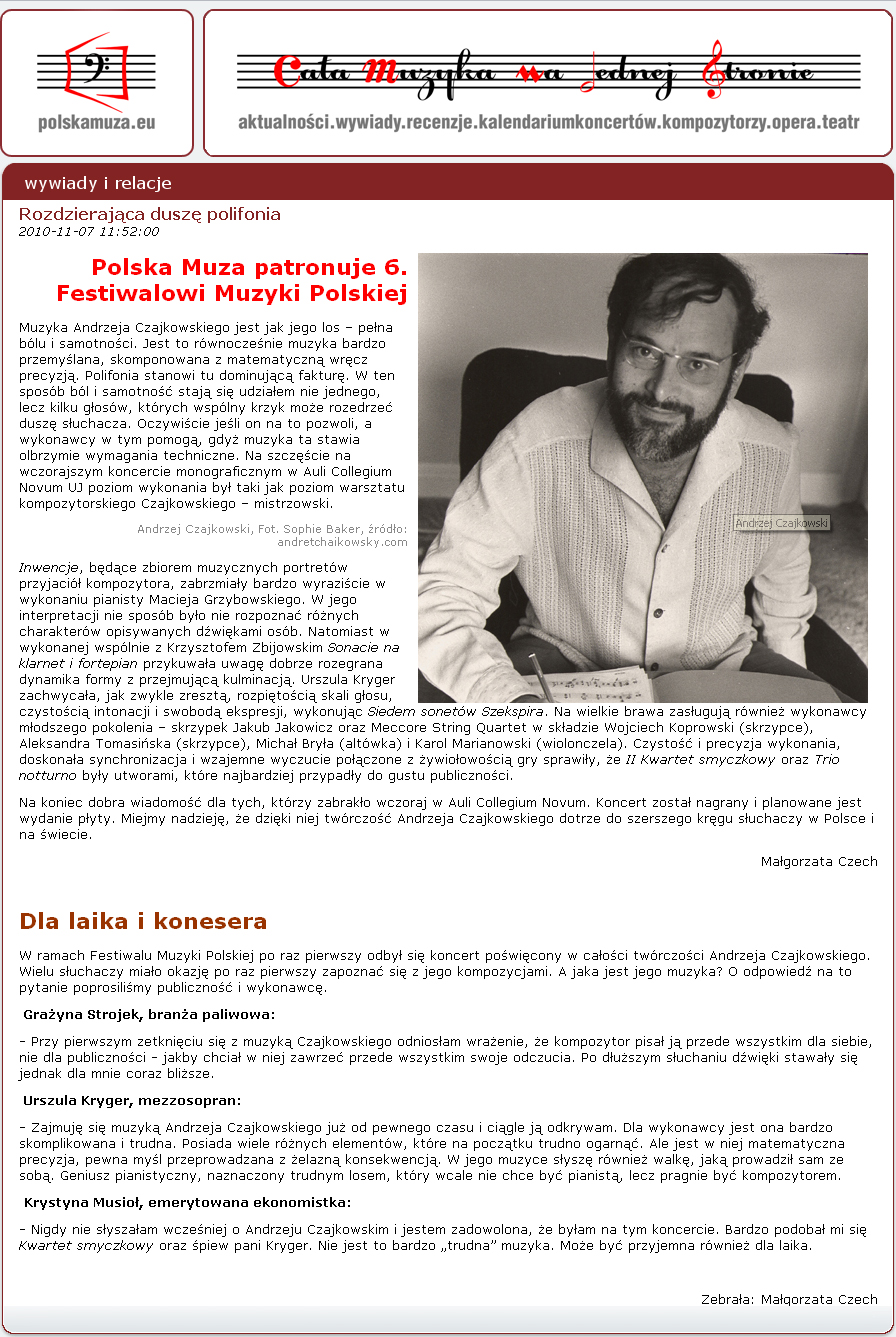
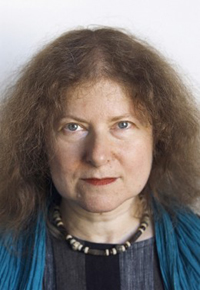
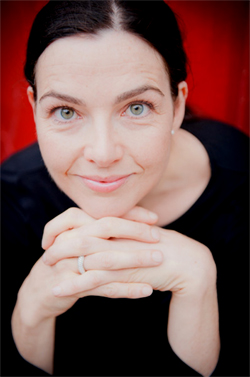
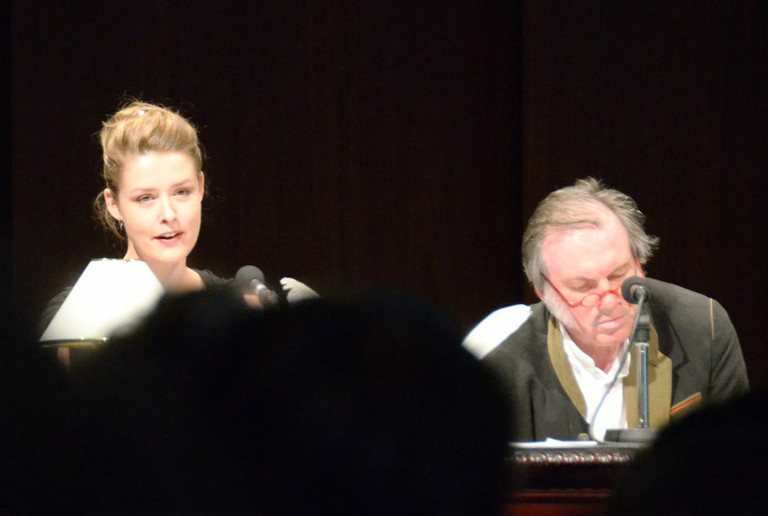
Dorota Szwarcman
Music Critic for Polityka
(Polish newsmagazine)
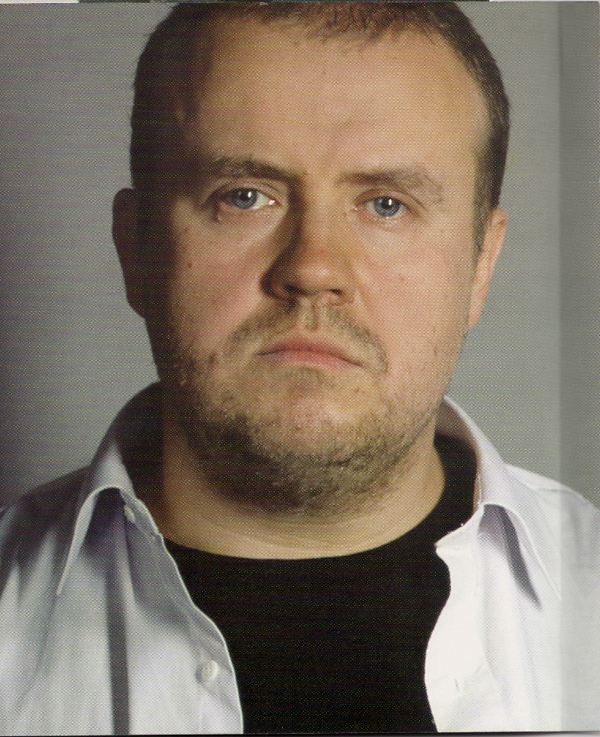
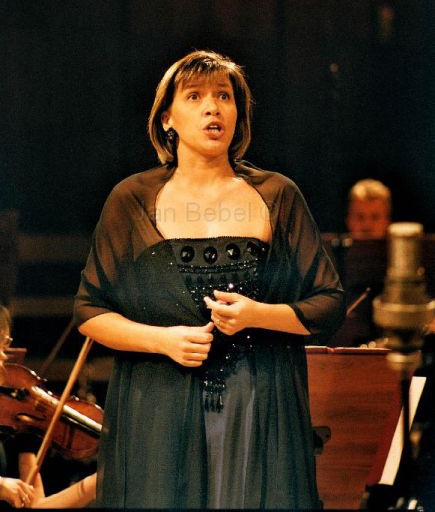
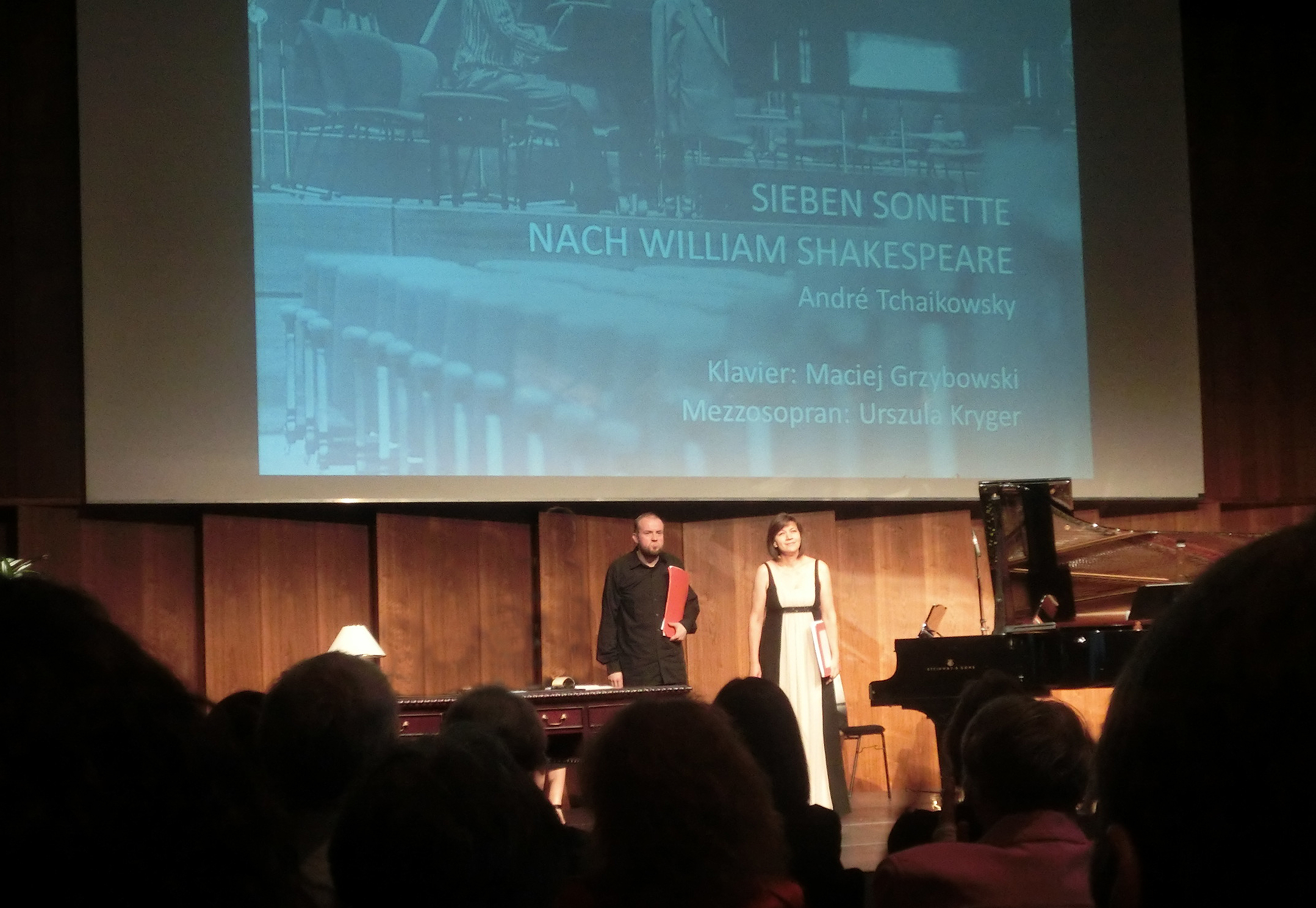
Maciej Grzybowski
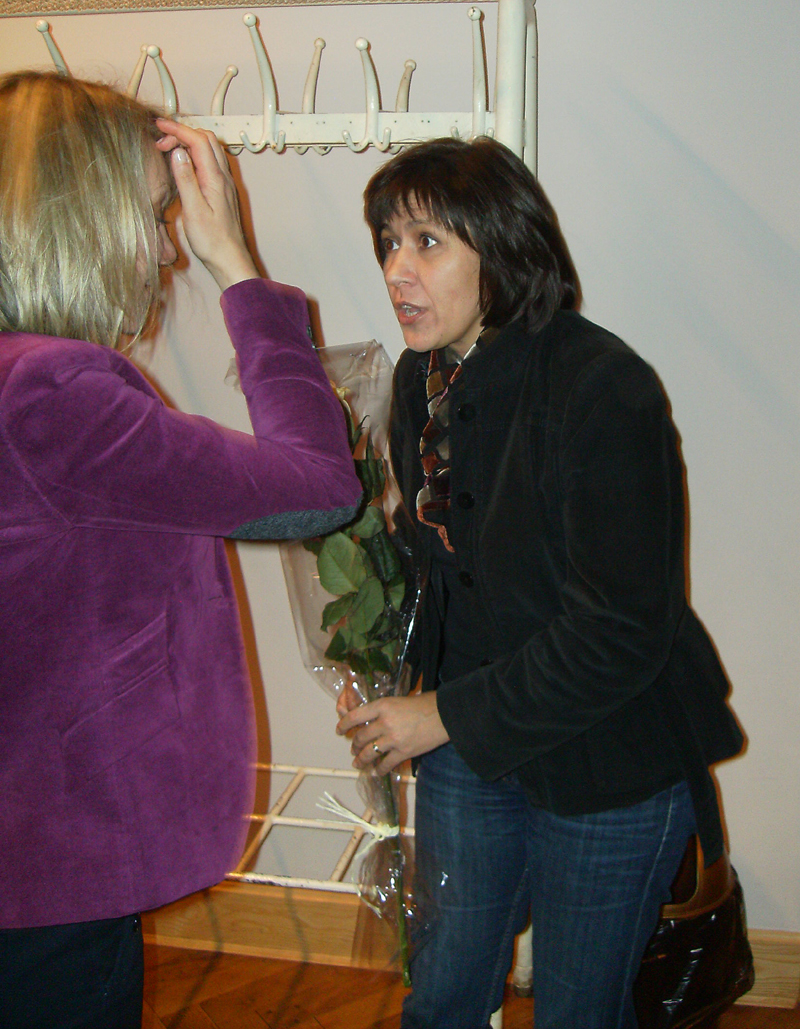
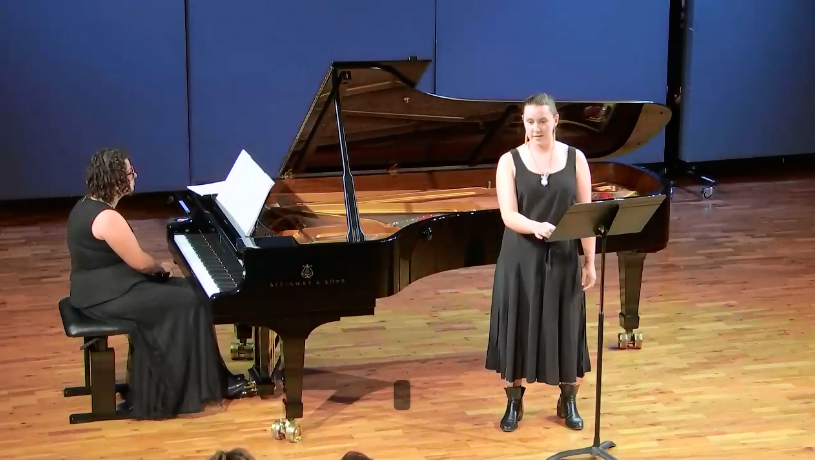
and Urszula Kryger take a bow after the 2013 Bregenz performance
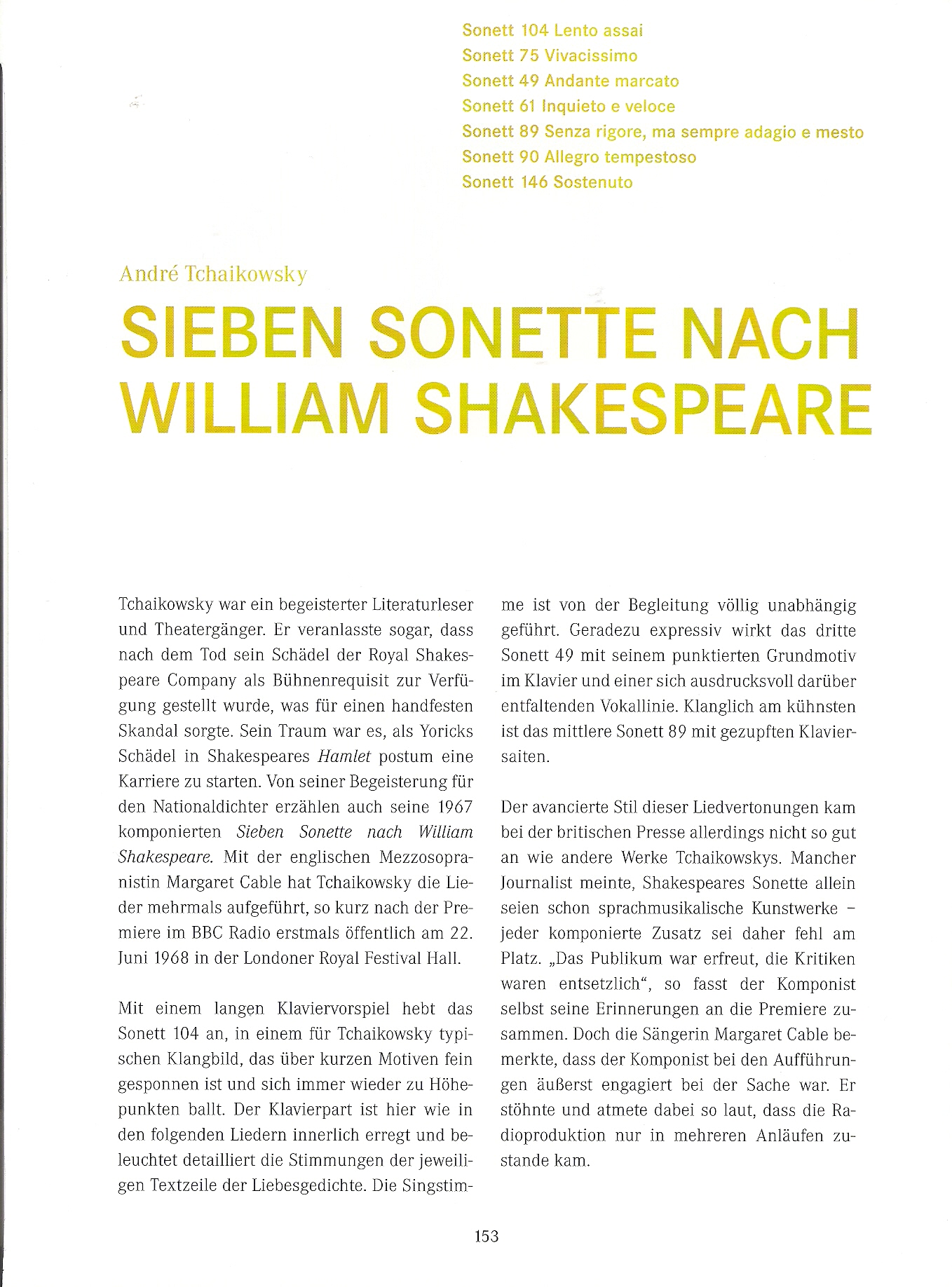
Seven
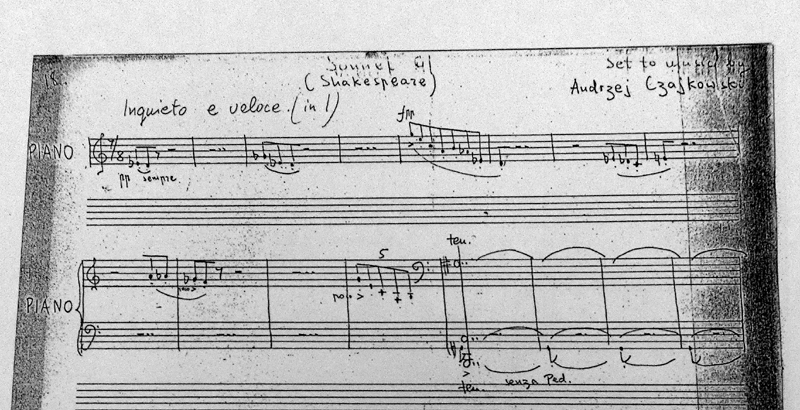
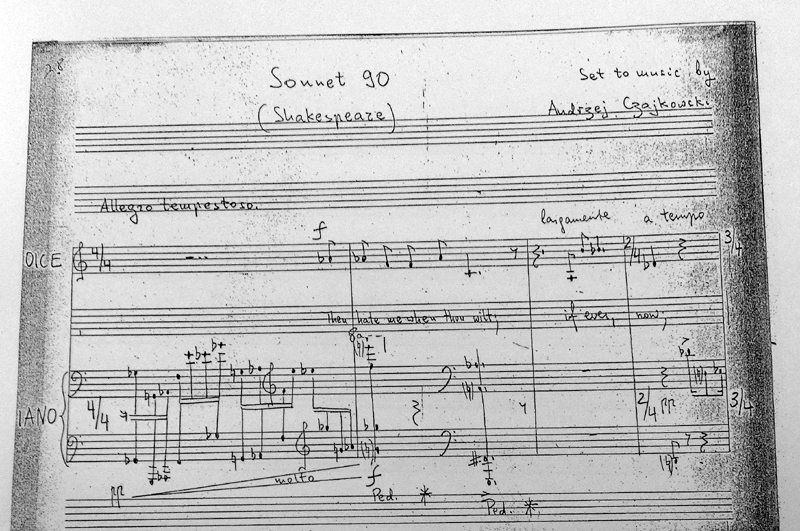
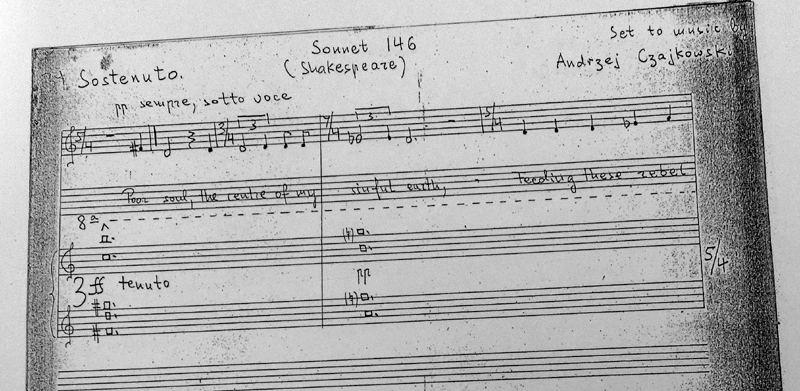
Sonnets of Shakespeare (1967) This
webpage provides information about the André Tchaikowsky composition,
Seven Sonnets of Shakespeare (1967). This includes text from
the book, The Other Tchaikowsky - A Biographical Sketch of André
Tchaikowsky. There were three performances with André Tchaikowsky
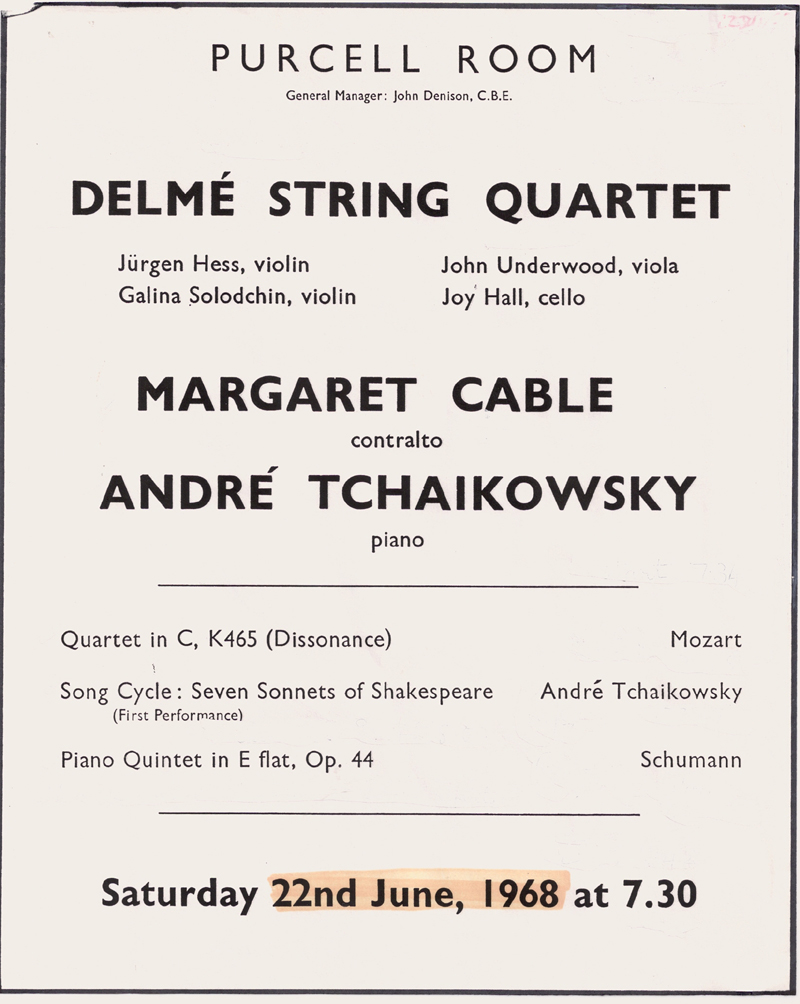
and Margaret Cable consisting of the world premiere performance on June
18, 1968 via a BBC broadcast, then a second performance on June 22,
1968 at the Royal Festival Hall, London, Purcell Room, and several months
later in Amsterdam in the small Concertgebouw concert hall.
(2019)
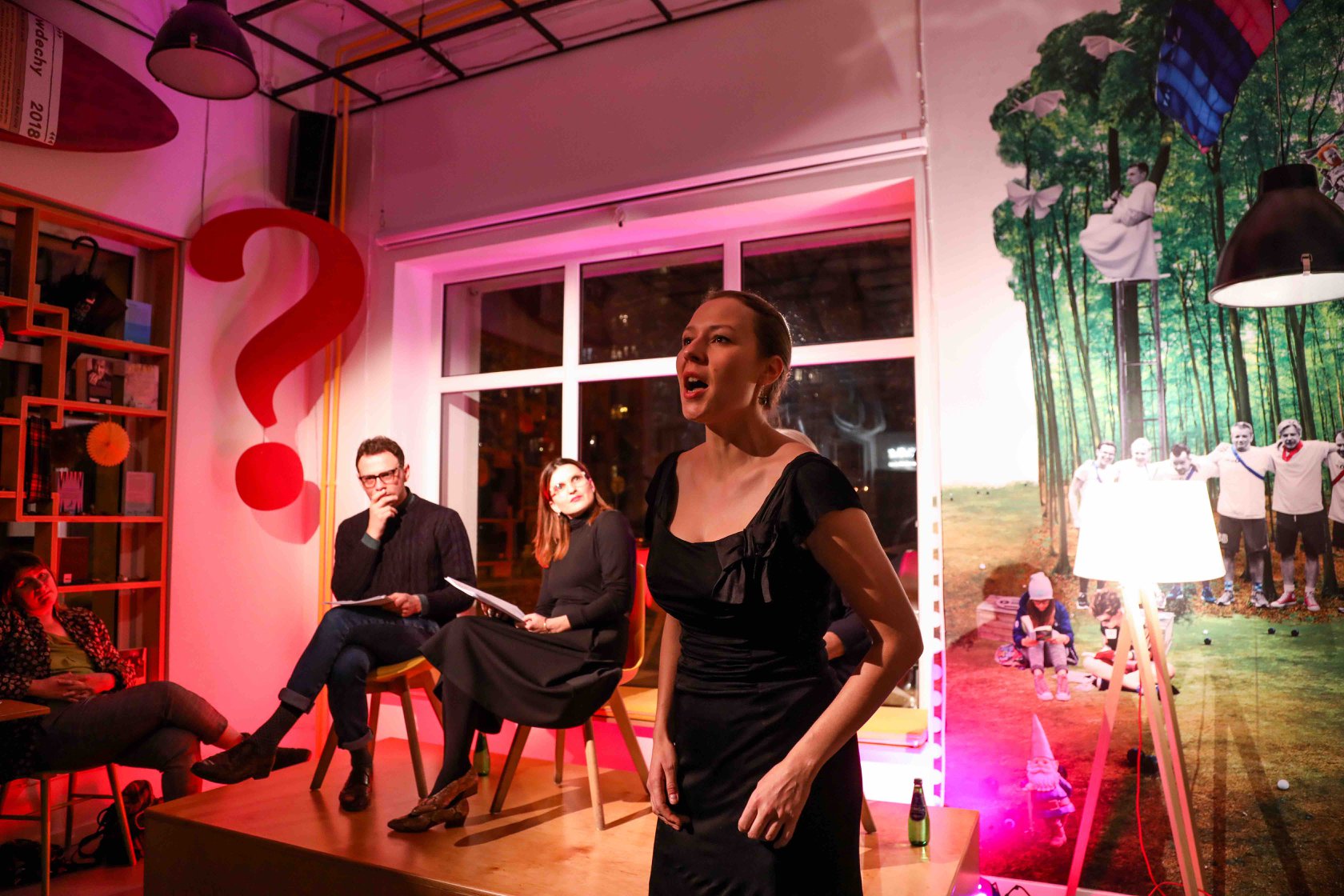
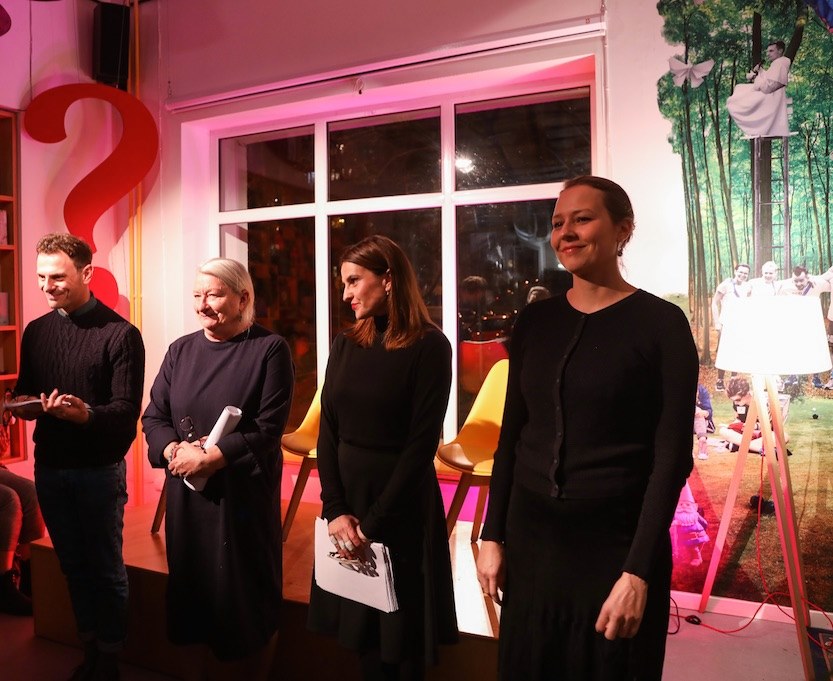
Seven Shakespeare Sonnets in Concert / Warsaw, Poland
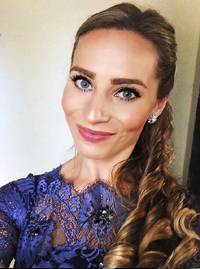
The extraordinary Polish Mezzosoprano, Marta
Wryk, sang portions of the Seven Sonnets of Shakespeare on November
24, 2019 at the Big
Book Cafe in Warsaw, Poland. This was a "Voice and Words"
event, with "words" being from a book of correspondence between
Andrzej Czajkowski and Halina Janowska, which Halina titled, My
Guardian Demon. Players were Andrzej, Andrzej's Grandmother, and
Halina.
Voice Marta
Wryk - Sung a capella, Sonnets
61 (Is it thy will, thy image should...)
89 (Then hate me when thou wilt...)
146 (Poor soul, centre of my sinful...)
(2019)
Seven Shakespeare Sonnets in Concert / Warsaw, Poland
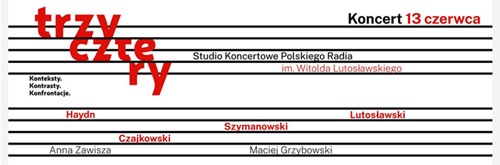
The TRZY–CZTE–RY
Music Festival in Warsaw, Poland, presented the Seven Sonnets of Shakespeare
in concert on June 13, 2019. The performers were: Anna
Zawisza– mezzo-soprano and Maciej
Grzybowski - piano.
Concert Review in Polish.
(2018)
Seven Shakespeare Sonnets in Concert / Wellington, New Zealand
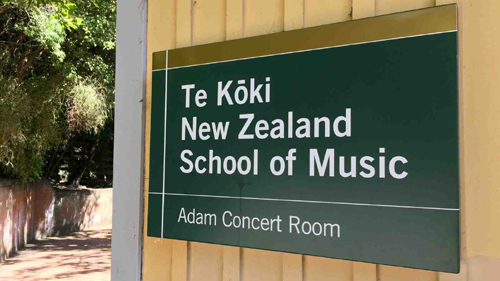
As part of her PhD requirements at the Victoria University of Wellington/New
Zealand School of Music, Polish piansit Gabriela Glapska included Seven
Shakespeare Sonnets on her PhD recital program number 3. Performers
were (Sonnets 1, 2, 3, 4) Eleanor McGechie, mezzo-soprano, and (Sonnets
5, 6, 7) Barbara Paterson, mezzo-soprano, with Gabrielal Glapska on
piano.
Gabriela Glapska and Eleanor McGechie Sample
Sonnet 49
Gabriela Glapska and Barbara Paterson Sample
Sonnet 89
(2017)
Seven Shakespeare Sonnets in Concert / London, UK
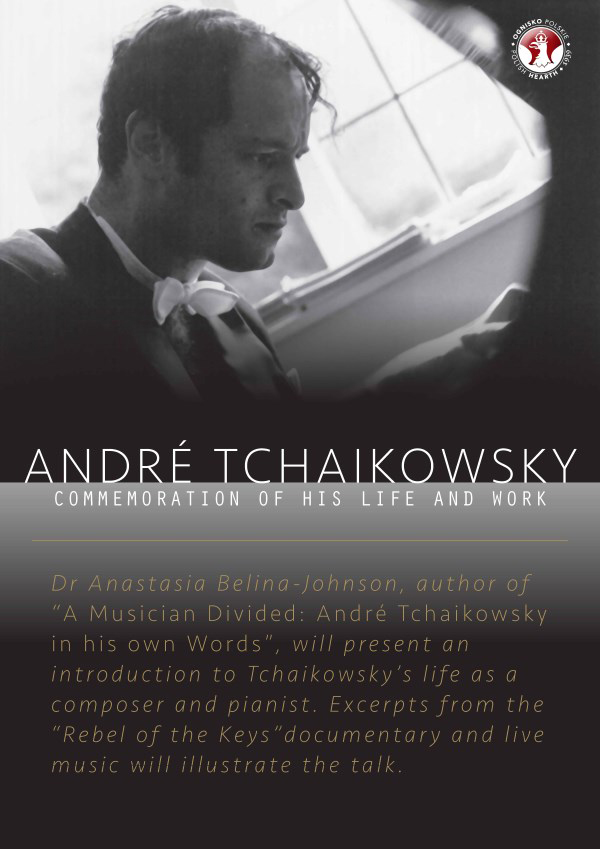
A portion of the André Tchaikowsky documentary, Rebel of the
Keys, is scheduled for a showing on March 24, 2017, at the Ognisko Polskie,
55 Princes Gate, South Kensington, London, SW7 2PN. The time will be
7 pm. This program includes an introduction to the life of André
Tchaikowsky by Dr.
Anastasia Belina-Johnson, author of "A
Musician Divided - André Tchaikowsky in his own words."
Live music of André Tchaikowsky's Seven Sonnets of Shakespeare
(1967) will be performed by Nico
de Villiers (piano) and Rosanna
Cooper (mezzo). Click
Here for details from the Ognisko Polskie website.
(2017)
Seven Shakespeare Sonnets in Concert / Polish Radio
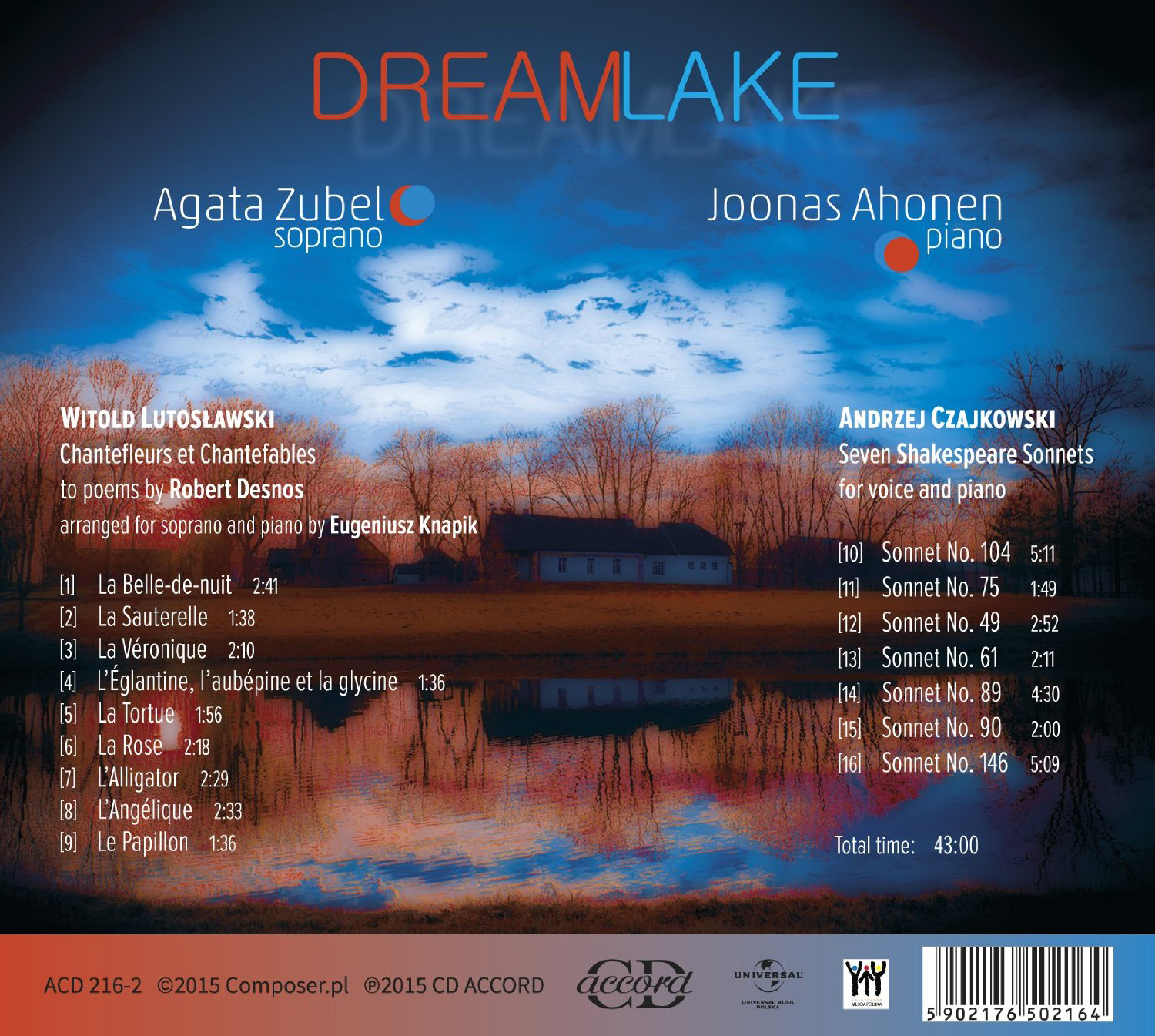
Polish Radio featured a broadcast of the Seven Sonnets (with Zubel and
Ahonen) on February 17, 2017. This was part of a larger program called
Fantazja Polska. Click
Here for the Polskie Radio link (the Sonnets are from 24:50 to 48:25).
(2016)
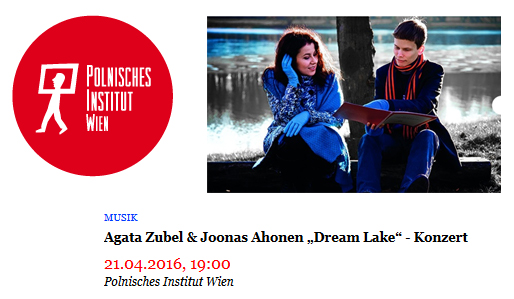
Seven Shakespeare Sonnets/ Polish Institute (Vienna)
The Polish Institute of Vienna (Polnisches Institut Wien) presented
a concert of the Seven Sonnets of Shakespeare on April 21, 2016. The
artists were Agata Zubel, a Polish award-wining composer and singer,
and pianist Joonas Ahonen, a Vienna-based Finnish pianist. They repeated
the program featured on their CD, Dream
Lake. Samples from the CD appear further down on this webpage.
(2016)
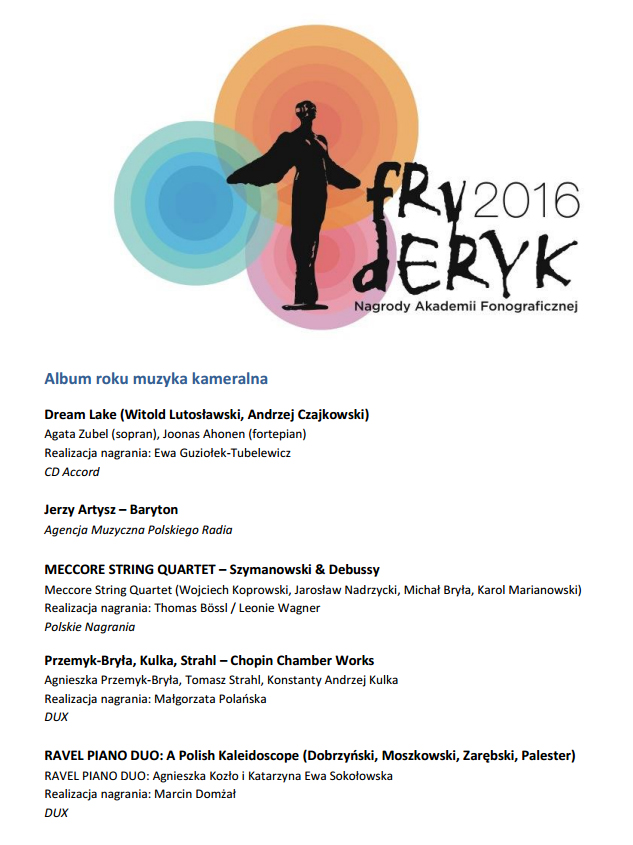
Seven Sonnets CD nominated for Best Chamber Music Album
Nominations for the Fryderyk 2016 awards (Polish Grammy) have been announced
by the National Photographic Academy (website)
(PDF
File). The Seven Sonnets of Shakespeare CD is in the category Best
Chamber Music Album (Album Roku Muzyka Kameralna). Congratulations to
Agata Zubel,
a Polish award-wining composer and singer, and pianist Joonas Ahonen,
a Vienna-based Finnish pianist. (The Meccore String Quartet, also nominated
for this award, play the Andrzej Czajkowski String
Quartet No. 2 and there is a music sample on VIMEO.)
[Winner was Ravel Piano Duo.]
(2016)
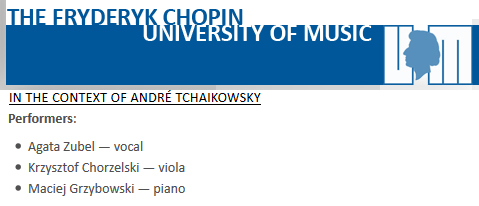
Seven Sonnets in Concert / The Fryderyk Chopin University of Music
The Fryderyk
Chopin University of Music in Warsaw presented the concert, "In
the context of André Tchaikowsky" on March 23, 2016 that
featured the Seven Sonnets. The performers were Agata Zubel, voice (see
more below about her excellent CD of the Seven Sonnets) and Maciej Grzybowski,
piano. The other André Tchaikowsky work on the program was the
Sonata
for Viola and Piano. Click
Here to learn more about this concert from the university website.
(2015)
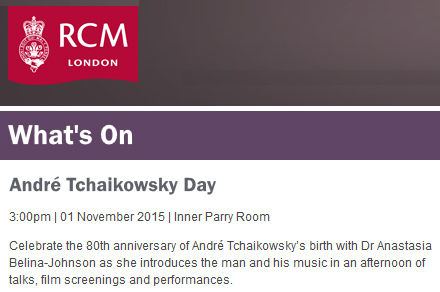
Seven Shakespeare Sonnets in Concert / RCM "André Tchaikowsky"
Day
The 80th anniversary of André Tchaikowsky’s birth was celebrated
with Dr. Anastasia Belina as she introduced the man and his music in
an afternoon of talks and performances at the Royal College of Music.
Performances included Ariel and Seven Sonnets of Shakespeare. Read
more (PDF file).
(2015)
Seven Shakespeare Sonnets in Concert / Polish Institute of Rome
The Polish
Institute of Rome, Italy, has announced for the Corso Poland Festival
of 2015, that the inauguration concert on June 9, 2015, at 20:30, will
feature the Seven Sonnets of Shakespeare. Click
Here to read the Polish Institute of Rome press release for the
festival and additional concert information. This is a repeat of the
"Dream Lake" concert from May 2015 (see below).
(2015)
Seven Shakespeare Sonnets in Concert / History of the Polish Jews
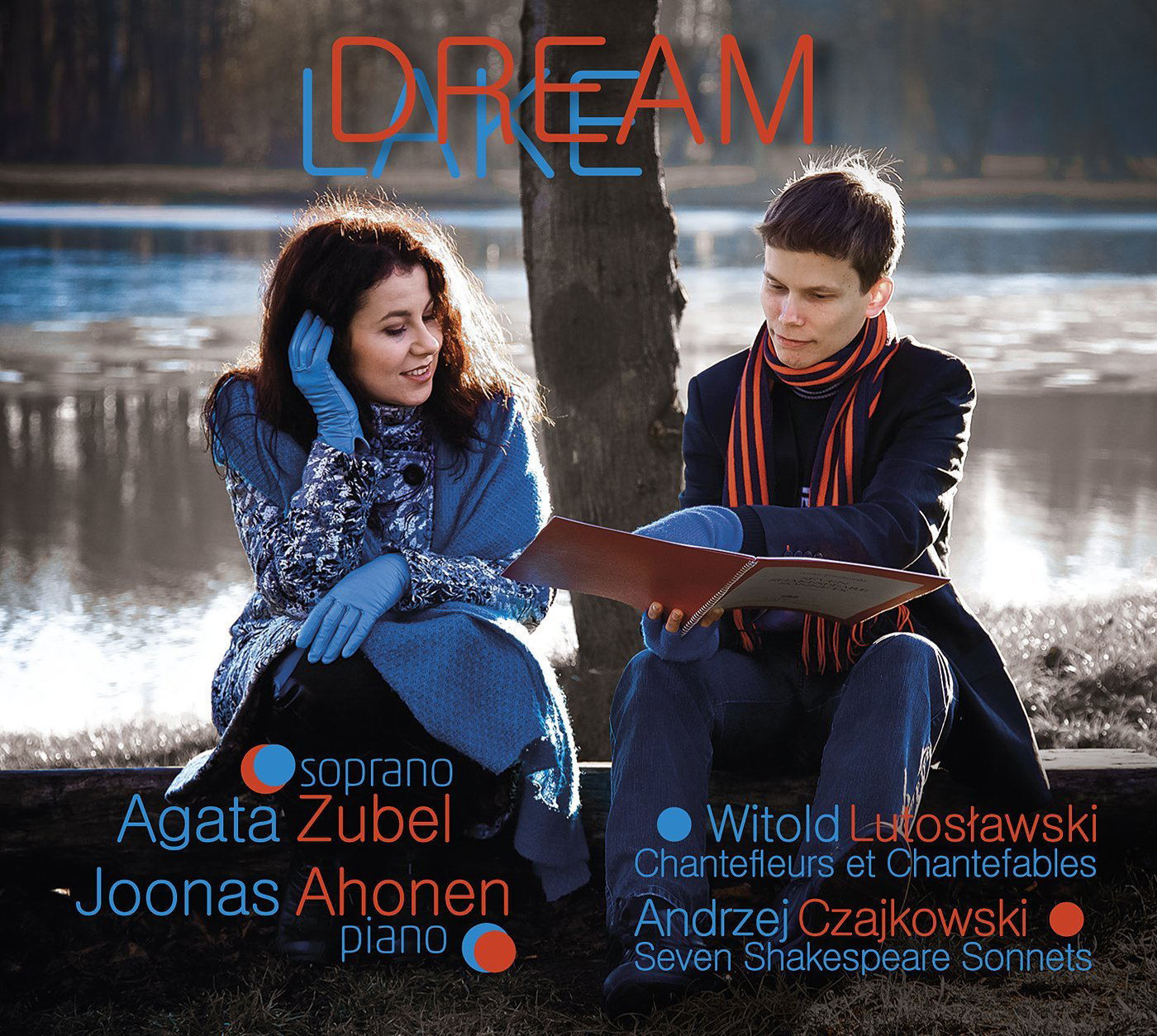
Agata Zubel, a Polish award-wining composer and singer, with pianist
Joonas Ahonen, a Vienna-based Finnish pianist, performed the Seven Sonnets
in Warsaw on May 6, 2015, at the History of the Polish Jews Museum.
This was both a concert and a CD release party, celebrating the first
CD of The Seven Sonnets of Shakespeare. The CD (Dream Lake) is available
on Amazon (Click
Here) and other websites. For a Polskie radio broadcast featuring
Agata Zubel (mp3 format), Click
Here (in Polish).
Click
Here for a review of the Dream Lake CD (in Polish). Click
Here for a review of the Dream Lake CD (in English). Click
Here for a review in Finnish. Click
Here for the Naxos website about the CD. Click
Here to hear Agata Zubel speak about the Sonnets (Polish).
(2014)
Seven Sonnets of Shakespeare in Concert / Qaartsiluni Ensemble
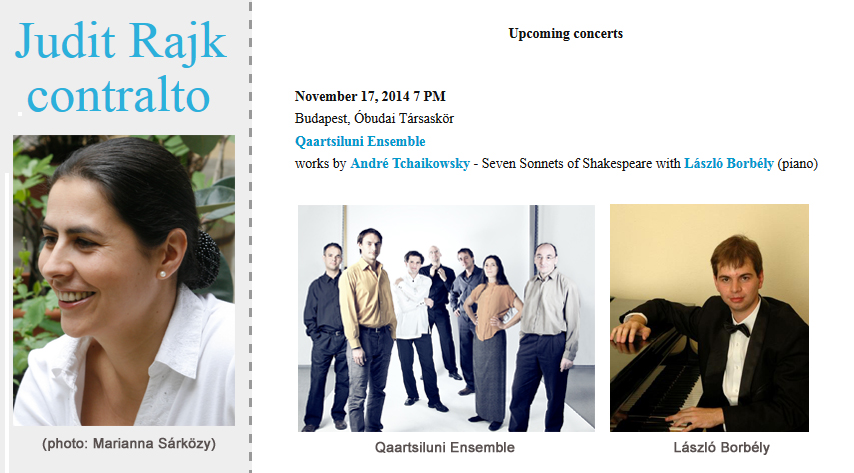
Hungarian contralto Judit Rajk (website)
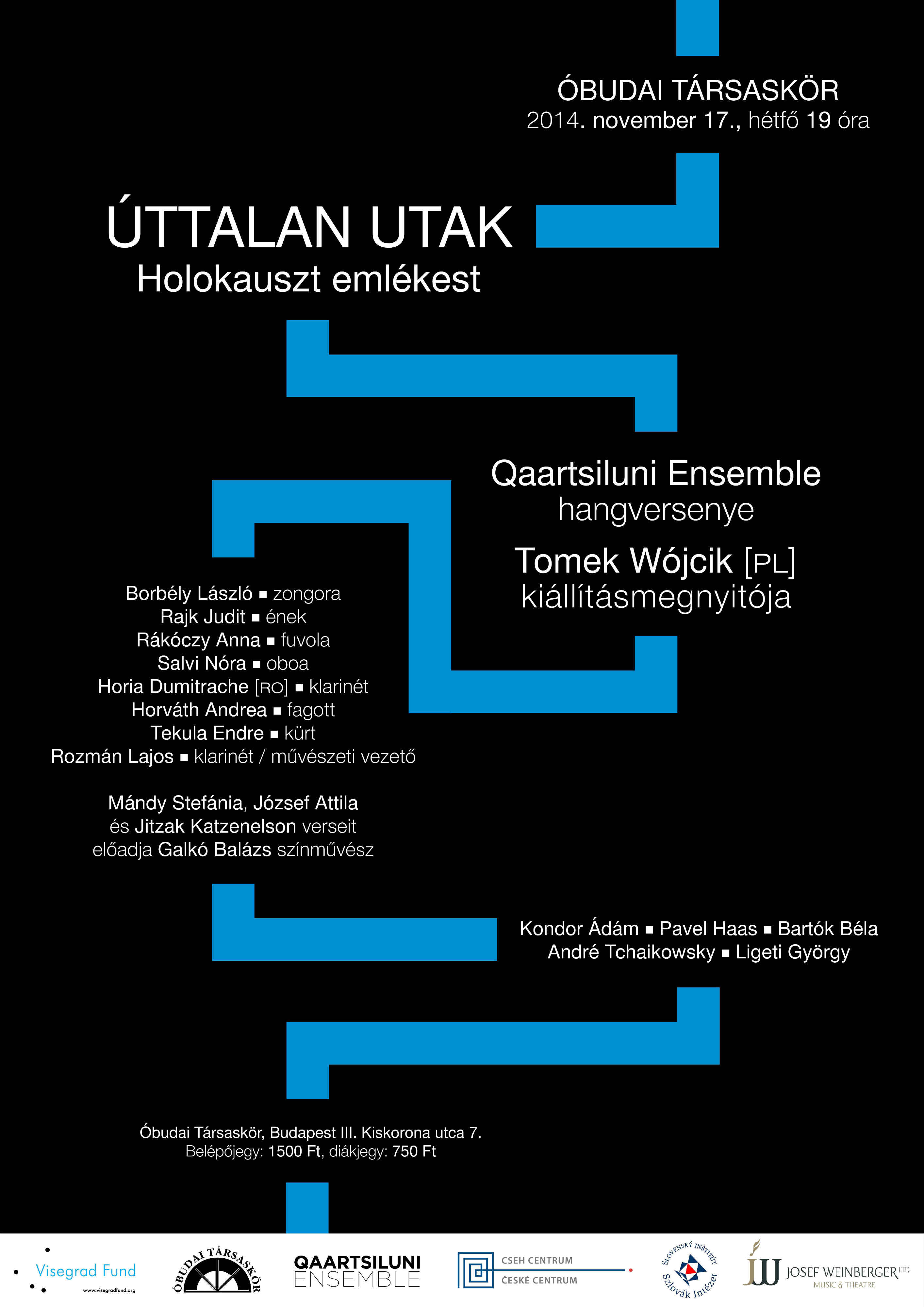
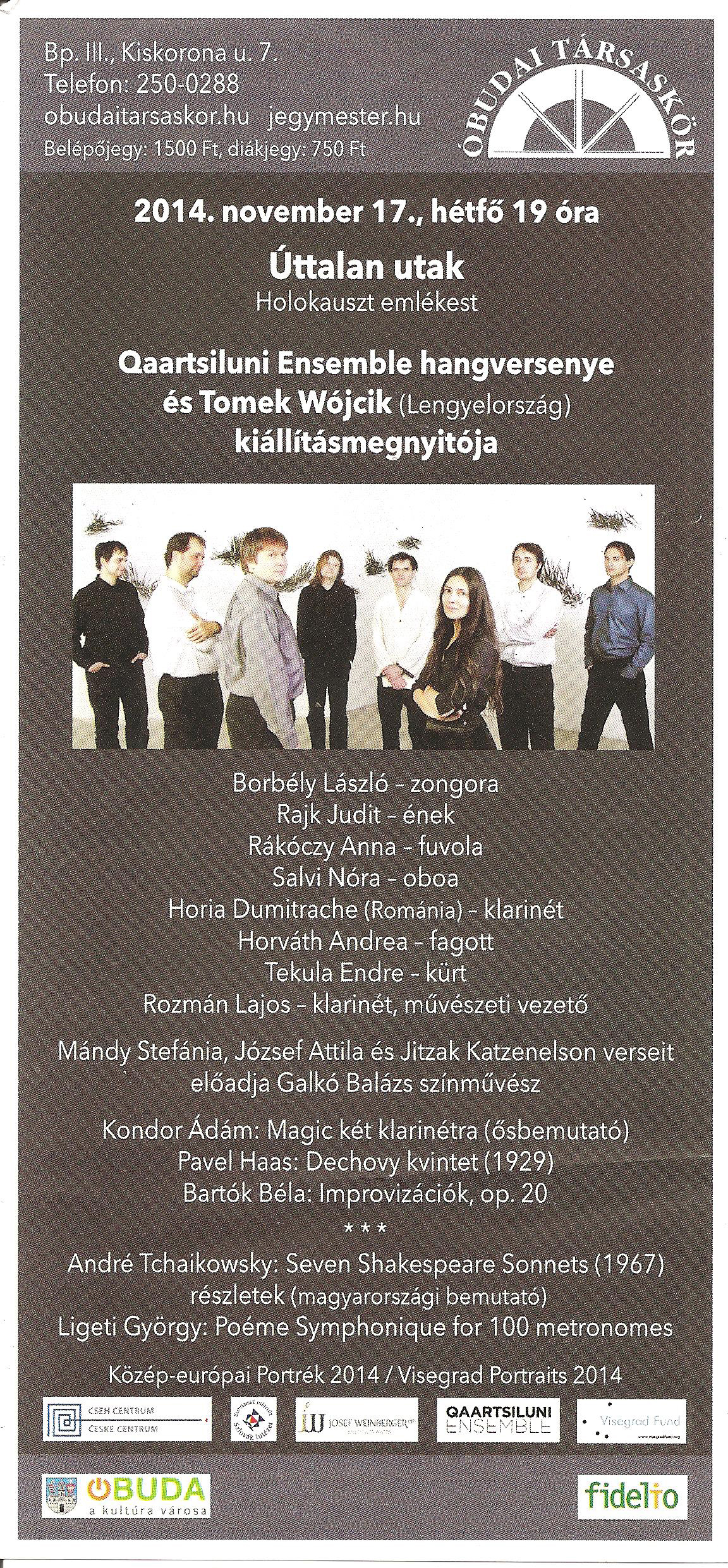
scheduled a performance of the Seven Sonnets on November 17, 2014 7 pm
as part of a Qaartsiluni Ensemble concert (website).
The pianist for this performance of the Seven Sonnets was László
Borbély (website).
The venue was the Óbudai Társaskör (website).
This concert was presented with the kind cooperation of Josef Weinberger
(website).
Click
Here or below for a YouTube performance of Sonnet 146 recorded live
at this concert.
(2014)
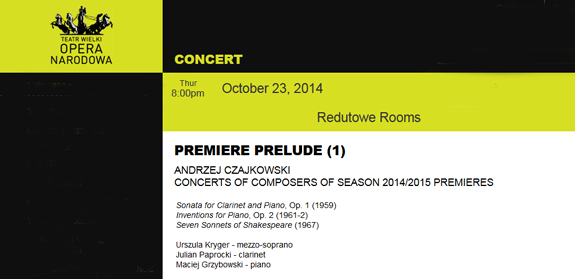
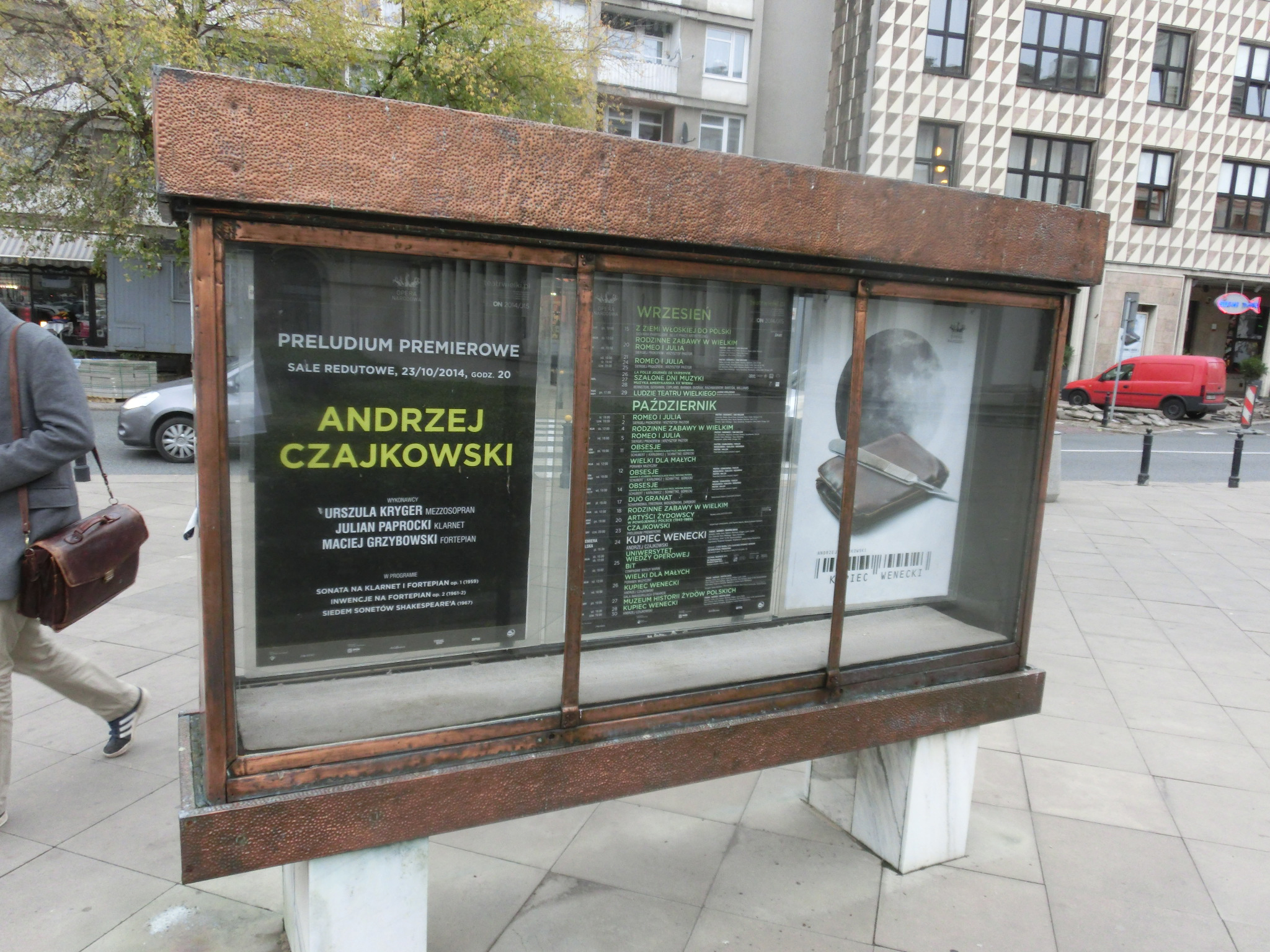
Seven Shakespeare Sonnets in Concert / Teatr Wielki
A performance of the Seven Sonnets took place on October 23, 2014 at
the Teatr Wielki - Polish National Opera in Warsaw, Poland. This is
first in the 2014-2015 series of concerts called "Concerts of Composers
- Premieres." Click
Here to learn more about the concert from the Teatr Wielki website.
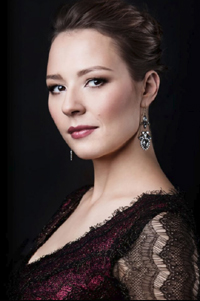
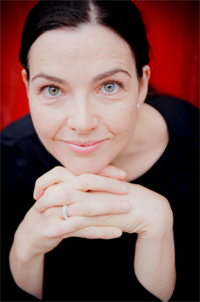
The performers were Mezzo-soprano Urszula Kryger (website),
and Pianist Maciej Grzybowski (website).
(2013)
Seven Sonnets of Shakespeare in Concert / Leeds Symposium/Concert
André's biographer, Dr. Anastasia Belina-Johnson, who is also
a Head of Classical Music department at Leeds College of Music and a
member of LUCOS (Leeds University Centre for Opera Studies), organized
a concert on André Tchaikowsky's birthday (November 1st, 2013)
dedicated to his compositions (he would have been 78 years old). One
concert event was a performance of the Seven Sonnets of Shakespeare
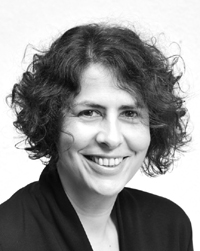
(1967) with Clare
McCaldin mezzo-soprano and Nico
de Villiers piano. Read about Nico de Villiers in the Volksblad
(Click
Here - in Afrikaans).
Clare
McCaldin - November 2013
(Photo: Aaron Collett)
Click
Here (pdf) to read Nico de Villiers' interview with Clare
McCaldin.
Click
Here (pdf) to read Nico de Villers' comments on André
Tchaikowsky.
Click
Here (jpg) to read Clare McCaldin's comments on André
Tchaikowsky
Click
Here to learn more about the symposium and concert.
In addition,
Mr. de Villiers wrote personal blog entries for each sonnet:
Sonnet 104 - Click
Here (Blog) or Click Here
(pdf)
Sonnet 75 - Click
Here (Blog) or Click Here
(pdf)
Sonnet 49 - Click
Here (Blog) or Click Here
(pdf)
Sonnet 61 - Click
Here (Blog) or Click Here
(pdf)
Sonnet 89 - Click Here (Blog) or Click Here (pdf) [in preparation]
Sonnet 90 - Click Here (Blog) or Click Here (pdf) [in preparation]
Sonnet 146 - Click Here (Blog) or Click Here (pdf) [in preparation]
Prepared
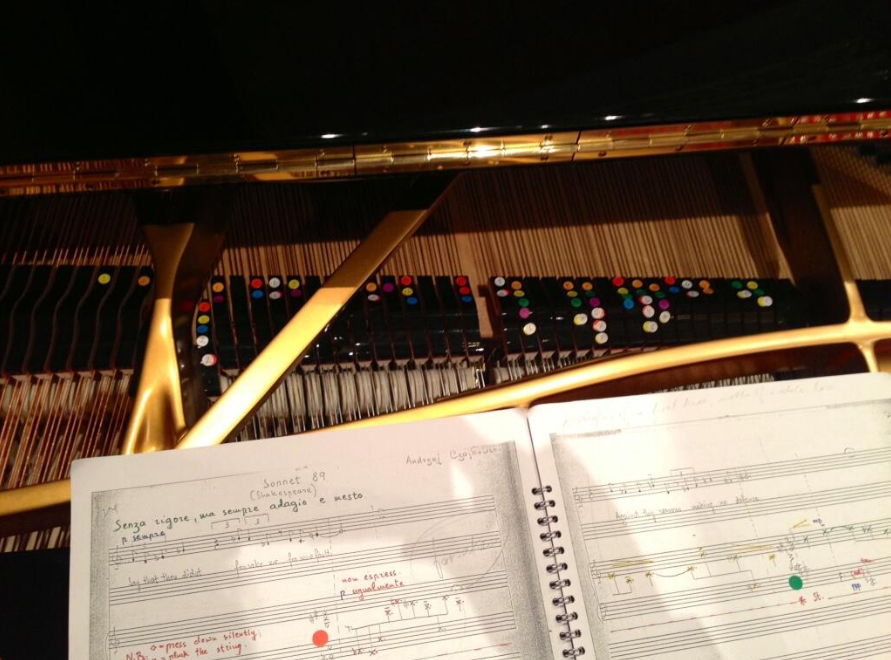
Piano for Sonnet 89
André choose to pluck the piano strings in Sonnet 89, "Say
that thou didst forsake me for some fault..." instead of using
the keyboard. This presents some serious problems for the pianist in
preparation for the performance. Pianist Nico de Villiers (with Clare
McCaldin mezzo-soprano) used colored dots in both the score and the
dampers in the piano to correlate what piano strings should be played
for his performance (image below).
(2013)
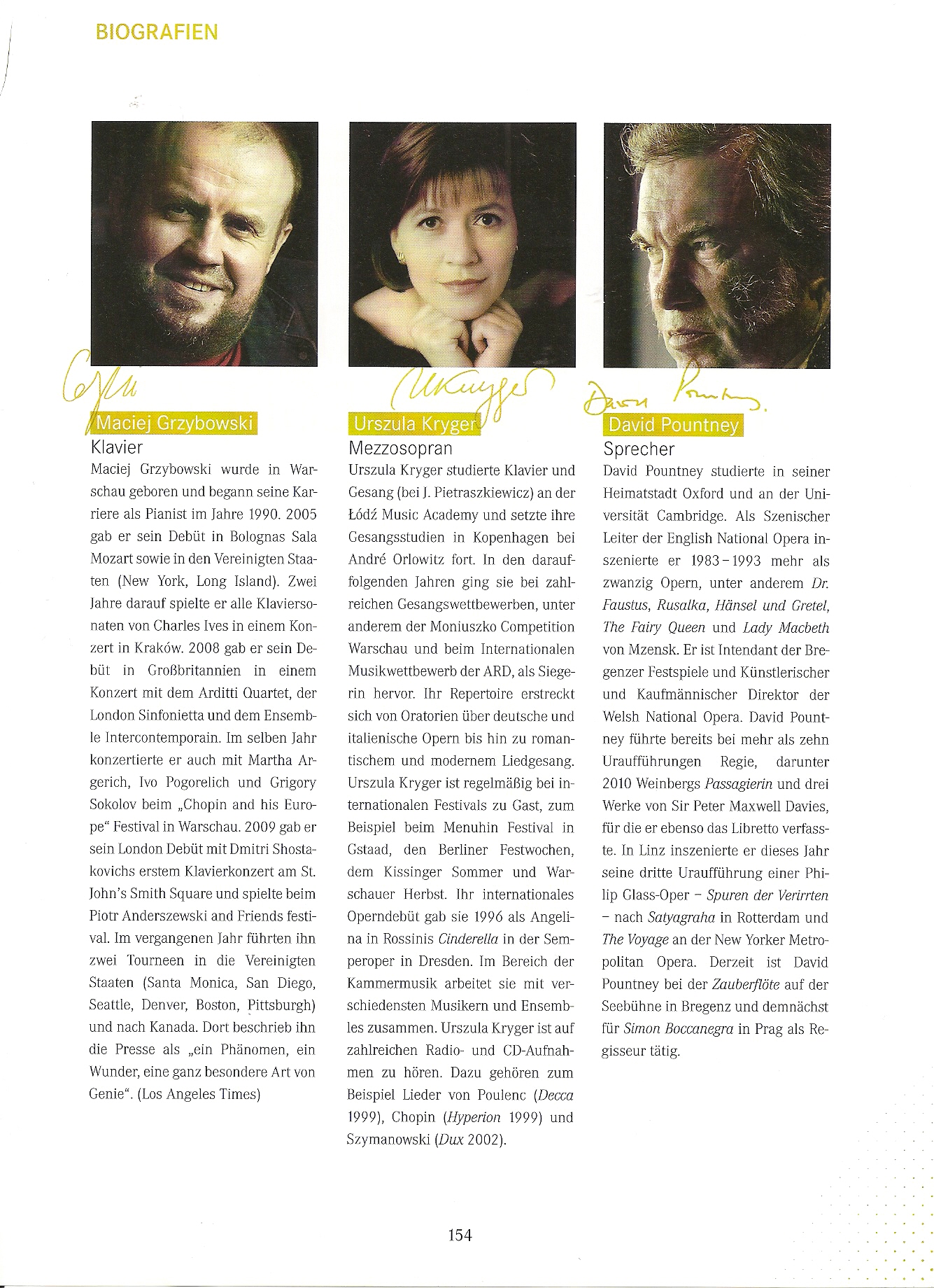
Seven Sonnets of Shakespeare in Concert / Bregenz Festival
The 1st of the "Music and Poetry" concerts for the 2013 Bregenz
Festival featured pianist Maciej Grzybowski and Mezzo-Soprano Urszula
Kryger playing the Seven Sonnets of Shakespeare. Prior to the
sonnets performance, David Pountney read each sonnet in his sterling
"theatre" voice (in English) and actress Laura
Louisa Garde (in German), creating the "Poetry" portion
of the concert. The combination of the poetry and music was stunning
and wonderfully performed.
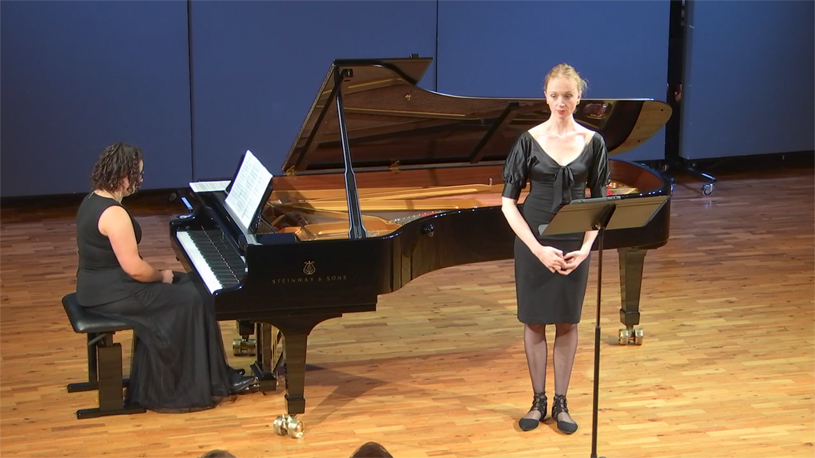
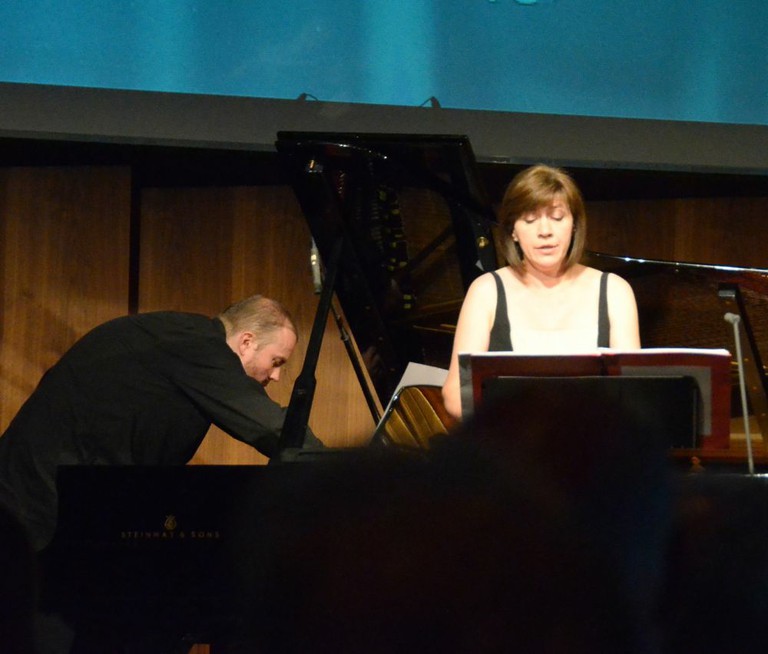
Maciej Grzybowski and Urszula Kryger
Performing Sonnet 89
Laura Louisa Garde and David Pountney reading each Sonnet
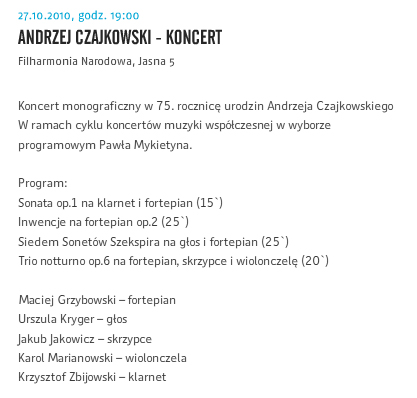
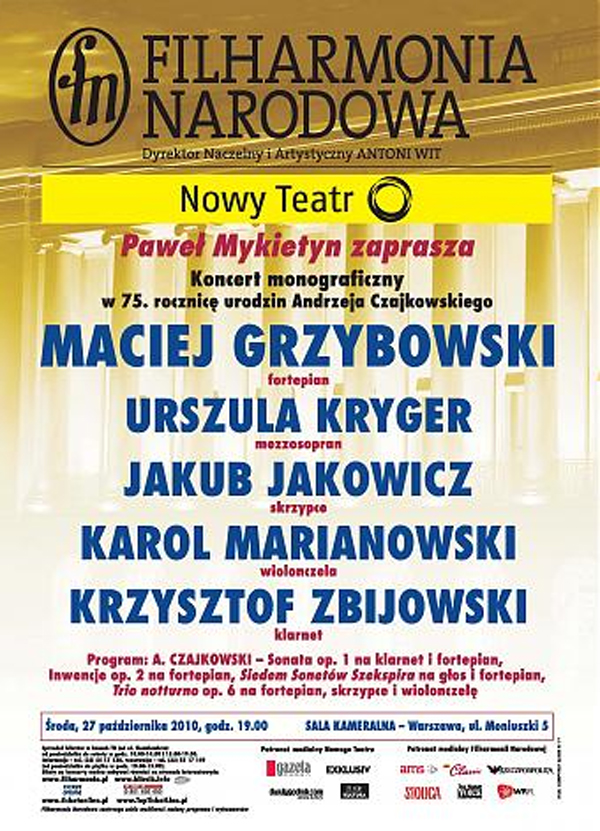
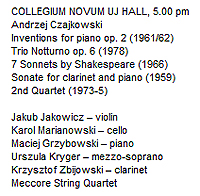
(2007, 2010) Seven Sonnets in Concert / Additional performances
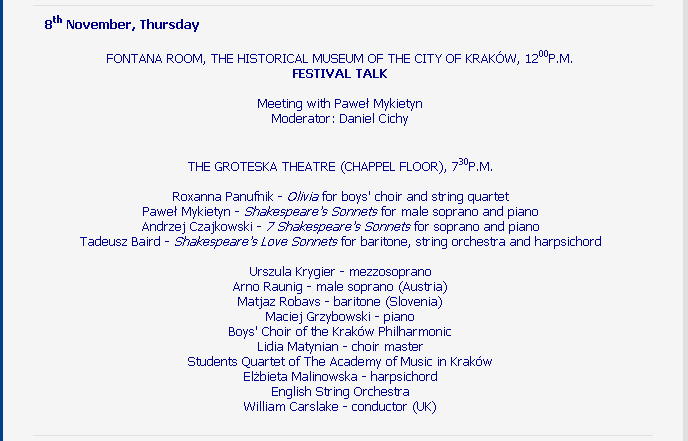
Additional performances were given at the Festiwal Muzyki Polskiej (Polish
Music Festival) in Kraków, Poland on November 8, 2007, featuring
Maciej Grzybowski on piano and mezzo-soprano Urszula
Kryger. And again on October 27, 2010 in Warsaw, Poland.
(2007)
Seven Sonnets in Concert / 3rd Krakow Festival of Polish Music
Fortunately, a recording was made of the excellent Sonnets performance
from the 3rd Krakow
Festival of Polish Music - 2007 in a concert given on November 8,
2007 with mezzo-soprano Urszula
Kryger and pianist (and champion of André Tchaikowsky's music),
Maciej Grzybowski.
Maciej
Grzybowski, Piano - Urszula Kryger, Mezzo-soprano
This
performance is on YouTube. Click
Here (opens new window)
(1967)
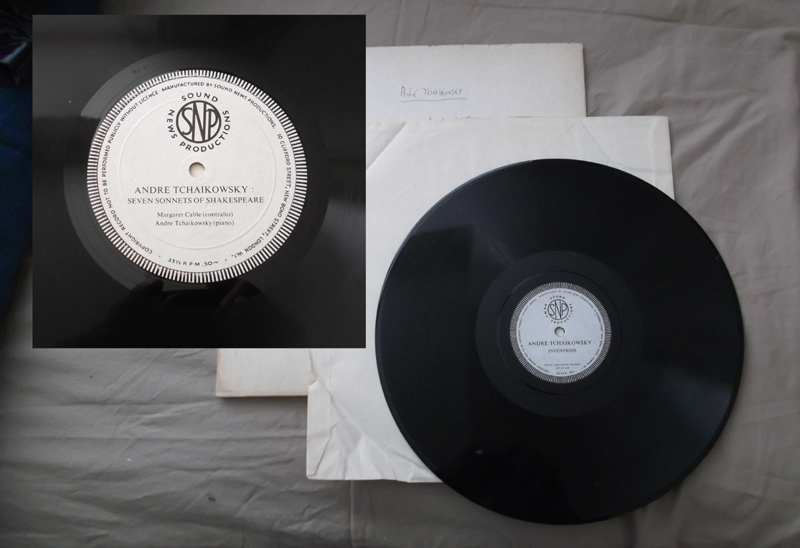
Recording on Sound News Productions
While there are no professional recordings available for the Seven Sonnets
of Shakespeare (1967), the original BBC broadcast with André
Tchaikowsky and Margaret Cable is available via a Long Playing (LP)
record made by Sound News
Productions. I bought this LP in an eBay auction and it is thought
that André made somewhere between 10 and 20 copies of this record
to hand out to friends. Oddly, in the record cover, there was a letter
from Judy Arnold (whose home André was living in at the time)
to pianist John Ogdon. To read this letter as a pdf file, Click
Here. The other side of the record features André's composition,
The Inventions.
André
Tchaikowsky, Piano - Margaret Cable, Mezzo-soprano
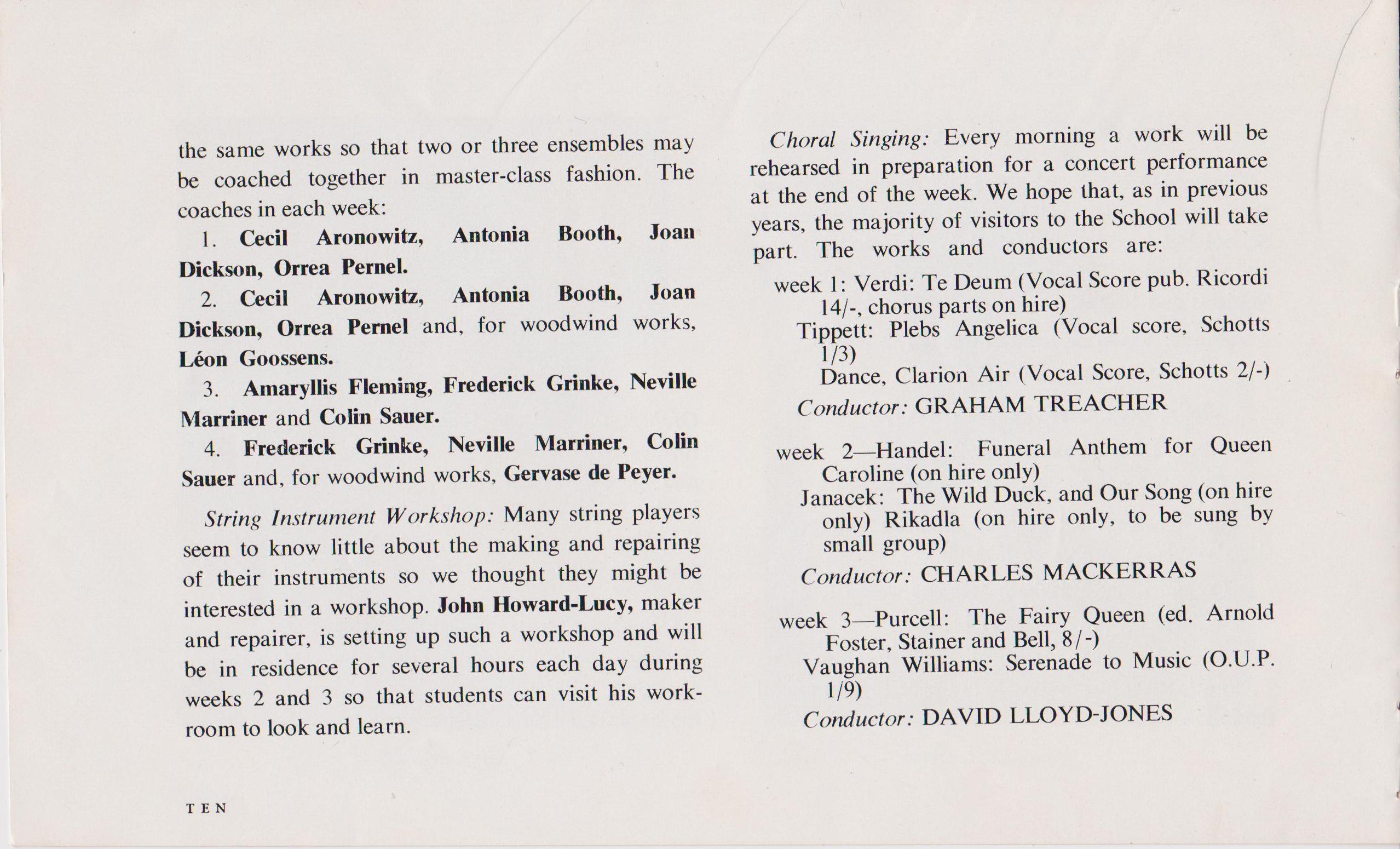
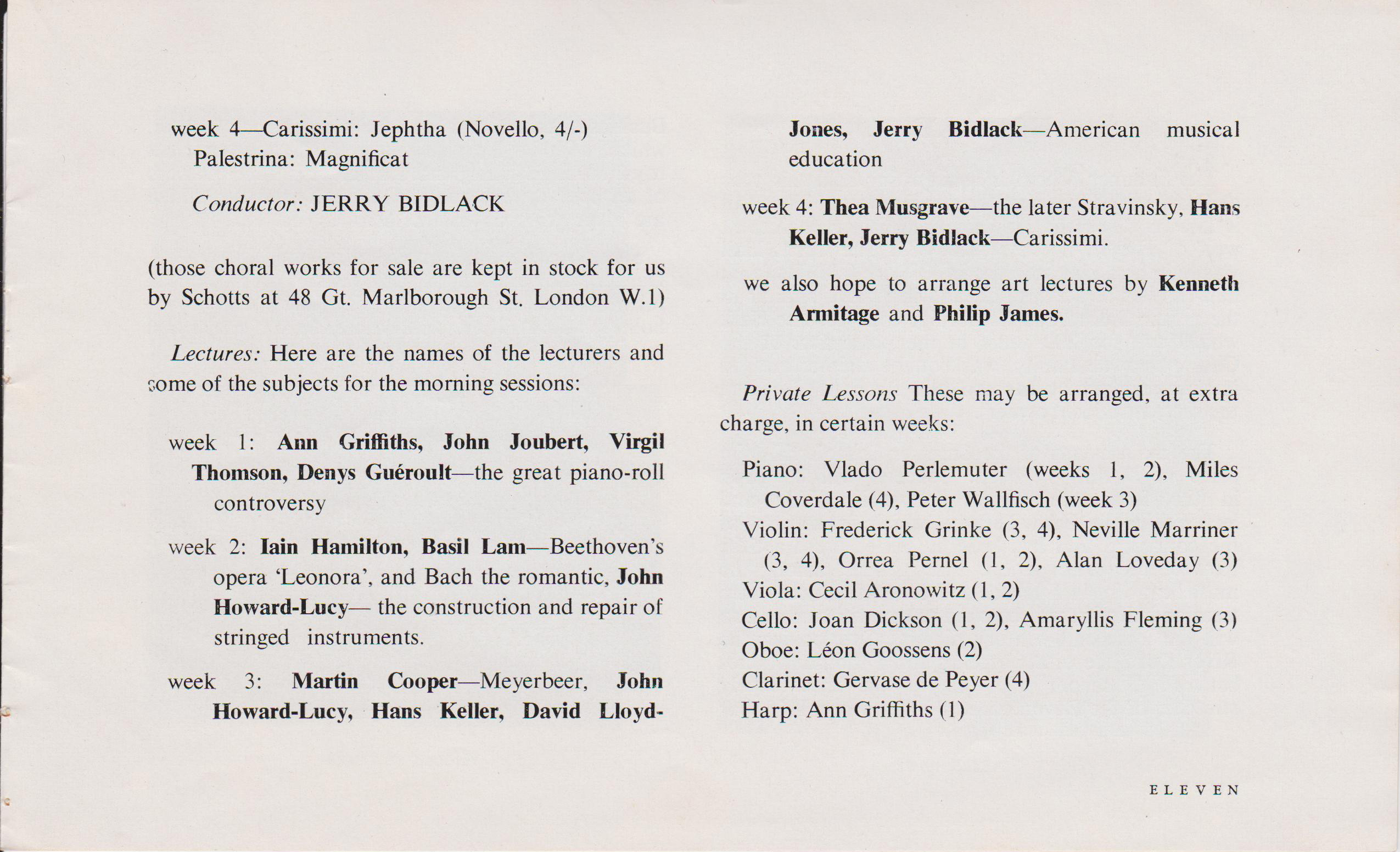
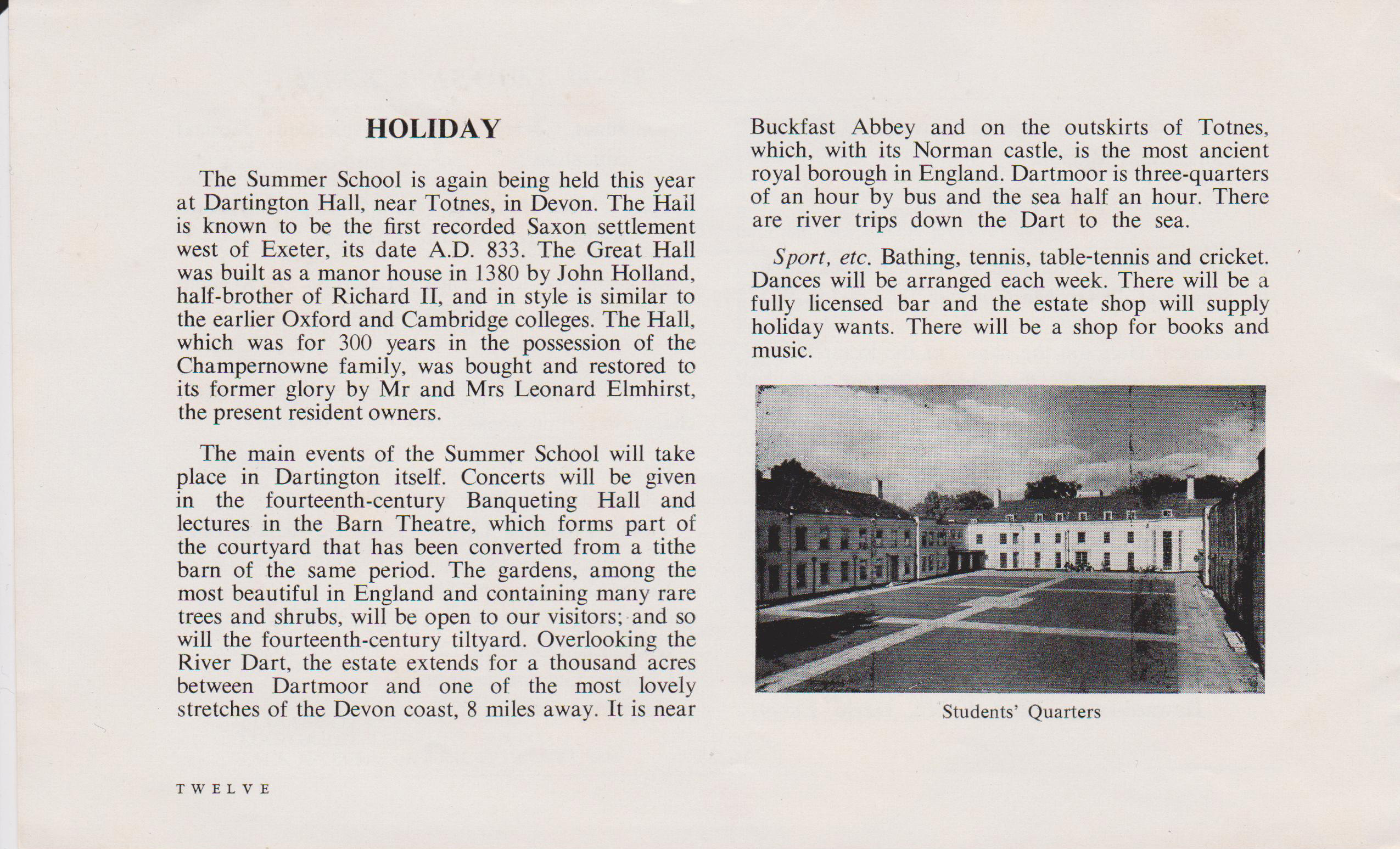
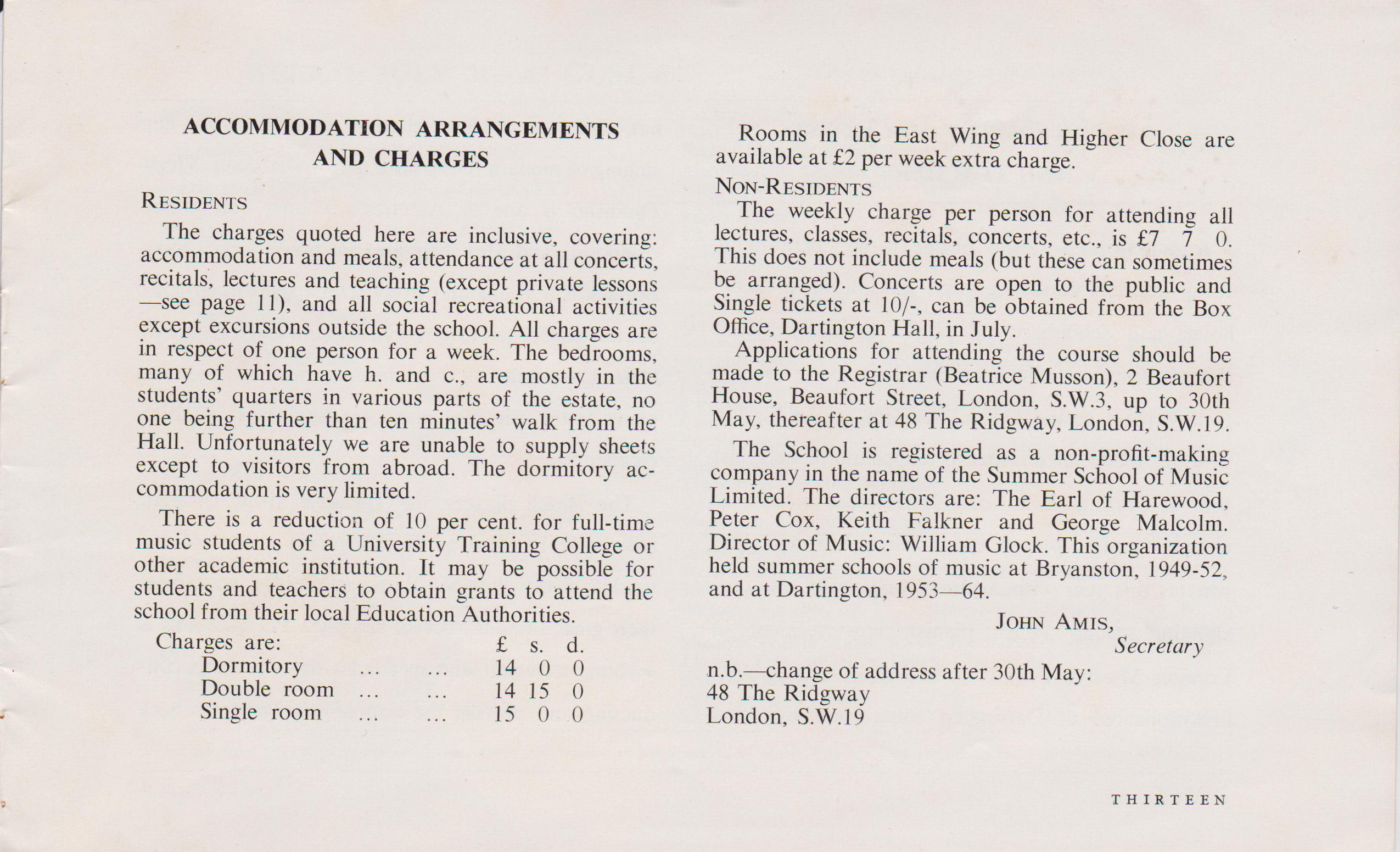
"Seven
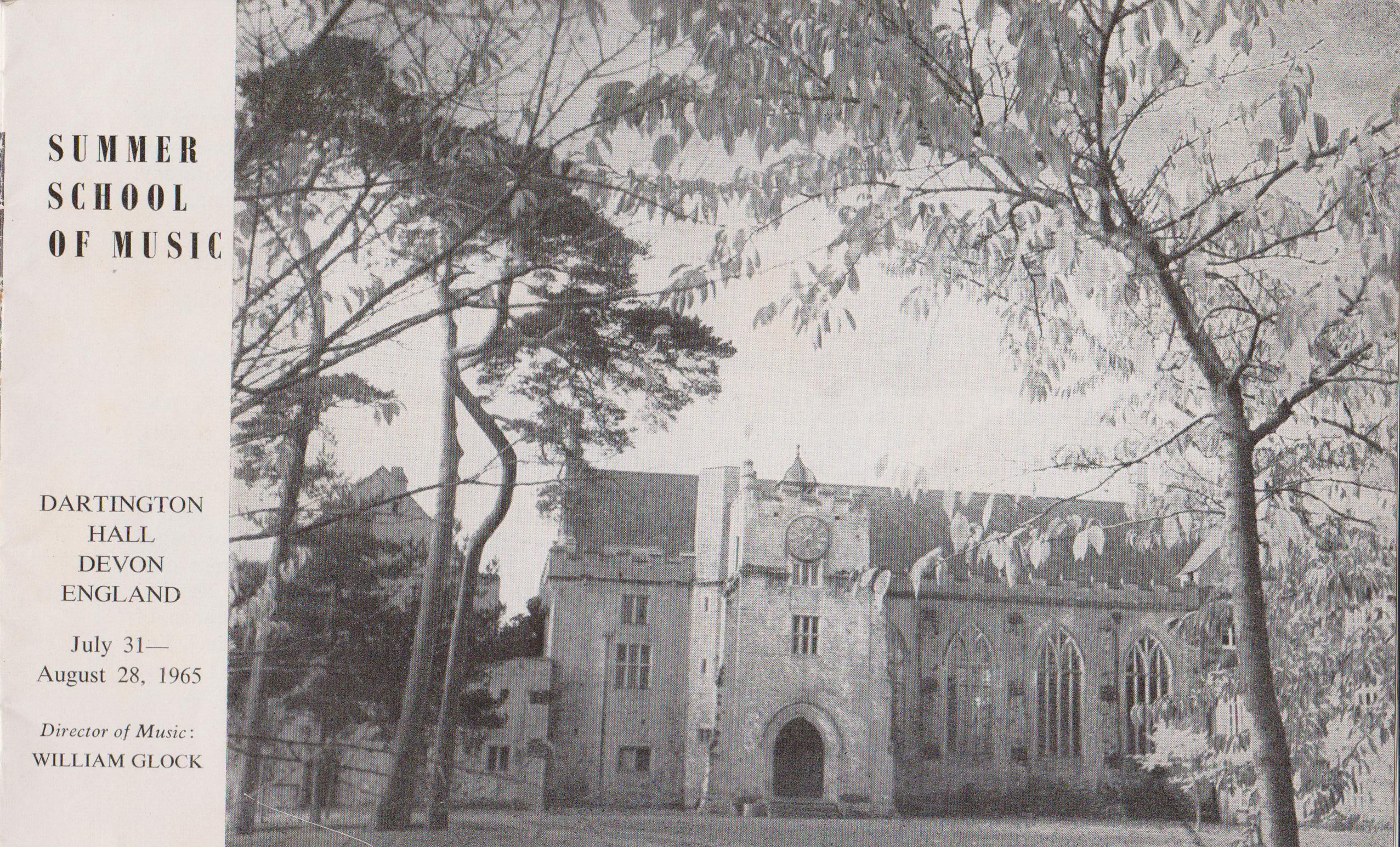
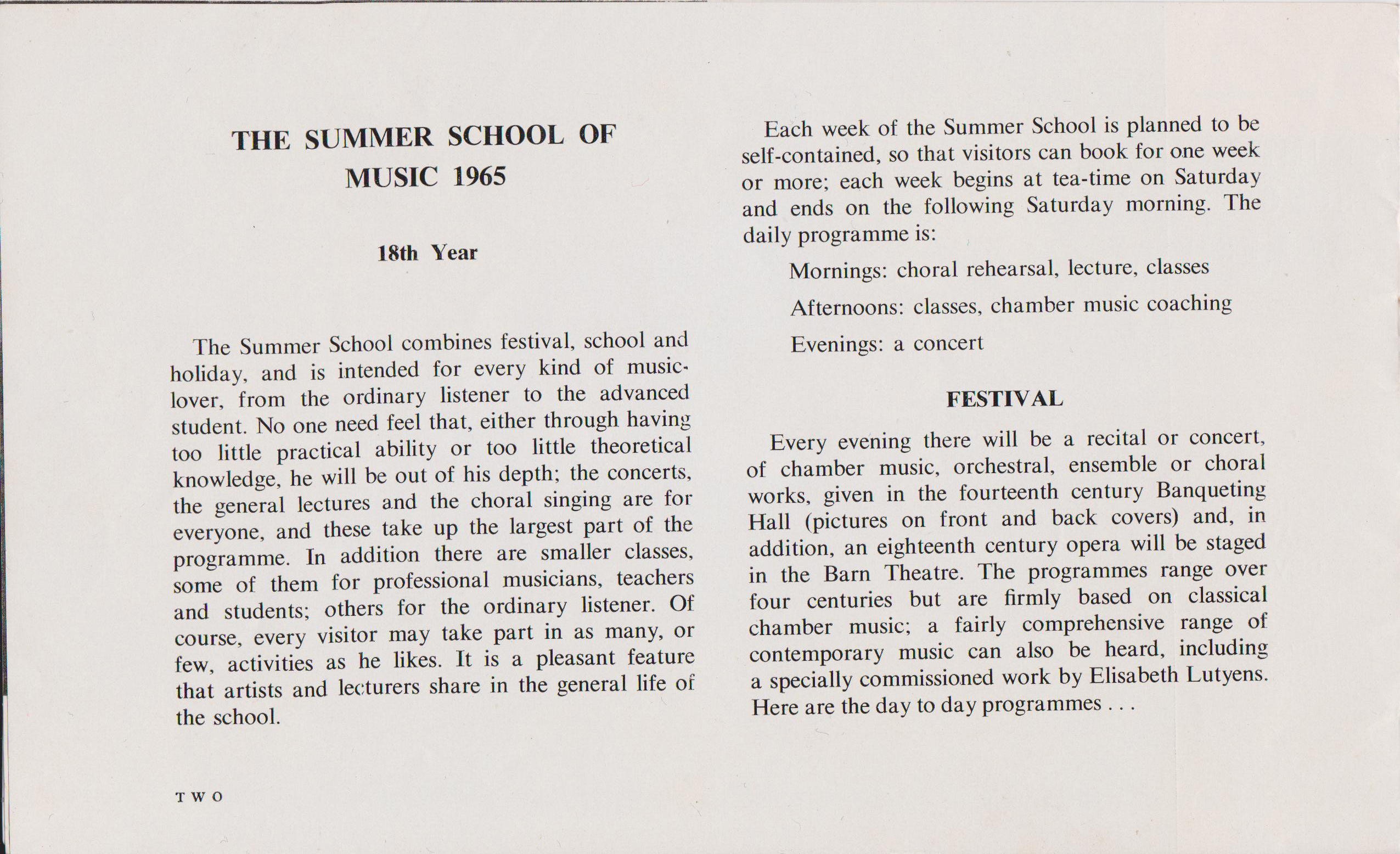
Sonnets of Shakespeare" and Dartington Hall Summer School
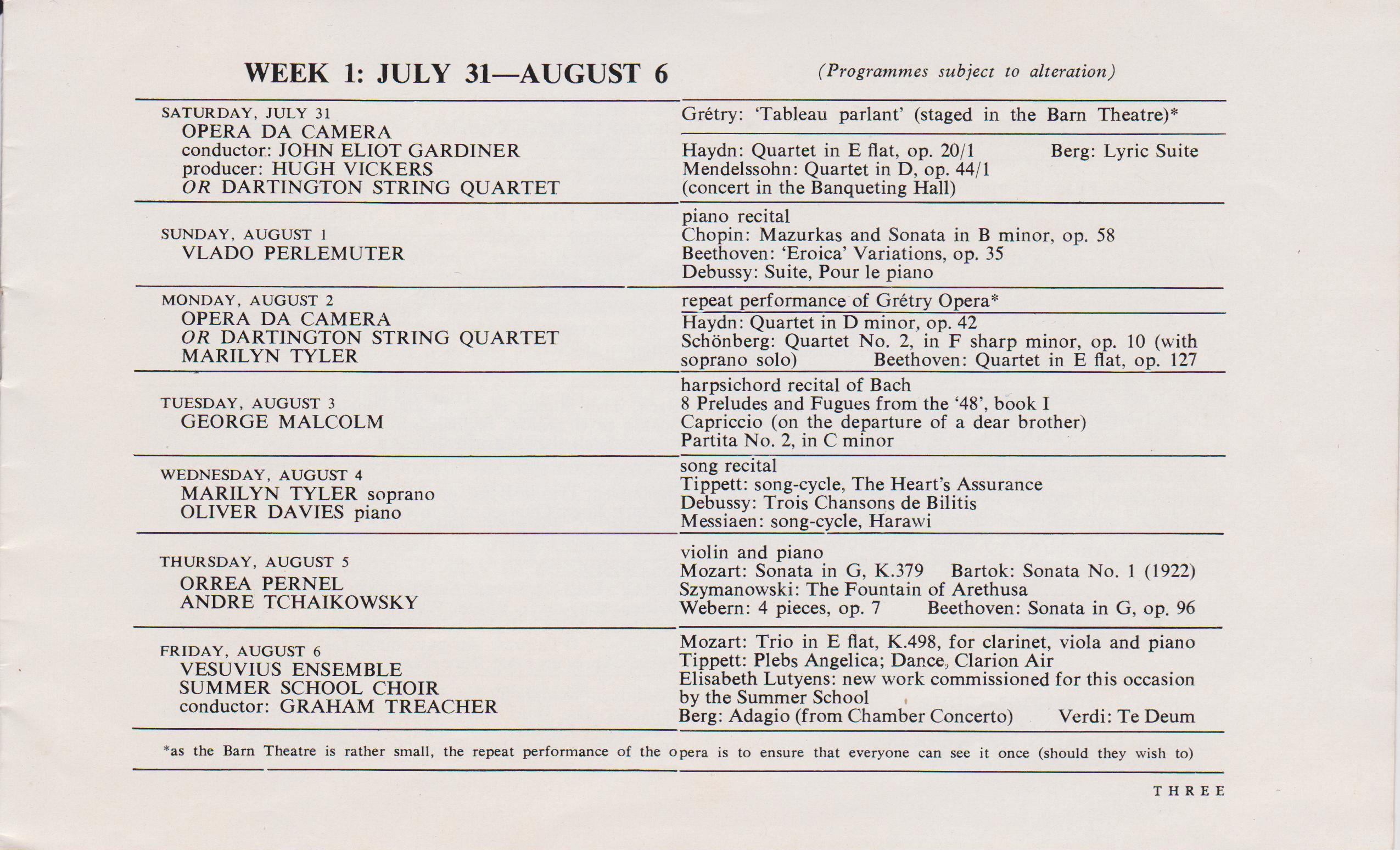
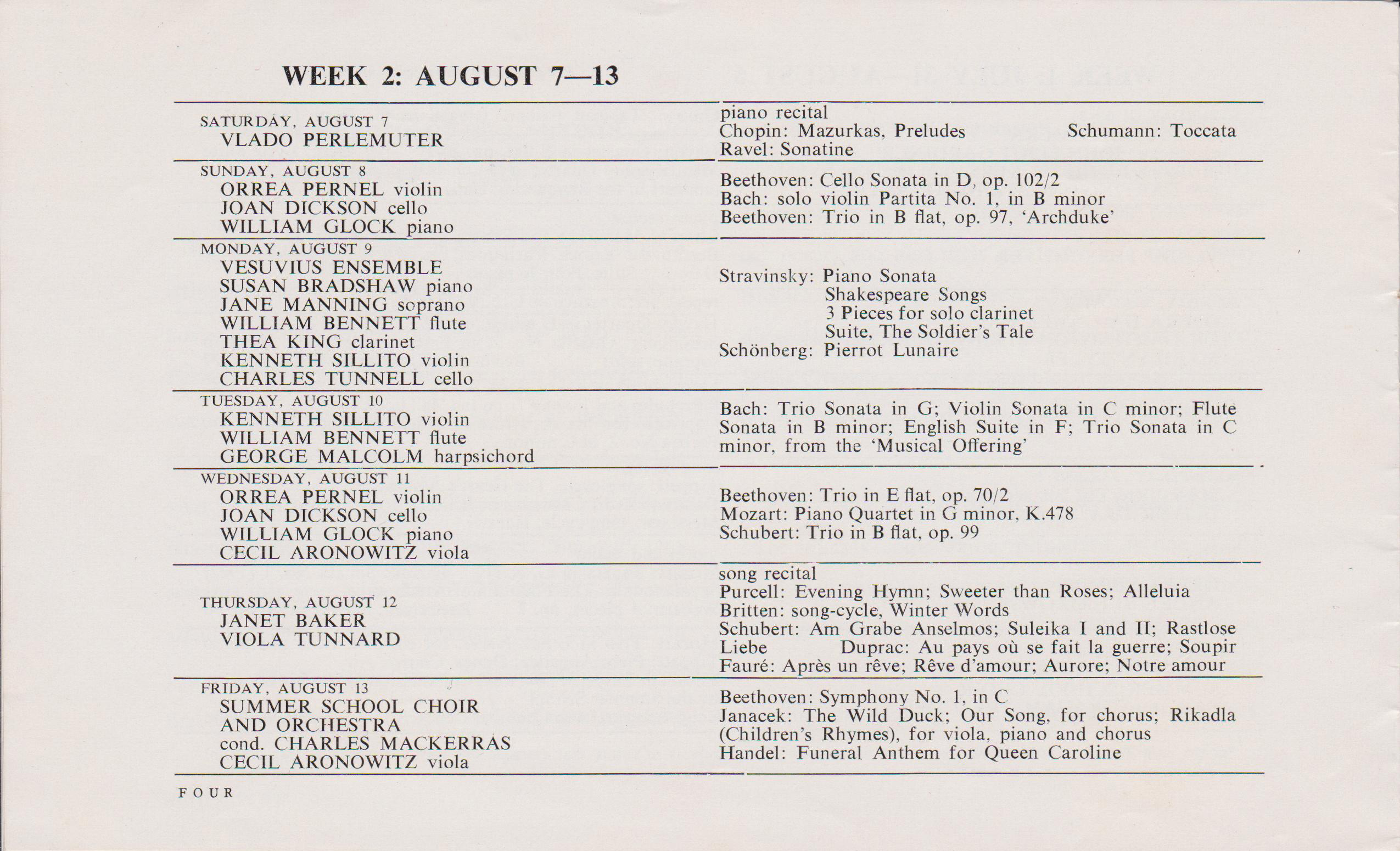
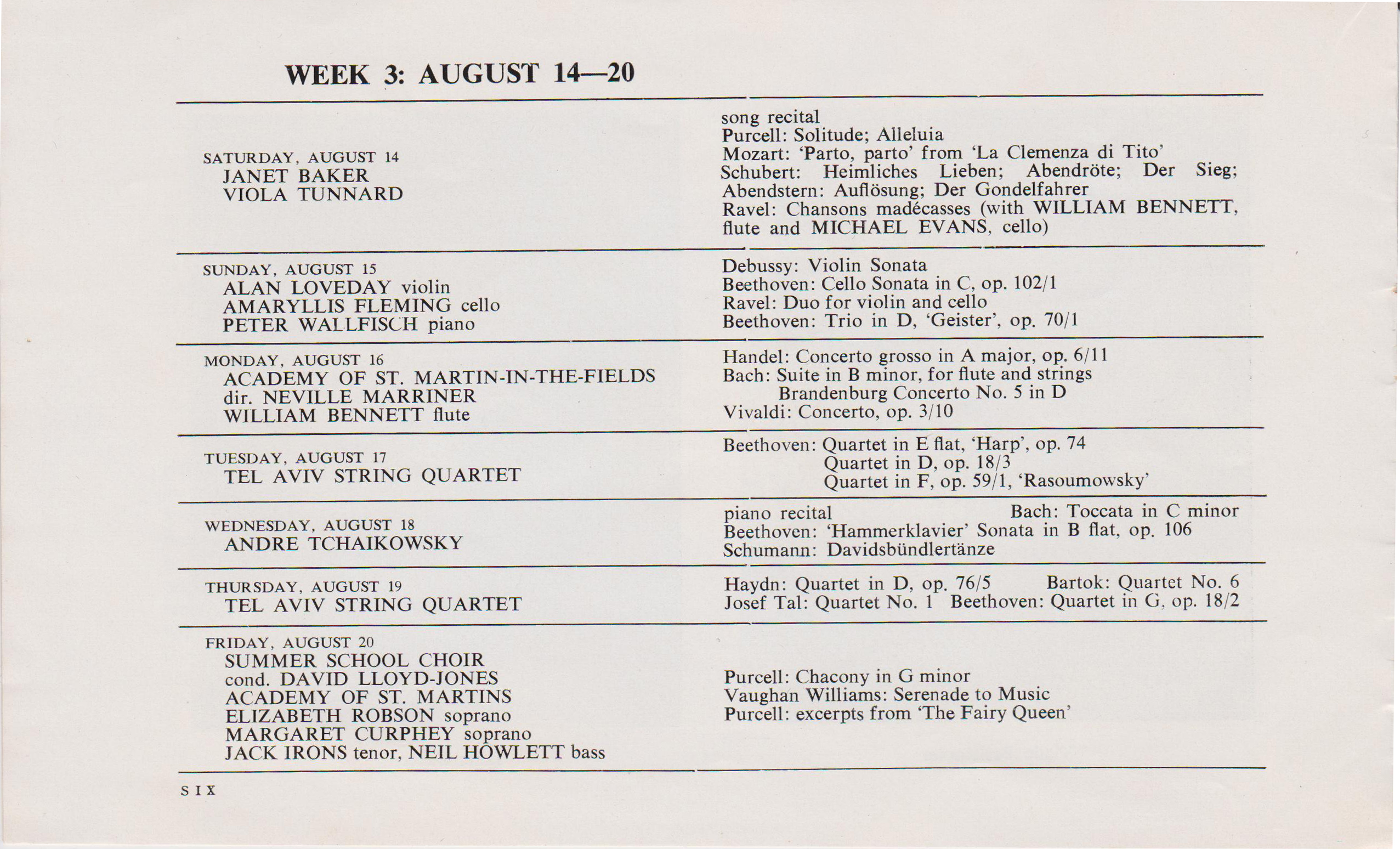
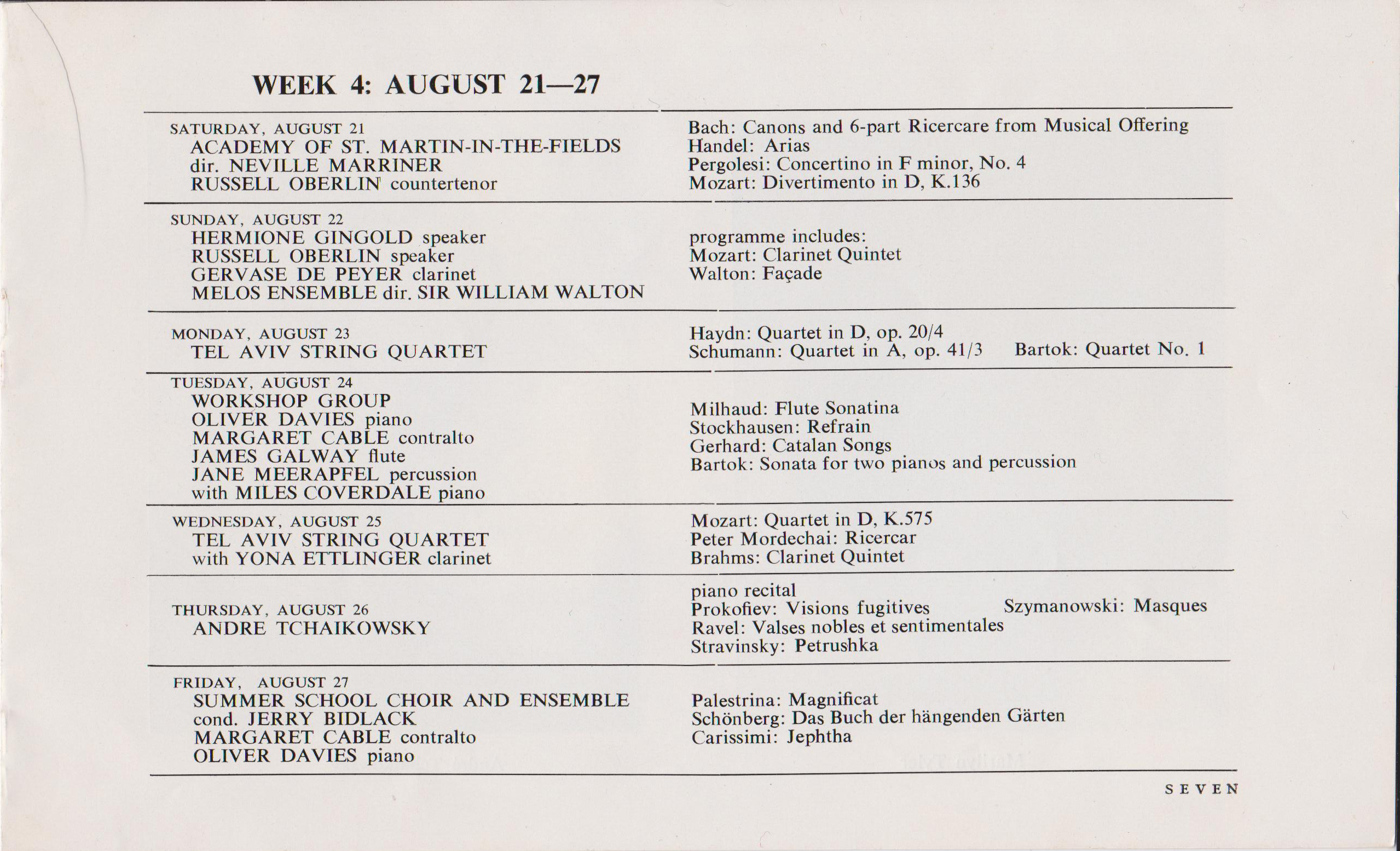
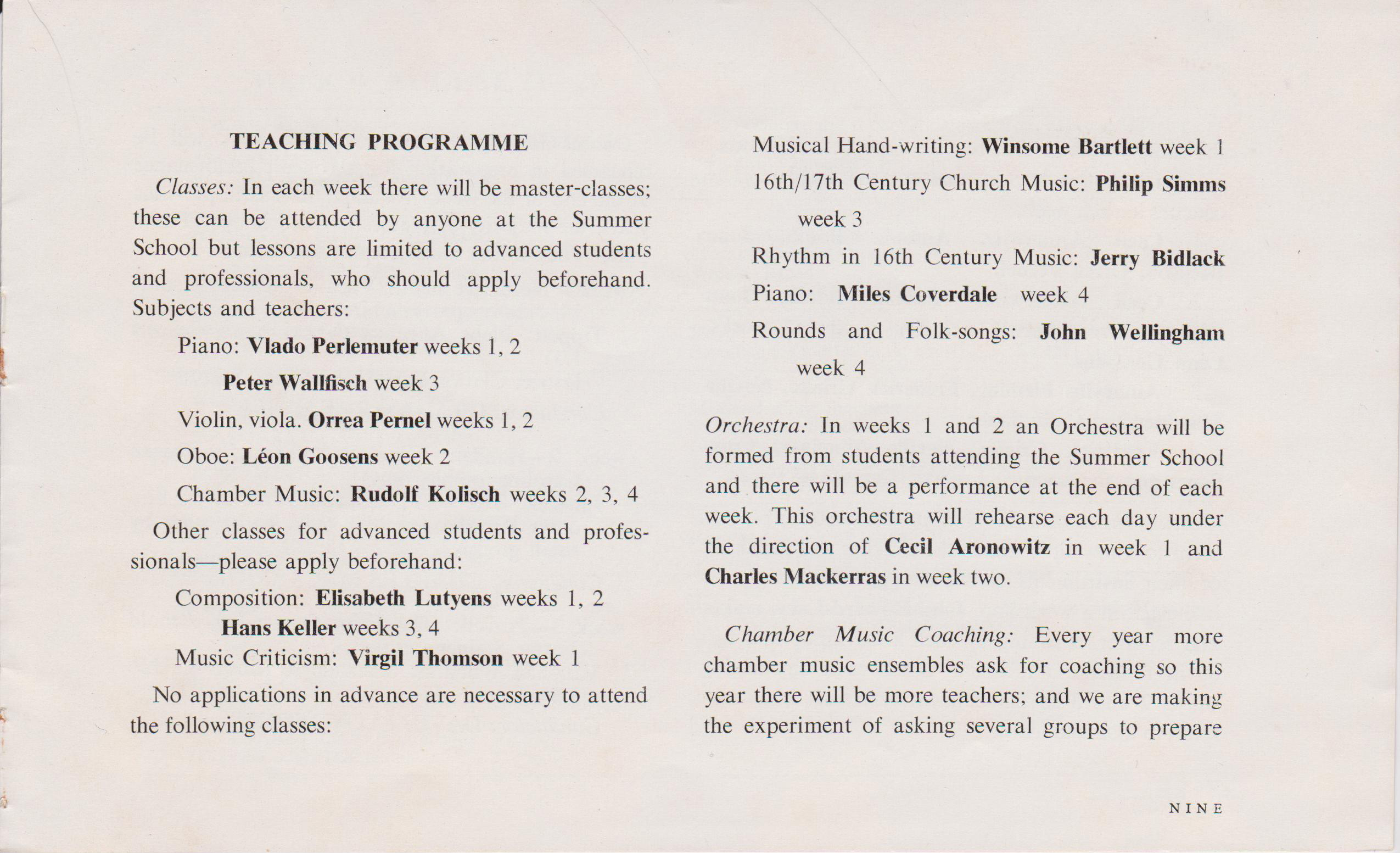
1965 was the third year running for André to attend the Dartington
Hall Summer School, which offered a multi-week program of concerts,
training, and a festival of music. André performed in three concerts:
Thursday,
August 5, 1965
Violin: Orrea Pernel
Piano: André Tchaikowsky
Program:
Mozart Sonata in G K.379
Bartok Sonata No. 1 (1922)
Szymanowski The Fountain of Arethusa
Webern 4 Pieces Opus 7
Beethoven Sonata in G, Opus 96
Wednesday
August 18, 1965
Piano: André Tchaikowsky
Program:
Bach Toccata in C Minor
Beethoven "Hammerslavier" Sonata in B Flat Opus 106
Schumann Davidsbündlertänze
Thursday
August 26, 1965
Piano: André Tchaikowsky
Program:
Prokofiev Visions Fugitives
Szymanowski Masques
Ravel Valses nobles et sentimentales
Stravinsky Petrushka
As an aside,
journalist and writer John Amis was at the concert with Orrea Pernel
and André on August 5th, writing:
[Pernel]
spent five summers at the Summer School at Dartington, Devon, teaching,
playing solos and chamber music with Joyce Rathbone, André
Tchaikowsky and Sir William Glock. Her playing was passionate but
her stance was calm, no histrionics. Only once did I see that calm
disturbed; she had played a big Mozart and a tough Bartok sonata with
no loss of cool but the concentration required for Webern's minuscule
Four Pieces Opus 7 brought her out in a profuse sweat.
At Dartington
in 1965 was the wonderful mezzo-soprano Margaret Cable, who sang in
two programs:
Thursday,
August 24, 1965
Voice: Margaret Cable contralto
Program:
Stockhausen Refrain and
Gerhard Catalan Songs
Friday,
August 27, 1965
Voice: Margaret Cable contralto
Program:
Palestrina Magnificat
Schönberg Das Buch der hängenden Gärten,
Carissimi Jephtha
The friendship
formed between André and Margaret at Dartington lead to the composition
Seven Sonnets of Shakespeare.
As a further
aside, André's last program included the Stravinsky Petrushka
suite. While relaxing the afternoon before the concert on the Dartington
grounds, a student, Michael Menaugh had a conversation with André.
Michael remembers:
André
said that he had added a number of notes and he also inserted the
Bear Dance in the last movement. André said he was going to
make an announcement about the fact before he played it and he didn't
quite know what to say. I said, why don't you say 'This performance
is entirely authentic, only the notes have been changed to protect
the innocent.' He loved that!
André
had been so impressed with Menaugh's "protect the innocent"
comment that he had taken the trouble to search out Menaugh and then
invite him to London. Michael Menaugh:
About
a week after I had returned home from Dartington, a letter arrived
and it was from André:
Dear Michael,
Forgive me if I'm wrong, but I've been doing a lot of detective work
and people say that the young man I spoke to on the grass on Saturday
is you. I'm writing to say that I have dined out for the last two
weeks on your introduction, the introduction you gave me to Petrushka.
Since it appears to have been the best thing about my performance,
I feel I owe you some of my fee! Thank you very much, and if you're
ever in London, please give me a ring or write to me at 64 Wood Vale,
London, N.lO. I would very much like to see you.
Yours, André Tchaikowsky
I was
knocked out by this and wrote back immediately. I said I was a student
in Oxford and if he were anywhere near Oxford, I'd be happy to show
him around, and if he was going to play in London, I would go to his
concert. He then wrote to me that he was going to play a Chopin Recital
for Finchden Manor and would like to see me afterwards as he was giving
a tea for some of the Finchden boys and friends. That was the beginning
of our friendship.
You can
view all images of the Dartington Hall Summer Program for 1965 using
the links in the left column.
Music
Publisher This
work is
published by Josef
Weinberger and appears in their catalog of André Tchaikowsky
published works. Click Here
for a PDF copy of the André Tchaikowsky Weinberger catalog.
From
the biography The
Other Tchaikowsky
At the Dartington
Summer School in 1965, André had met singer Margaret Cable, whose
abilities impressed him greatly and he promised to write a song cycle
for her. The result was the "Seven Sonnets of Shakespeare,"
completed in October 1967 and dedicated to Margaret Cable. Margaret
Cable recalls André and the Sonnets:
"I
first met André in 1965 at Dartington. We were both there in
the days when William Glock was running Dartington Summer School.
Mr. Glock was a very enterprising man and had lots of unusual artists
doing all sorts of unusual things. I remember one occasion when André
was playing Pictures at an Exhibition at Dartington, in the original
piano version. Fantastic.
"We
became really good friends. He hadn't been in England that long, and
had nobody, really, and he valued his friends enormously and took
his friendships very seriously. André also met John [Margaret's
husband-to-be, tuba virtuoso John Fletcher]. John and I weren't married
then -- we didn't marry until 1967. So John was around and knew André
and we all got along very well. Judy Arnold knew him best back then.
Judy was marvelous, in a way. She's a great organizer, but she is
also very dominant, to the point of being slightly overpowering. I
think André felt a little constricted by her sometimes, but
she did a lot for André.
"André
was terribly well-read and made me feel totally ignorant. He knew
English literature, French literature, Russian literature, all in
the original languages. He put seven Shakespeare sonnets to music
and I did them. We also broadcast them, he and I."
The Sonnets
were first heard on a BBC broadcast on June 18, 1968. The first public
performance was June 22,1968, at the Purcell Room. Music critic, Robert
Henderson, wrote in The Musical Times:
Chamber
Music
Although
composers must obviously be free to set whatever texts they like,
it is doubtful whether music could ever add anything of much significance
to the Shakespeare sonnets which André Tchaikovsky chose for
his song-cycle "Seven Sonnets of Shakespeare," performed
for the first time by Margaret Cable with the composer (PR, June 22).
The concentrated imagery of the poems, the balanced rhythms and already
intensely musical character of the language, for instance, made the
not particularly distinctive vocal lines sound rather perfunctory,
and it was the beautifully written, often strikingly inventive piano
accompaniments which seemed to distill much more accurately the passion
and intensity implicit in the words.
Music critic,
Stephen Walsh, wrote in Music and Musicians:
Unfortunately,
Tchaikowsky's own work was rather a disappointment. In a way this
might have been expected, since the work was a cycle of Shakespeare
sonnets, the sort of poetic ground which even the most inspired composers
are apt to find pretty daunting. Tchaikowsky's settings, for contralto
and piano, showed clearly enough why this is true. Shakespeare's poems
are so intense, so imbued with a musical quality of their own, that
there is really nothing that music can add, and in this case the vocal
line was of noticeable poverty, much too dependent on devices like
unaccompanied recitative, and hardly beginning to match the poems
in linguistic or psychological subtlety. The accompaniment was less
shackled, but it was nevertheless seldom prepossessing and seldom
memorable. The total impression was one of dryness, of music hopelessly
circumscribed by its subject matter. I am sure Tchaikowsky is capable
of better things.
Margaret
Cable gave what seemed a useful performance, not always completely
accurate, but rich in tone and sensitive in inflection. She was accompanied
by the composer, so clearly the performance could not be blamed for
the impression left by the music.
Margaret
Cable remembers another aspect of the BBC and Purcell Room performances:
"I
remember in the Purcell Room André made terrible noises when
he played. He would groan and make such noise. He would moan and make
problems for the recording studios at the BBC and we had to do things
over and over."
There was
another performance of the Sonnets some months later in Amsterdam, in
the small Concertgebouw concert hall. Margaret Cable describes this
performance:
"After
this concert in Amsterdam, we had an American friend with us, Donald
Blakesley, who was the tuba player in the Concertgebouw Orchestra.
Donald and his wife came to the concert and sent me a very nice bunch
of red roses backstage. After the concert they took us out for a meal,
and then said, since we were only in Amsterdam for one night, they
will drive us around and show us everything. Inevitably, part of the
tour was through the beautiful red-light district. It all looks so
exquisite with all the windows and the girls and so on.
"André
sat back in the car with me and got terribly quiet. He was obviously
terribly upset. We were going along, when outside one of the houses
was a very young girl. She looked about 12 years old, probably older,
but she looked about 12. She was standing on the pavement. André
insisted that the car be stopped. He threw open the door, grabbed
my bunch of roses, and gave them to this little girl."
André
reported the Sonnets concert in a letter to Halina Wahlmann-Janowska,
written on June 29, 1968:
A week
ago there was the first performance of my song cycle, Seven Sonnets
of Shakespeare. There were quite a few musicians there: Andrzej Panufnik
and his wife [Camilla Jessel], Daniel Barenboim and his wife [Jacqueline
du Pre], Gervase dePeyer, and Fou Ts'ong's wife. Fou Ts'ong was playing
somewhere that evening. It turned out the cycle is first class, undoubtedly
better than anything I've written so far. As a result, Andrzej Panufnik's
wife gave birth to a child two weeks prematurely, but the baby seems
to be normal. The cycle went like a bomb. The audience was delighted,
the reviews were terrible, so everything was as it should be, and
I'm happy with one and the other.
At Dartington
Summer School in 1968, André was to meet composer David Lord
who had also finished a song cycle, "The Wife of Winter."
David's and André's song cycles were similar in that each had
a beautiful piano accompaniment. André suggested David write
a piano concerto, which André would play. He agreed, and André
boldly added the work to his repertoire list. They met again at a party
in London at the home of Judy Arnold (at which Alfred Brendel appeared
wearing only a bath towel) and discussed the project further. André
and David were friends for several years, playing piano duets, discussing
composition, but David started writing more and more slowly, and the
friendship faded away. The concerto was never written.
André
dismissed the Sonnets after a few years. They were never published and
at this writing, received only the BBC, Purcell Room, and Amsterdam
performances, plus the 2007 and 2010 performances in Warsaw and Krakow.
André
selected the following seven sonnets for this cycle:
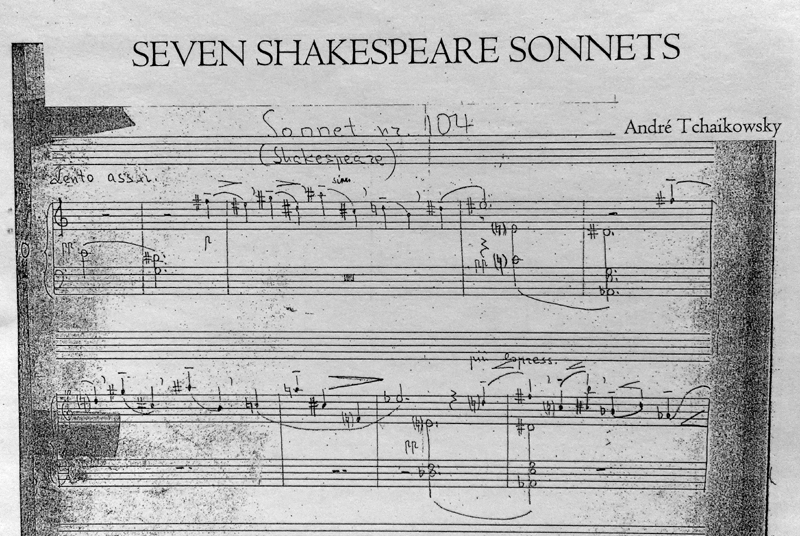
Sonnet
104
To me
fair friend you never can be old,
For as you were when first your eye I eyed,
Such seems your beauty still: three winters cold,
Have from the forests shook three summers' pride,
Three beauteous springs to yellow autumn turned,
In process of the seasons have I seen,
Three April perfumes in three hot Junes burned,
Since first I saw you fresh which yet are green.
Ah yet doth beauty like a dial hand,
Steal from his figure, and no pace perceived,
So your sweet hue, which methinks still doth stand
Hath motion, and mine eye may be deceived.
For fear of which, hear this thou age unbred,
Ere you were born was beauty's summer dead.
Sonnet
75
So are
you to my thoughts as food to life,
Or as sweet-seasoned showers are to the ground;
And for the peace of you I hold such strife
As 'twixt a miser and his wealth is found.
Now proud as an enjoyer, and anon
Doubting the filching age will steal his treasure,
Now counting best to be with you alone,
Then bettered that the world may see my pleasure,
Sometime all full with feasting on your sight,
And by and by clean starved for a look,
Possessing or pursuing no delight
Save what is had, or must from you be took.
Thus do I pine and surfeit day by day,
Or gluttoning on all, or all away.
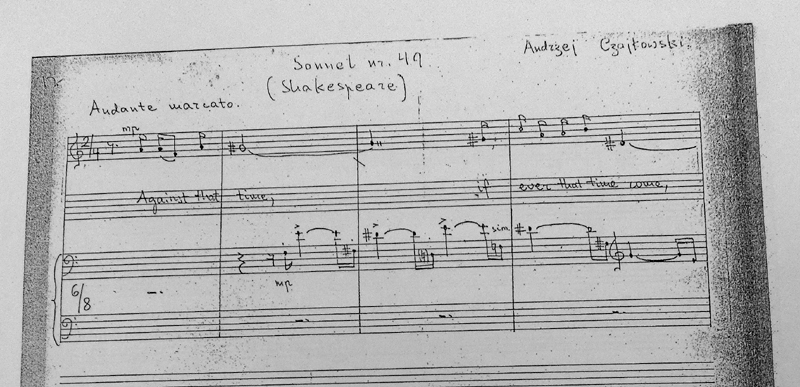
Sonnet
49
Against
that time (if ever that time come)
When I shall see thee frown on my defects,
When as thy love hath cast his utmost sum,
Called to that audit by advised respects,
Against that time when thou shalt strangely pass,
And scarcely greet me with that sun thine eye,
When love converted from the thing it was
Shall reasons find of settled gravity;
Against that time do I ensconce me here
Within the knowledge of mine own desert,
And this my hand, against my self uprear,
To guard the lawful reasons on thy part,
To leave poor me, thou hast the strength of laws,
Since why to love, I can allege no cause.
Sonnet
61
Is it
thy will, thy image should keep open
My heavy eyelids to the weary night?
Dost thou desire my slumbers should be broken,
While shadows like to thee do mock my sight?
Is it thy spirit that thou send'st from thee
So far from home into my deeds to pry,
To find out shames and idle hours in me,
The scope and tenure of thy jealousy?
O no, thy love though much, is not so great,
It is my love that keeps mine eye awake,
Mine own true love that doth my rest defeat,
To play the watchman ever for thy sake.
For thee watch I, whilst thou dost wake elsewhere,
From me far off, with others all too near.
Sonnet
89
Say that
thou didst forsake me for some fault,
And I will comment upon that offence,
Speak of my lameness, and I straight will halt:
Against thy reasons making no defence.
Thou canst not (love) disgrace me half so ill,
To set a form upon desired change,
As I'll my self disgrace, knowing thy will,
I will acquaintance strangle and look strange:
Be absent from thy walks and in my tongue,
Thy sweet beloved name no more shall dwell,
Lest I (too much profane) should do it wronk:
And haply of our old acquaintance tell.
For thee, against my self I'll vow debate,
For I must ne'er love him whom thou dost hate.
Sonnet
90
Then
hate me when thou wilt, if ever, now,
Now while the world is bent my deeds to cross,
join with the spite of fortune, make me bow,
And do not drop in for an after-loss:
Ah do not, when my heart hath 'scaped this sorrow,
Come in the rearward of a conquered woe,
Give not a windy night a rainy morrow,
To linger out a purposed overthrow.
If thou wilt leave me, do not leave me last,
When other petty griefs have done their spite,
But in the onset come, so shall I taste
At first the very worst of fortune's might.
And other strains of woe, which now seem woe,
Compared with loss of thee, will not seem so.
Sonnet
146
Poor
soul the centre of my sinful earth,
My sinful earth these rebel powers array,
Why dost thou pine within and suffer dearth
Painting thy outward walls so costly gay?
Why so large cost having so short a lease,
Dost thou upon thy fading mansion spend?
Shall worms inheritors of this excess
Eat up thy charge? is this thy body's end?
Then soul live thou upon thy servant's loss,
And let that pine to aggravate thy store;
Buy terms divine in selling hours of dross;
Within be fed, without be rich no more,
So shall thou feed on death, that feeds on men,
And death once dead, there's no more dying then.