|
Nocturne (1948)
Etude (1949)
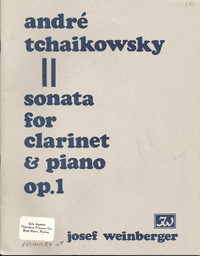
Opus 1 Sonata for Clarinet and Piano (1959)
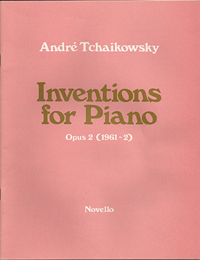
Opus 2 The
Inventions
(1961 -1963)
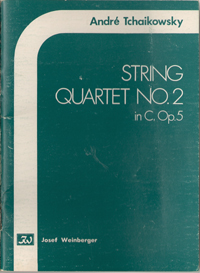
Opus 5 -
String Quartet No. 2
(1973-1975)
|
André
Tchaikowsky as Composer
All
known compositions that have an existing manuscript or are published
appear in the table below. Chose any link to display a dedicated webpage
for the selected composition. The small "note" symbol indicates
there is at least one recording of the work available. (For purchasing
information of Opus 1 to 6, see the end of this webpage.)
Sonata
for Viola and Piano (1954-1955) Piano and Viola
|
|
| Piano
Concerto (1956-1957) - Piano and Orchestra |
|
| Sonata
for Piano (1958) - Solo Piano |
|
| Sonata
for Clarinet and Piano (1959) - Opus 1 - Clarinet and Piano |
|
| Two
Songs after Poems by William Blake (1960) - Piano and Voice |
|
| Octet
(1961) - clarinet, horn, bassoon, 2 violins, viola, 'cello,
and bass |
|
| The
"Inventions" for Piano (1961-1962) - Opus 2 - Solo
Piano |
|
| Violin
Concerto "Classico" (1962-1964) - Violin and Orchestra |
|
| Arioso
e Fuga per Clarinetto Solo (1964-1965) - Solo Clarinet |
|
| “Hamlet"
Music (1966) - Chamber Players |
|
| Seven
Sonnets of Shakespeare (1967) - Piano and Voice |
|
| "Ariel"
(1969) - voice, flute, oboe, clarinet, bassoon, piano/celesta/harp |
|
| String
Quartet No.1 in A (1969-1970) - Opus 3 - String Quartet |
|
| Piano
Concerto (1966-1971) - Opus 4 - Piano and Orchestra |
|
| String
Quartet No.2 in C (1973-1975) - Opus 5 - String Quartet |
|
| Trio
Notturno (1978) - Opus 6 - Piano, Violin, 'cello |
|
| Six
Dances for Piano (1981) - Solo Piano |
|
| Five
Miniatures for Violin and Piano (1981) - Piano and Violin |
|
| The
Merchant of Venice (1968-1982) - Opus 7 - Opera Information |
|
| The
Merchant of Venice (1968-1982) - Opus 7 - Opera (WNO) |
|
| The
Merchant of Venice (1968-1982) - Opus 7 - Opera (Warsaw) |
|
| The
Merchant of Venice (1968-1982) - Opus 7 - Opera (Bregenz) |
|
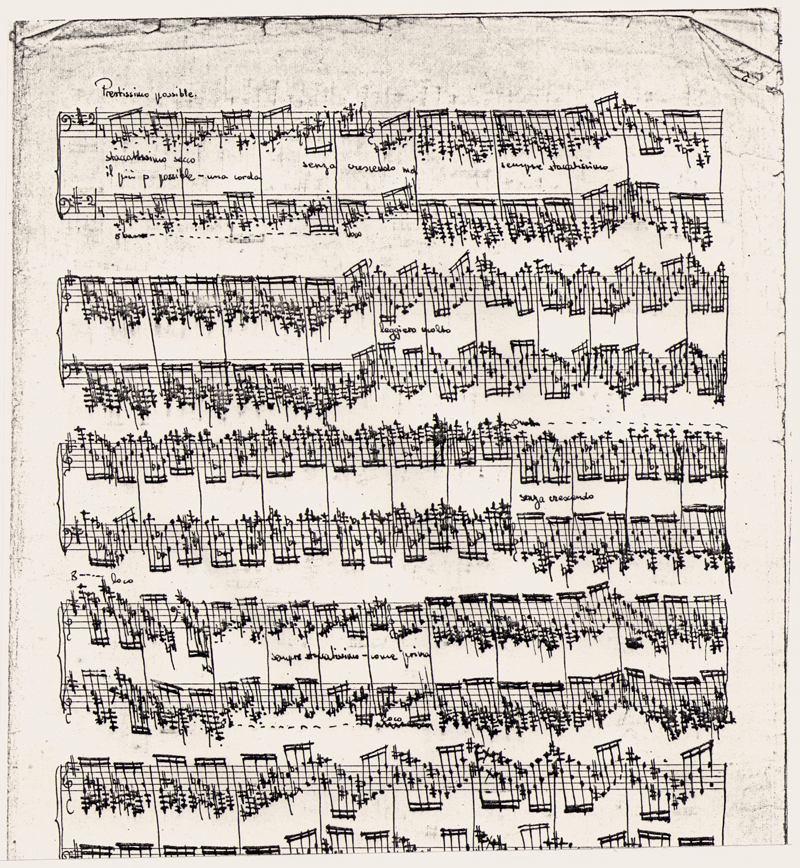
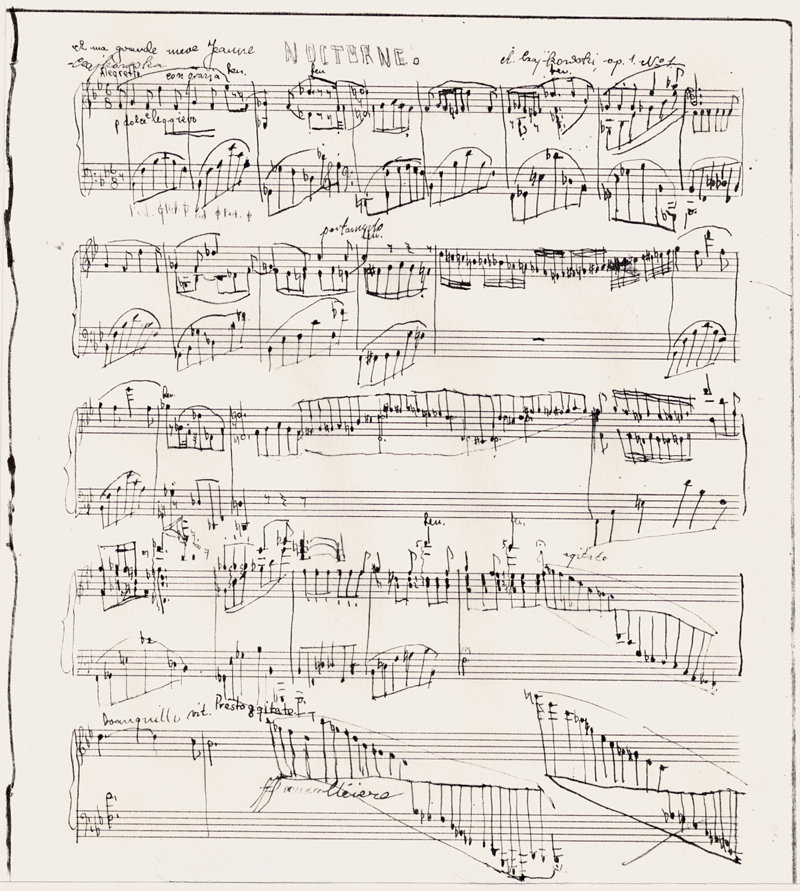
The
Polish Music Information Center has provided the following list of compositions
that are pre-1956 and usually associated with André's membership
in the Polish Composers' Union. In the left panel are images of two
fragments that survived: a Nocturne (1948) that Andrzej marked, Opus
1, Number 1, and dedicated to his grandmother Celina: and then one of
his (12) Etudes that he wrote to develop certain aspects of his piano
technique. The location of the manuscripts of the other compositions
are unknown.
| Nocturne
(1948) [Dedicated to his grandmother as Opus 1 No. 1] |
| Etude
(1949) |
| Introduction
et scherzo de la sonata en mi mineur (1949) |
| Variations
sur le Prélude de Chopin en do mineur (1949) |
| Six
Fantaisies (1949) |
| Ten
Etudes for piano (1949) |
| Sonata
in G-major for Piano (1949) |
| Prelude,
Cavatina, Waltz, and Lullaby for piano (1950) |
| Violin
Concerto (1950) |
| Concerto
for Flute and Orchestra (1950) |
| Variations
on a Theme of Cohen for piano (1950) |
| Prelude
and Fugue for piano (1953) [won a prize] |
| Two
Preludes for piano (1954) |
| Two
Etudes for piano (1955) |
| Song
for soprano and piano (1955) |
The
exception to the list above is a Symphony (1958), but there is no known
manuscript and if this did exist, it may have been destroyed after André
moved from Paris to London in the early 1960s. This is because André
told his Aunt Mala in Paris to destroy the large box he left behind
and Mala's son, Charles Fortier, reported that Aunt Mala did, indeed,
throw the box into the trash. According to friends, André felt
that his compositions from 1957 and 1958 were overly influenced by his
studies with Nadia Boulanger at the American Conservatory in Fontainebleau
and did not express his true compositional voice.
Catalog
of Published Music by Josef Weinberger
Josef Weinberger, publisher of music by André Tchaikowsky, has
prepared a catalog that lists available music and provides useful background
information about André. Click
Here to view the catalog in PDF format.
For
information about Josef Weinberger in German, Click
Here.
Music
for Purchase or Hire - Opus 1 to 7

Opus
1 to 7 are published and each has an International Standard Book Number
(ISBN) reference. Note that Josef
Weinberger has unpublished scores for works by André Tchaikowsky
that do not have an opus number. Refer to their catalog
(pdf) or online (Click
Here). Feel free to contact them directly.
Opus
1 - Sonata for Clarinet and Piano
ISBN: M570053179
Click
Here to order directly from Josef Weinberger
Opus
2 - The Inventions
ISBN: M570053582
Click
Here to order directly from Josef Weinberger
Opus
3 - String Quartet No. 1
Score
ISBN: M570053247
Click
Here to order directly from Josef Weinberger
Opus 3 - String Quartet No. 1
Parts
ISBN: M570053254
Click
Here to order directly from Josef Weinberger
Opus
4 - Piano Concerto
(2 piano version)
ISBN: M570053094
Click
Here to order directly from Josef Weinberger
Opus
5 - String Quartet No. 2
Score
ISBN: M570053261
Click
Here to order directly from Josef Weinberger
Opus
5 - String Quartet No. 2 Parts
ISBN: M570053278
Click
Here to order directly from Josef Weinberger
Opus
6 - Trio Noturrno
(score and parts)
ISBN: M570053841
Click
Here to order directly from Josef Weinberger
Opus
7 - The Merchant of Venice (opera)
Contact Josef
Weinberger
|