|
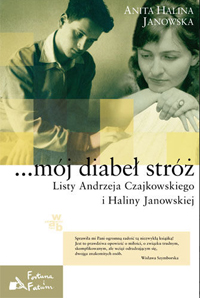
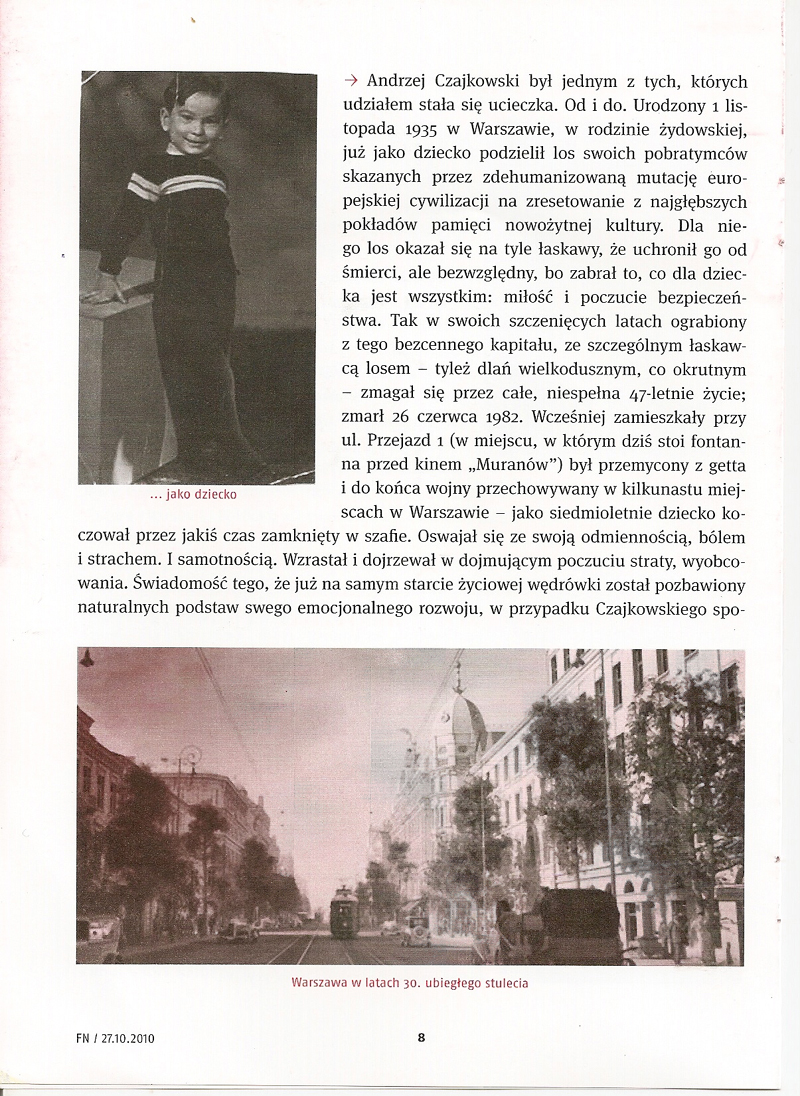
Moj
Diabel Stroz
(My Guardian Devil) (2011)
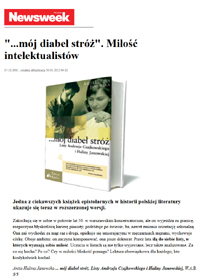
Review in
Newsweek (Polish)
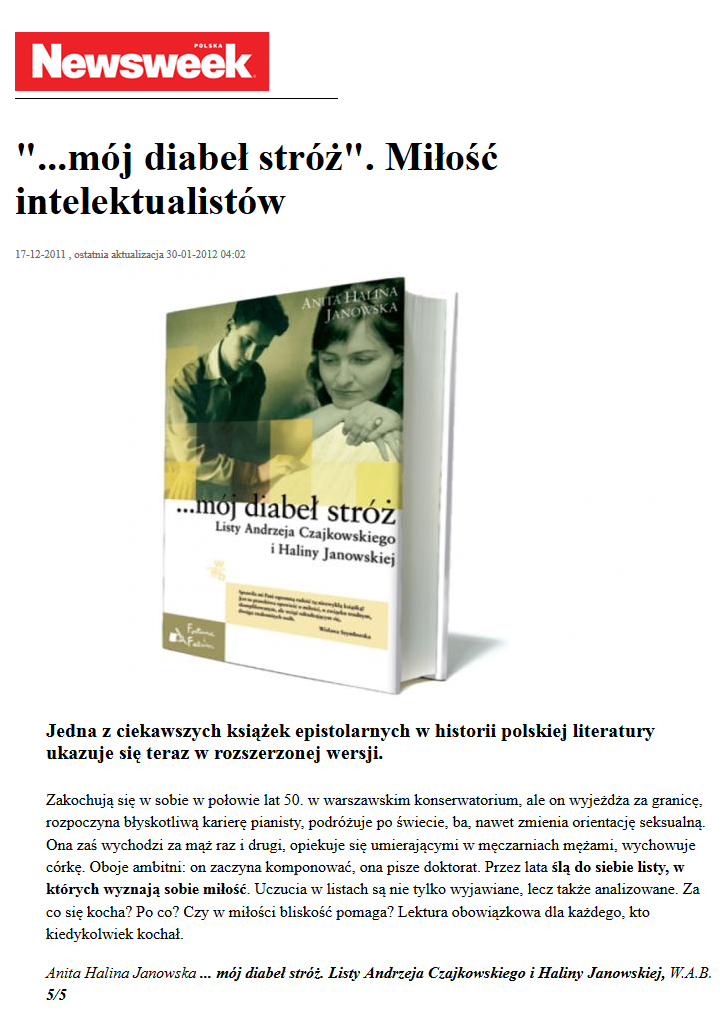
("My Guardian Devil" Love Intellectuals) (Click Image)

"A Study in Contrast" from July 10, 1992, narrated by pianist
David Owen Norris: study_in_contrast.mp3

Polish Radio
External Service "Focus - Rediscovering Czajkowski" from February
15, 2008, by Michal Kubicki: redisdcovering_czajkowski.mp3
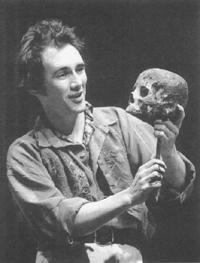
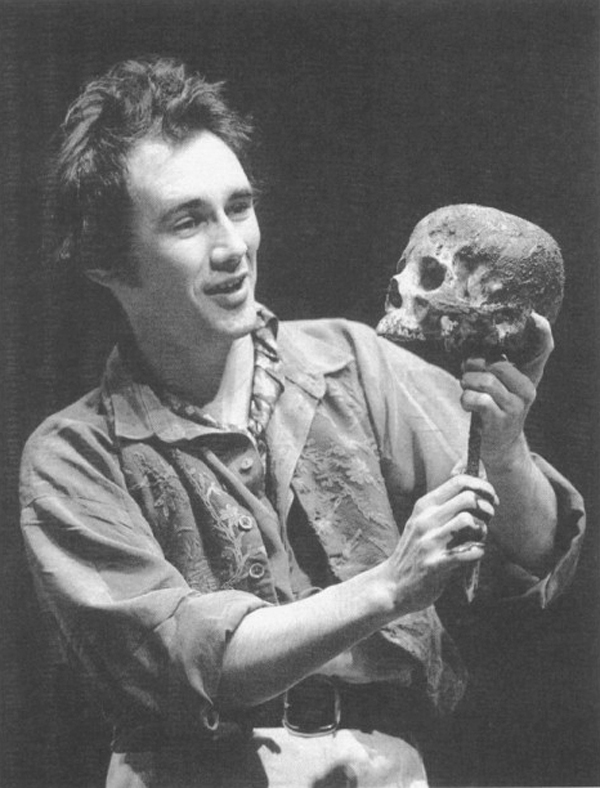
Mark Rylance
as Hamlet
Click here for the complete story of André Skull Bequest

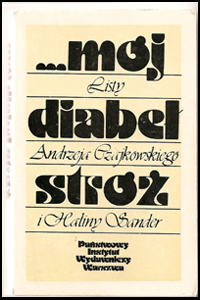
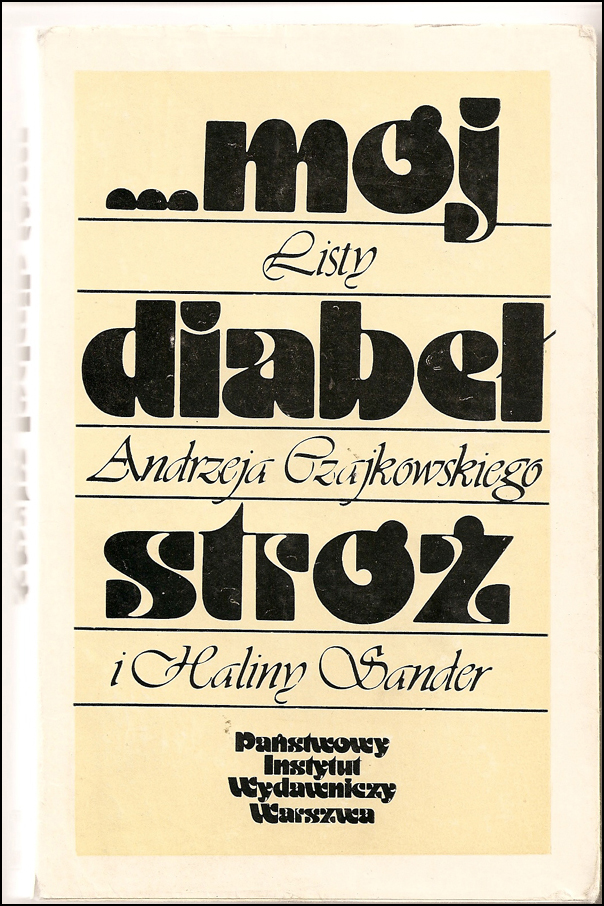
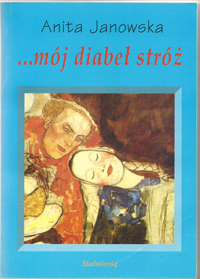
Moj Diabel
Stroz
(My Guardian Devil) (1988)
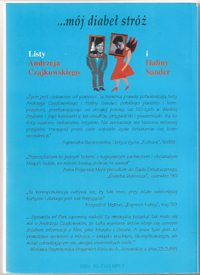
Moj Diabel Stroz
(My Guardian Devil) (1996)
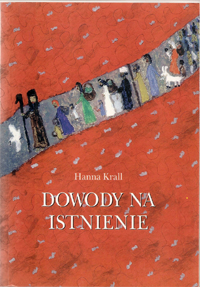
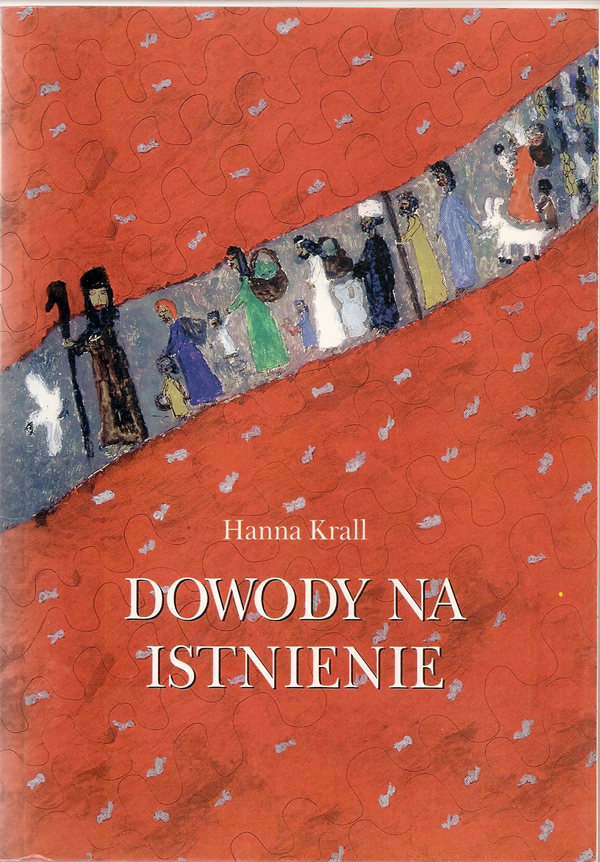
Dowody Na
Istnienie
(Proofs of Existence) (1996)
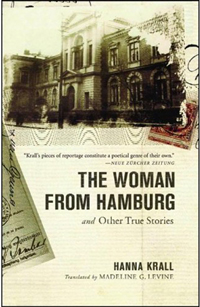
The Woman
from Hamburg and other True Stories (2006)
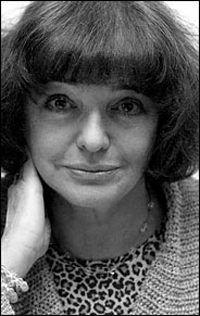
Hanna Krall
(photo: Czeslaw Czaplinski)
XII Koncert
Europejski
Olsztyn, Poland (2006)
Program Notes (in Polish)
Festival
of Theatrical Music
Andrzej Czajkowski Essay (2008)
(in English) (in Polish)
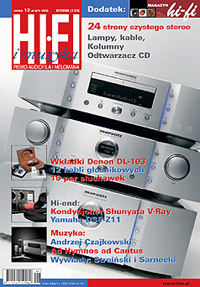
Hi-Fi Magazine
Article (2008)
Click here for pdf
file (in Polish)
Click
here for Hi-Fi Website
(read Interview)
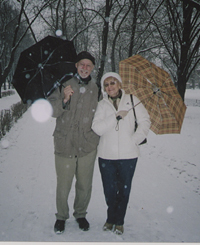
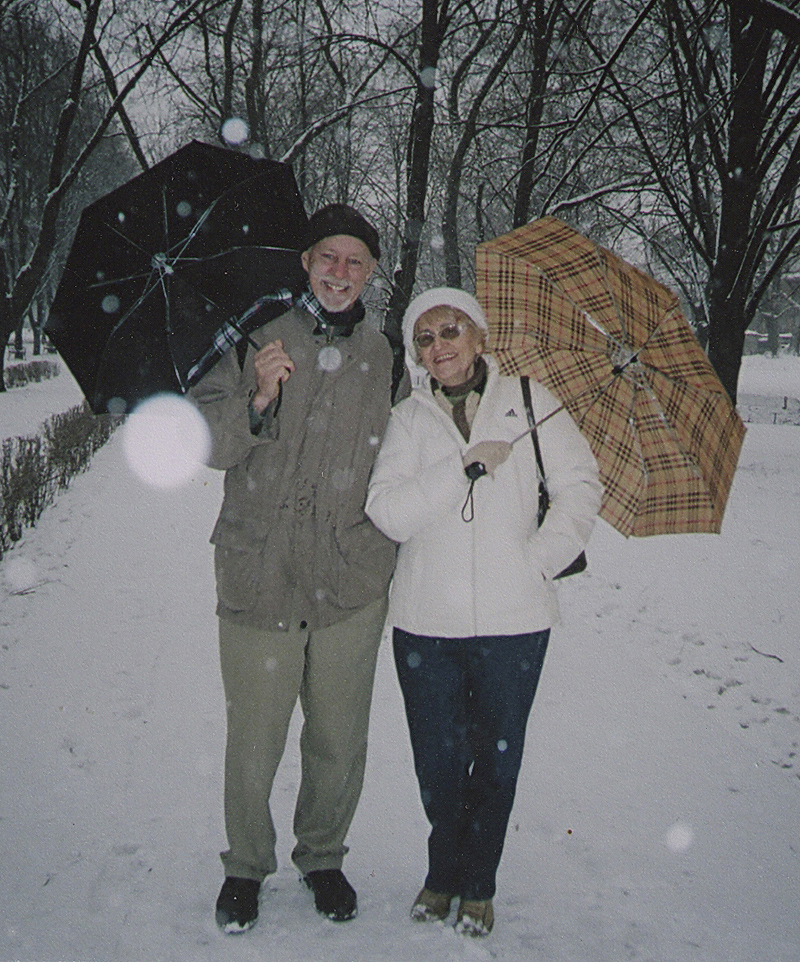
David A.
Ferré and
Anita Halina Janowska
Warsaw (2007)
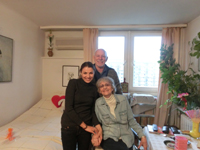
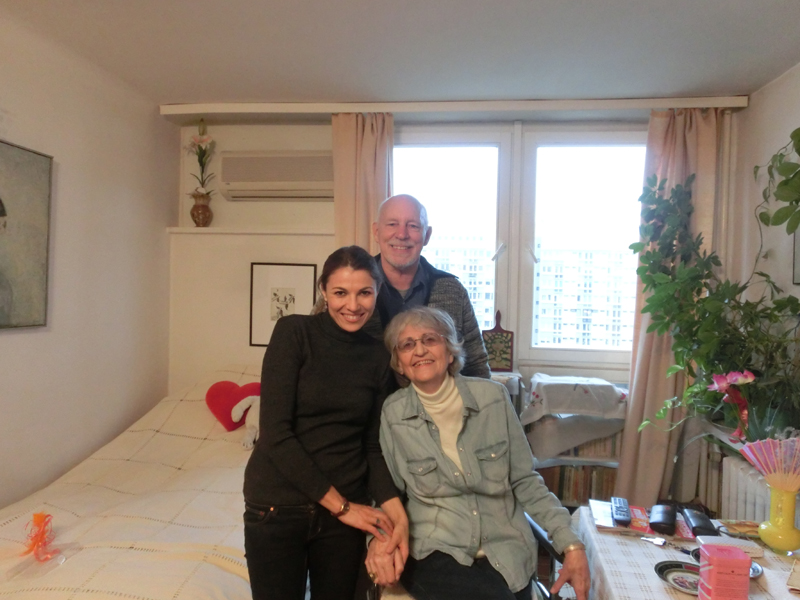
Dr. Anastasia Belina-Johnson, David A. Ferré, Anita Halina Janowska
Warsaw (2012)
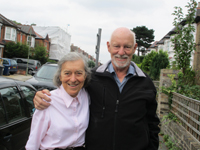
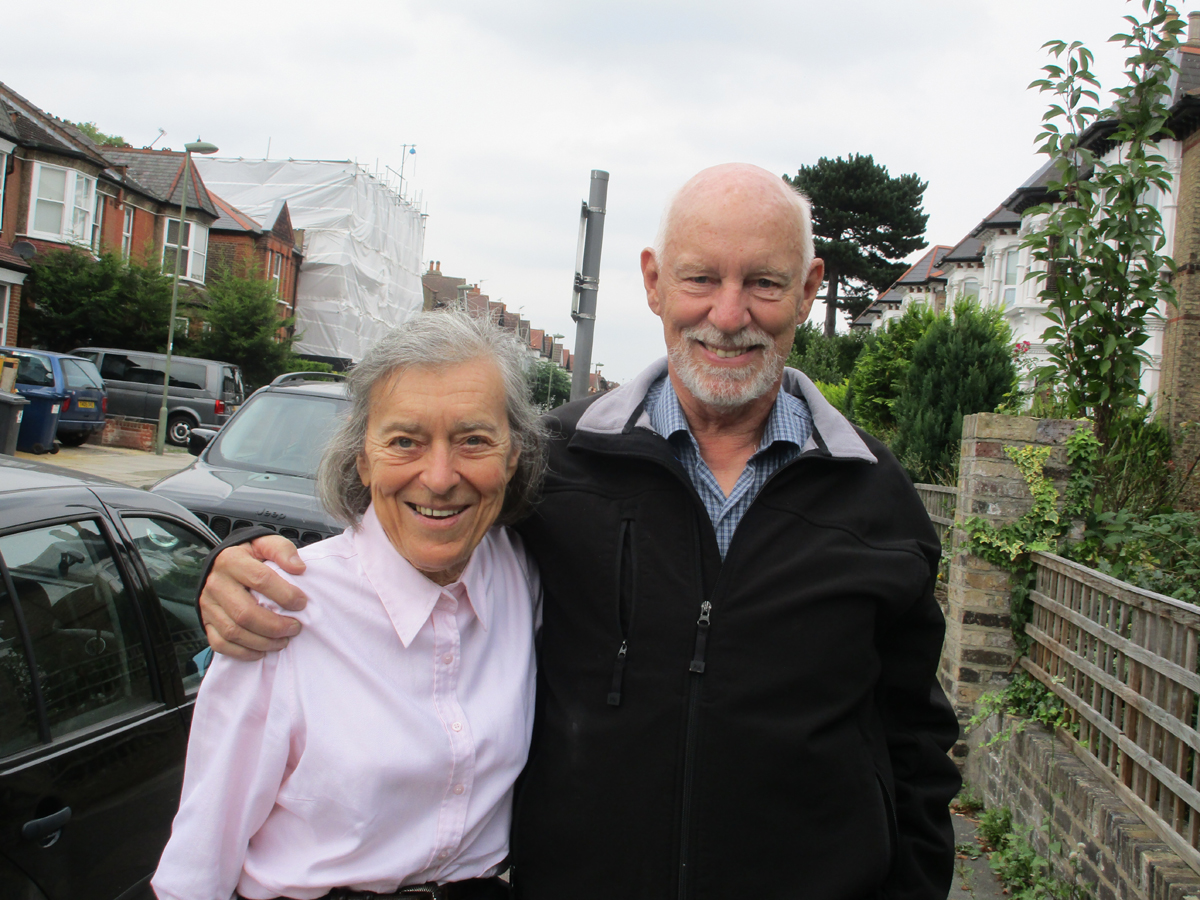
Judy Arnold and David A. Ferré
London (2016)
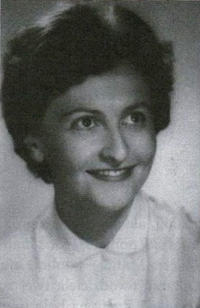
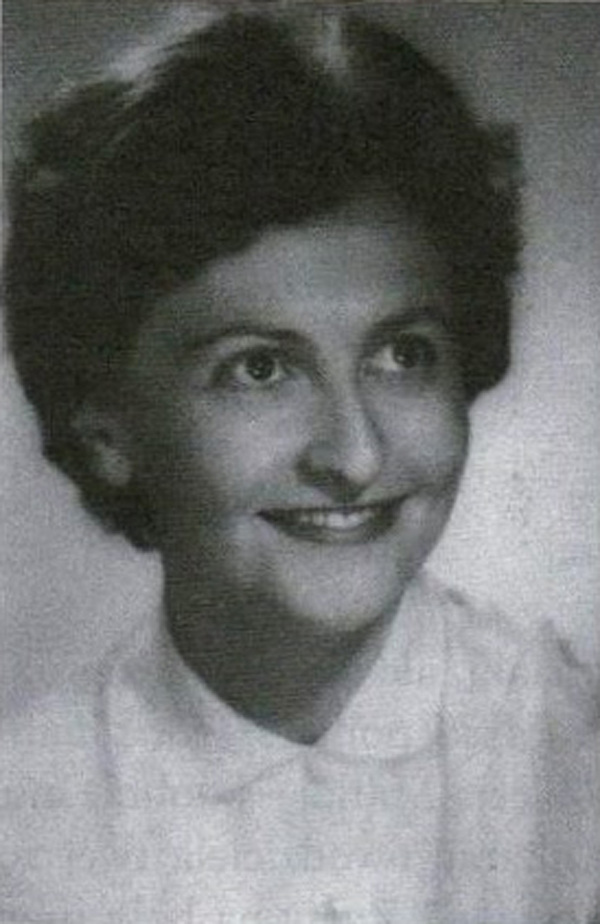
Anita Halina Janowska (1965)
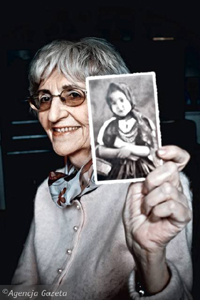
Anita Halina
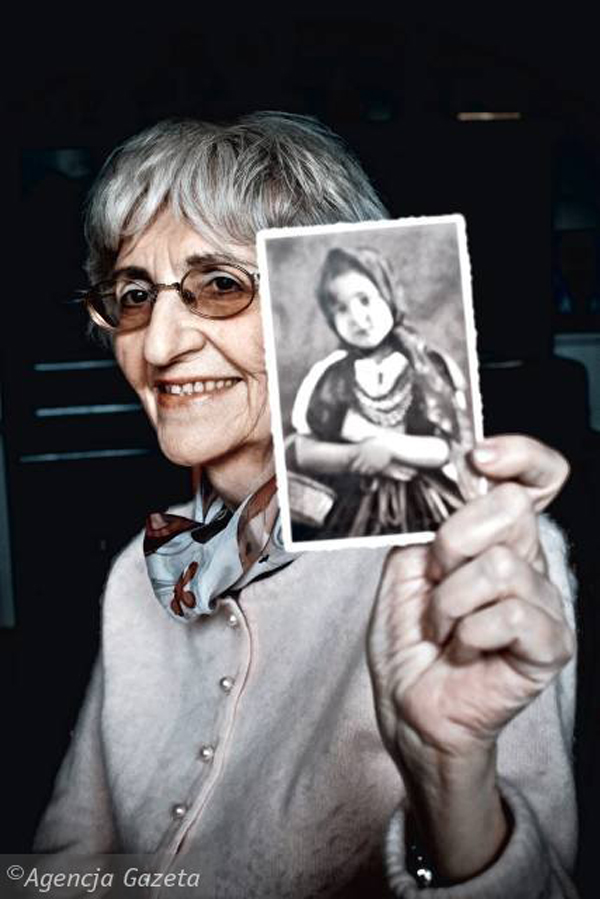
Janowska (2010)
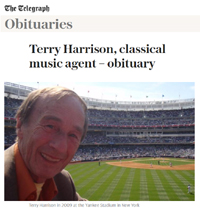
Obituary
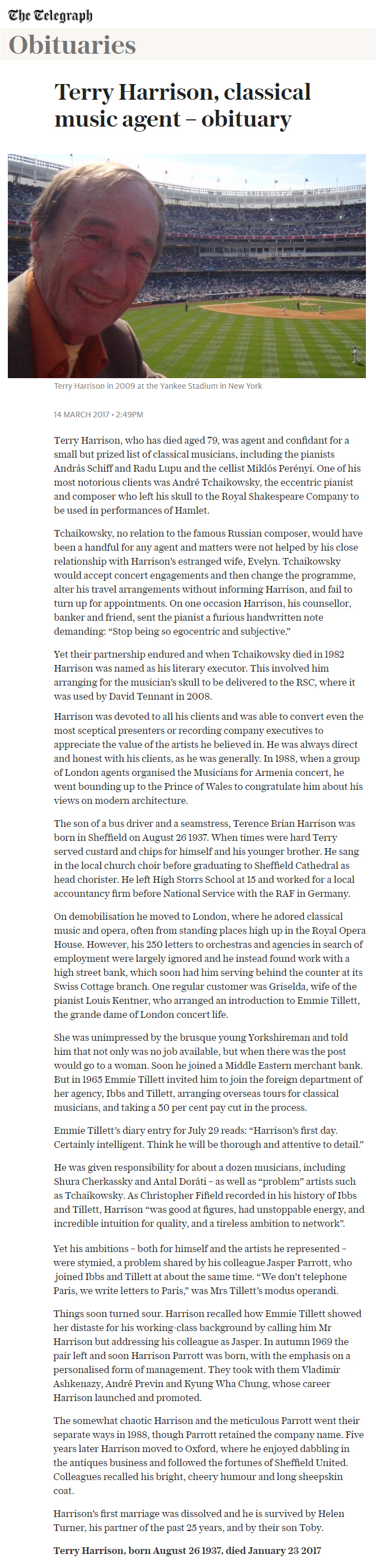
- Terry Harrison
(André's Longtime Manager)
August 26, 1937 - Jan, 23, 2017
(Click Here
for pdf file)
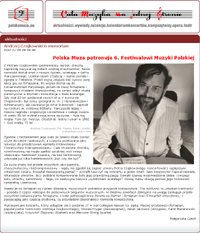
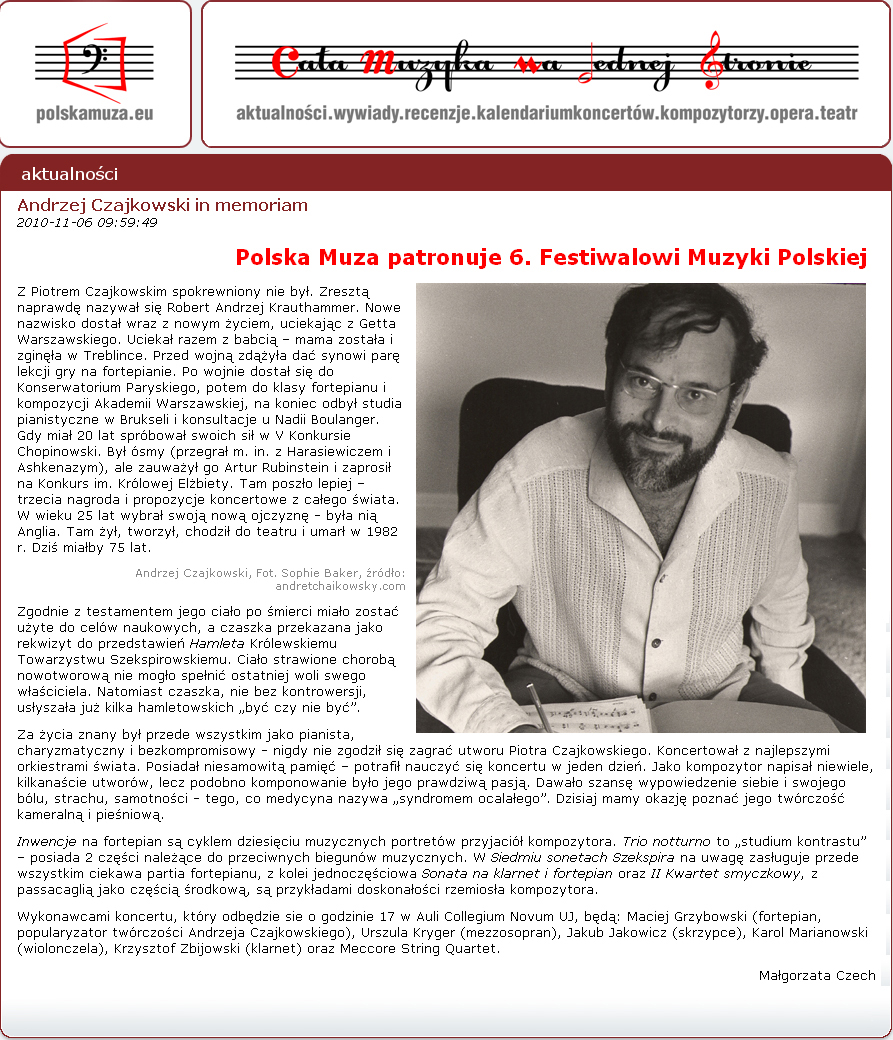
www.polskamuza.eu
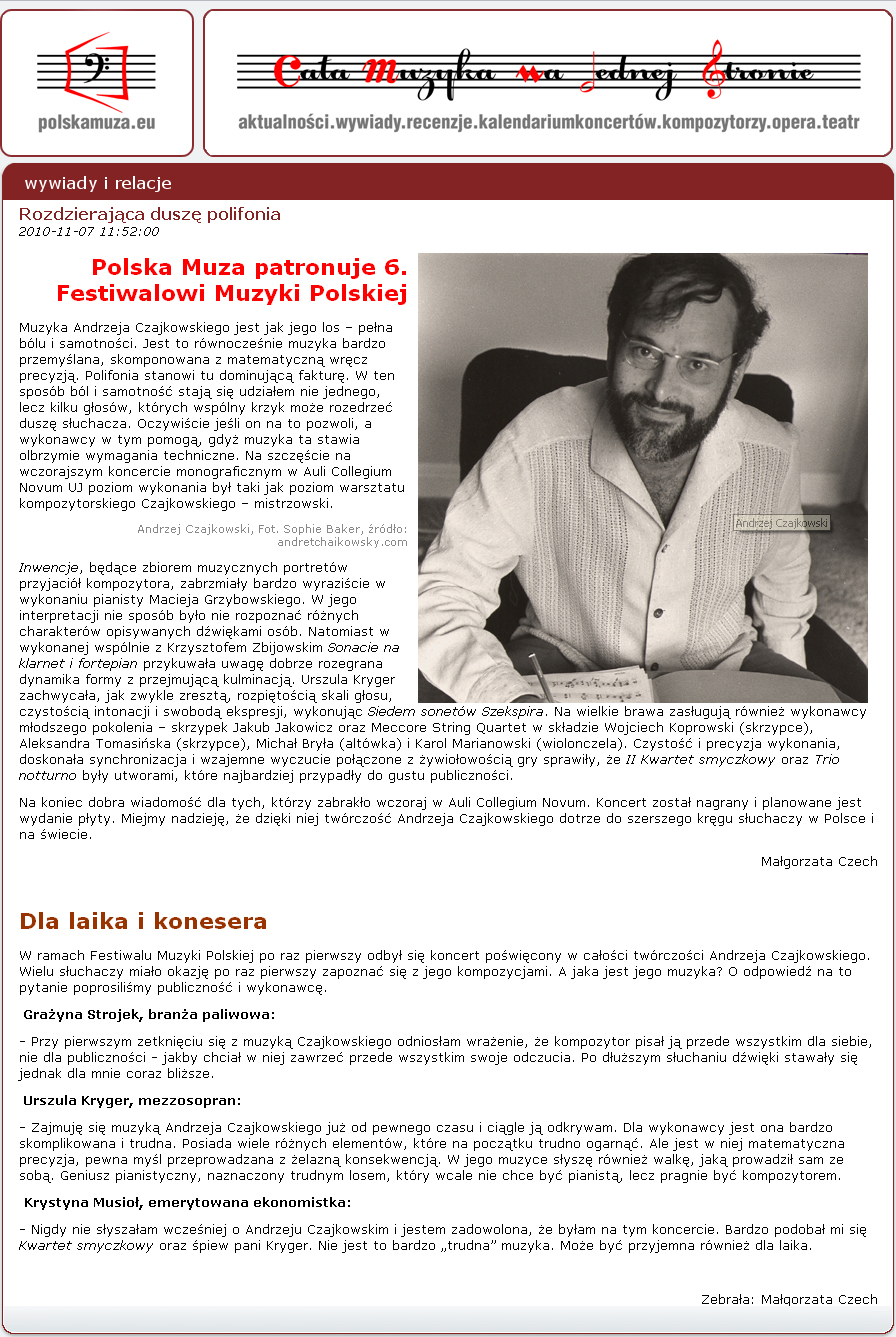
article (November, 2010) by Malgorzata Czech for a concert in
tribute to
André Tchaikowsky - Page 1
(in Polish)
www.polskamuza.eu
review (November, 2010) by Malgorzata Czech for a concert in
tribute to
André Tchaikowsky - Page 2
(in Polish)
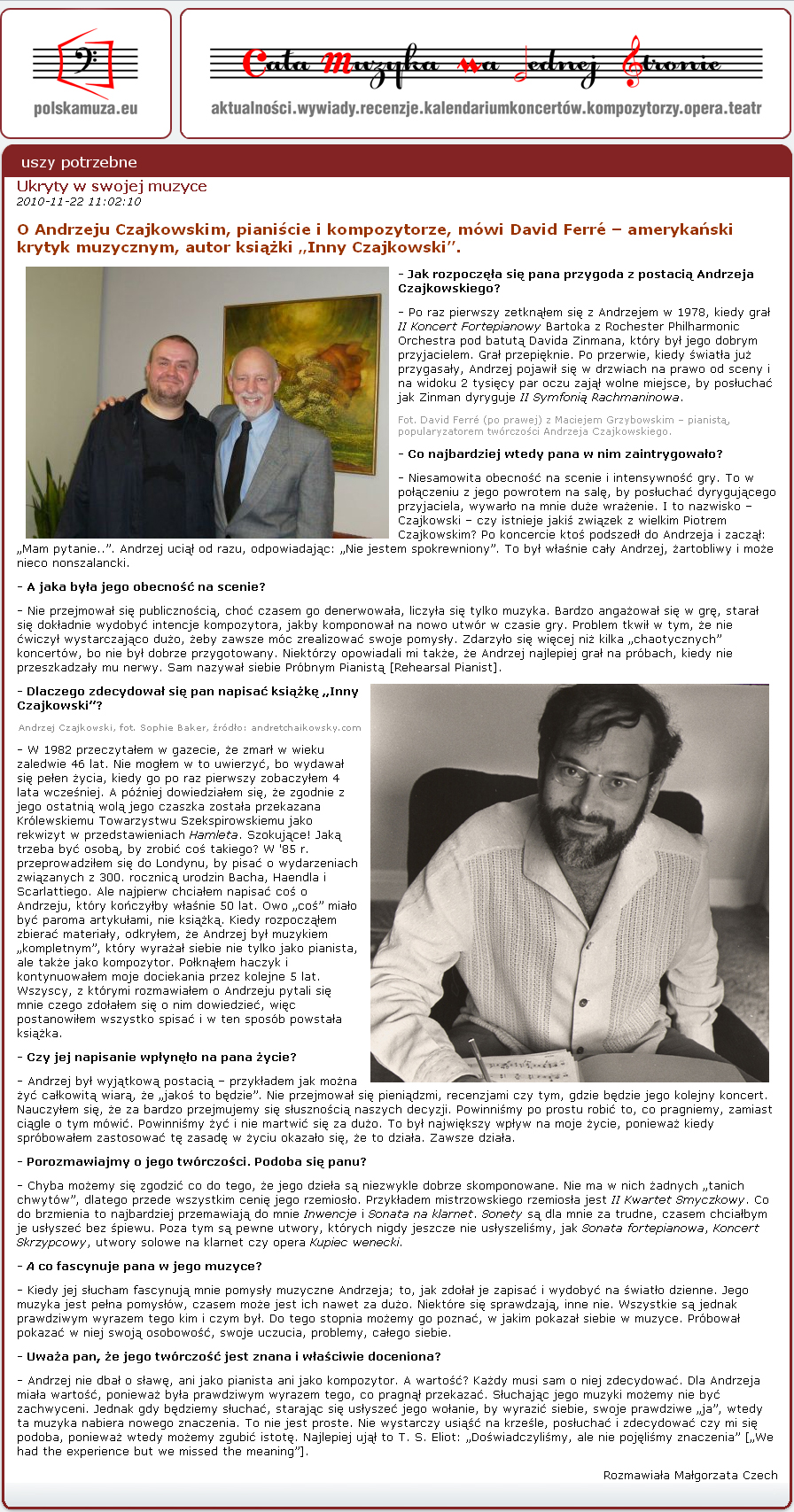
www.polskamuza.eu
interview (November, 2010) by Malgorzata Czech for a concert
in tribute to
André Tchaikowsky - Page 3
(in Polish)
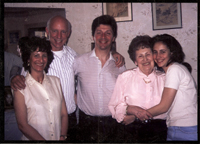
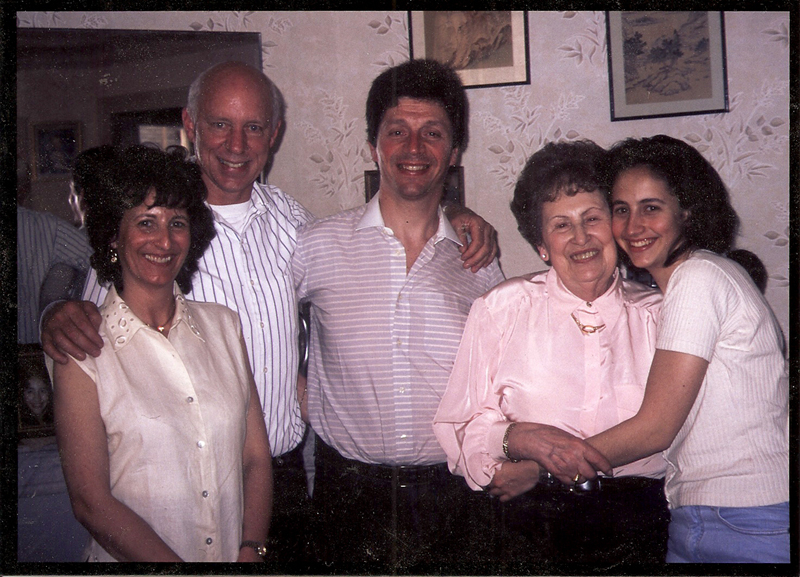
Krauthammer family (1992)
left-to-right Katherine Krauthammer-Vogt (André's 1/2 sister),
David Ferré, Michel Vogt (Katherine's husband), Mrs. Eugenie
Krauthammer (André's step-mother), Natalie Vogt (daughter of
Katherine and Michel)

Hear
Peter Kingston tell story of the bum at the keyboard
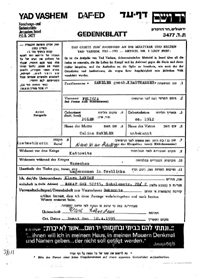
Yad Vashem (Holocaust Museum in Israel) report of the death of André's
mother, Felicja Sandler - The respondent Klara LANDAU taught dance in
Ramat Gan as the "Klara Landau-Bondy Ballet Studio" before
her own death
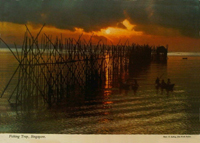
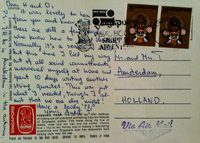
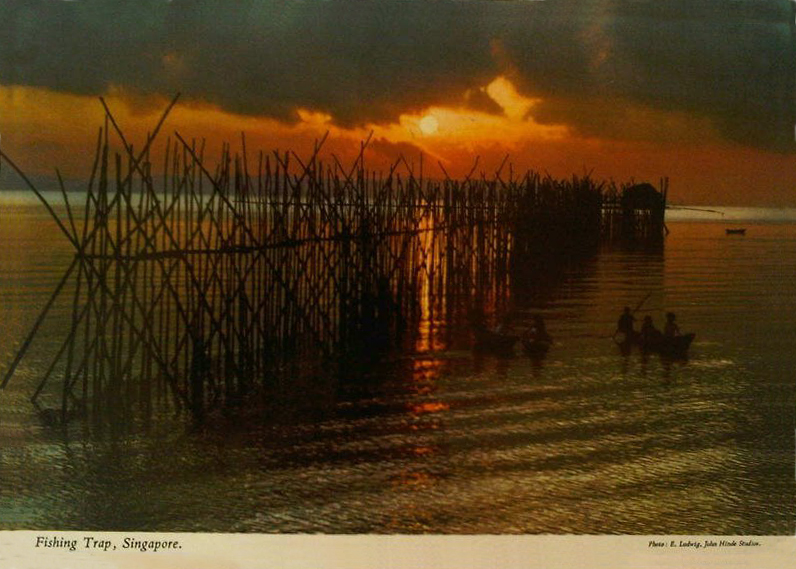
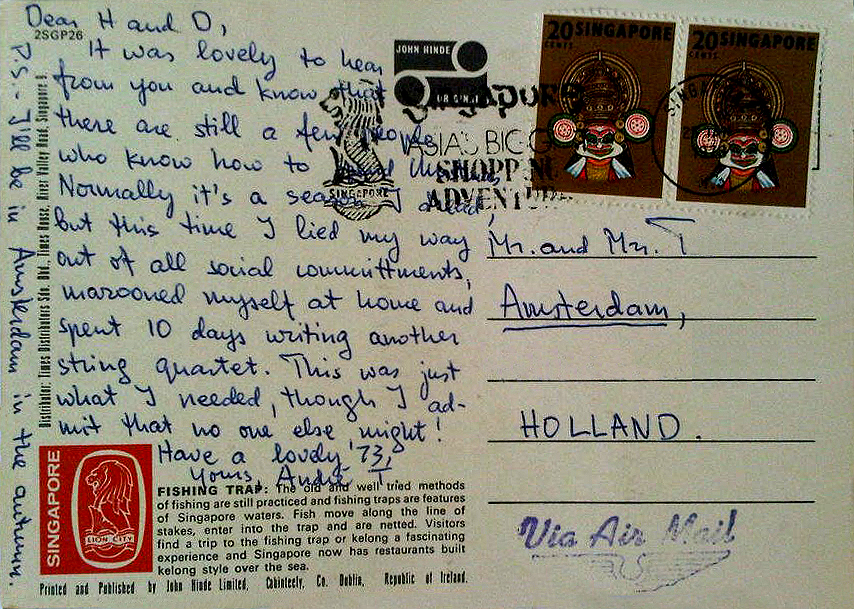
Postcard
to friends in Amsterdam
(January 1973)
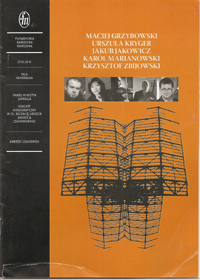
Front Cover
Inside Front
Cover
Page 1
Page 2
Page 3
Page 4
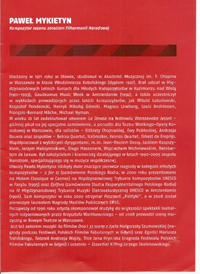
Page 5
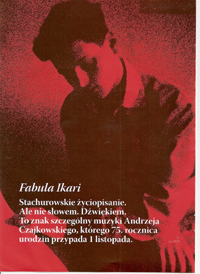
Page 6
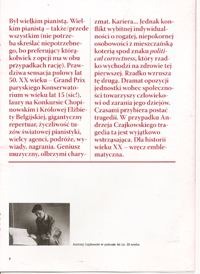
Page 7
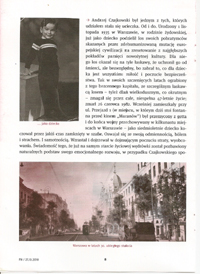
Page 8
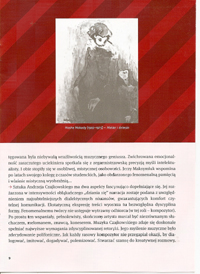
Page 9
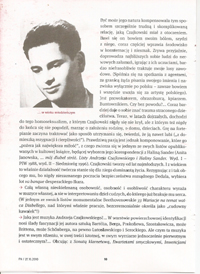
Page 10
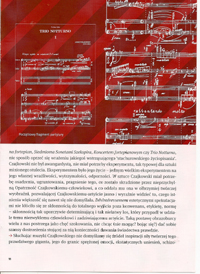
Page 11
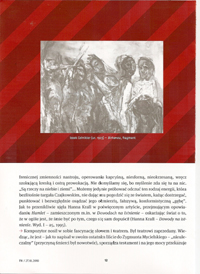
Page 12
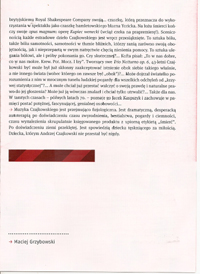
Page 13
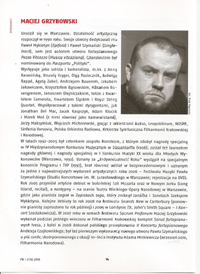
Page 14
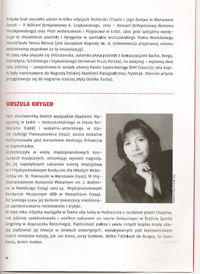
Page 15
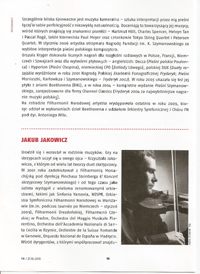
Page 16
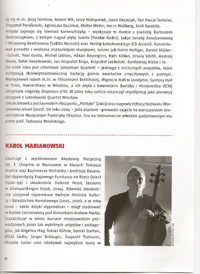
Page 17
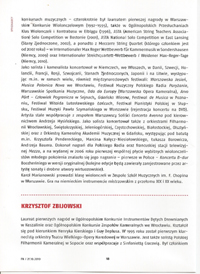
Page 18
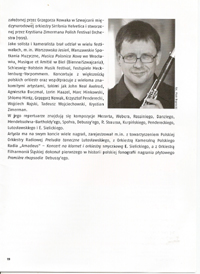
Page 19
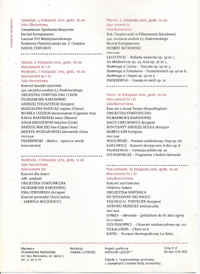
Page 20
Inside Back
Cover
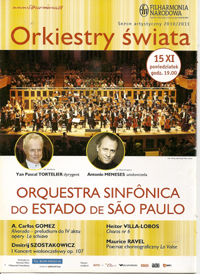
Back Cover
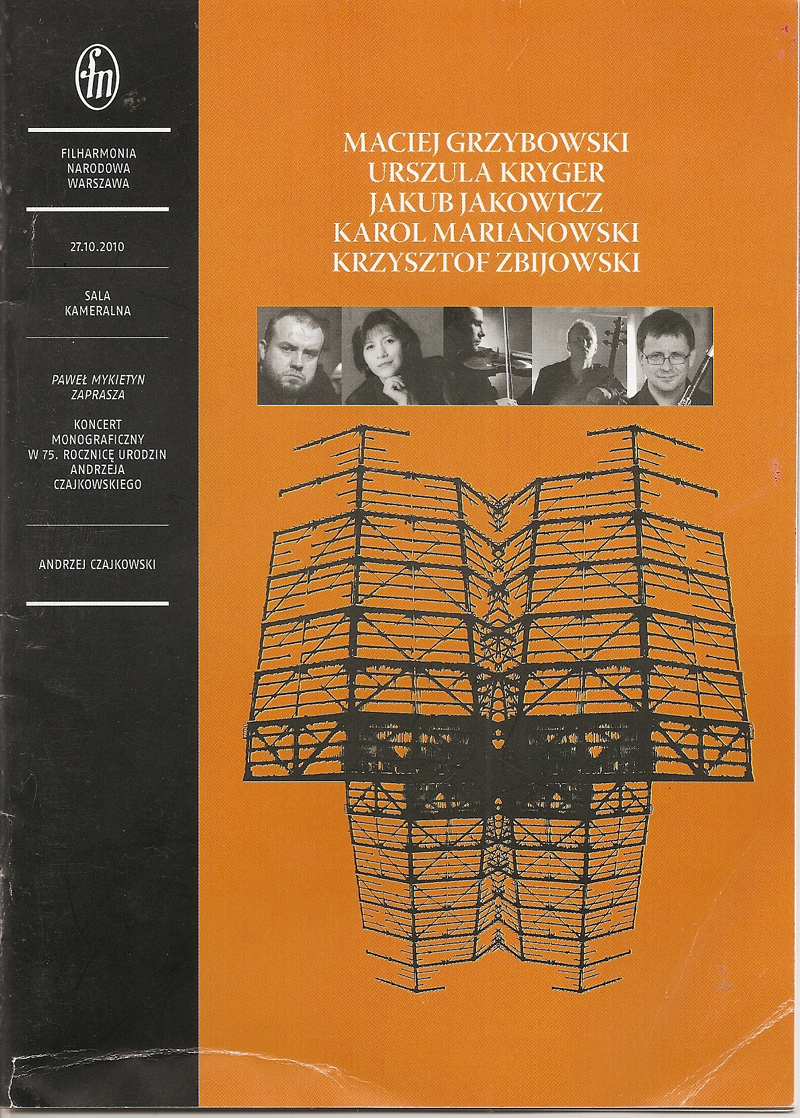
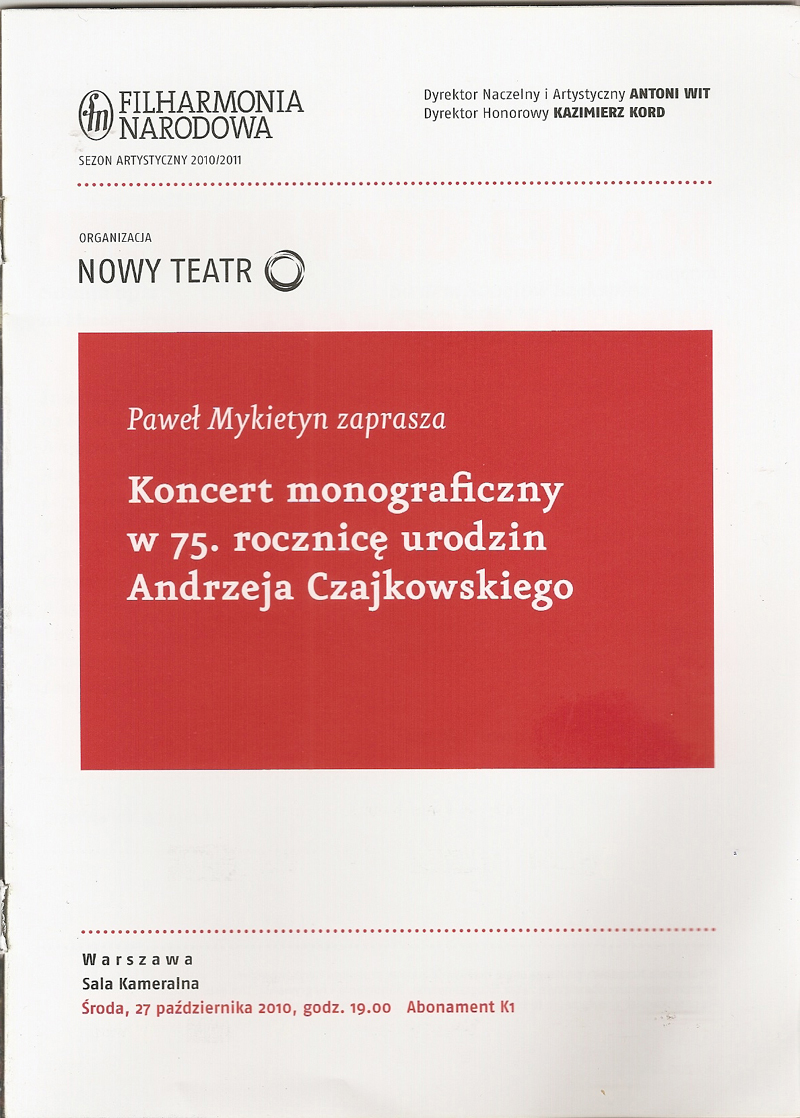
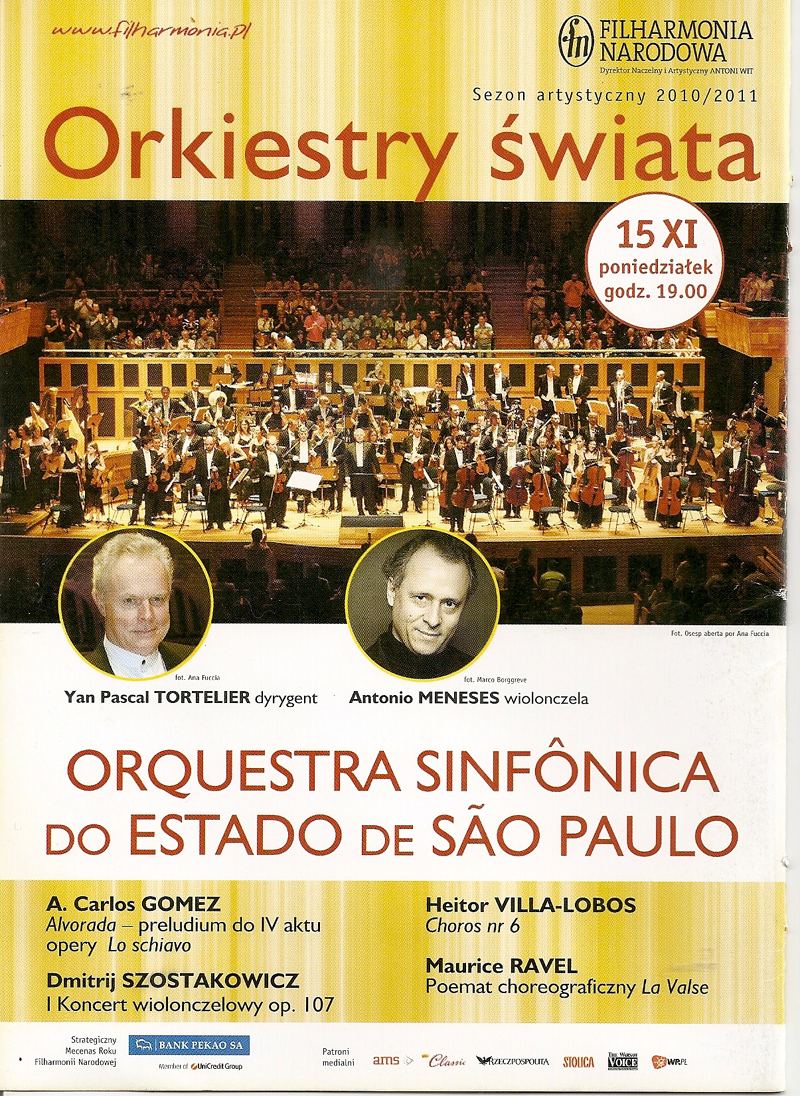
Program
from the Warsaw
Monographic Concert of
Andrzej Czajkowski Music (2010)
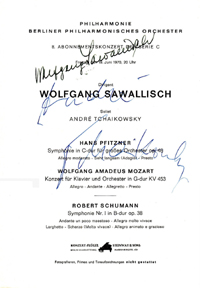
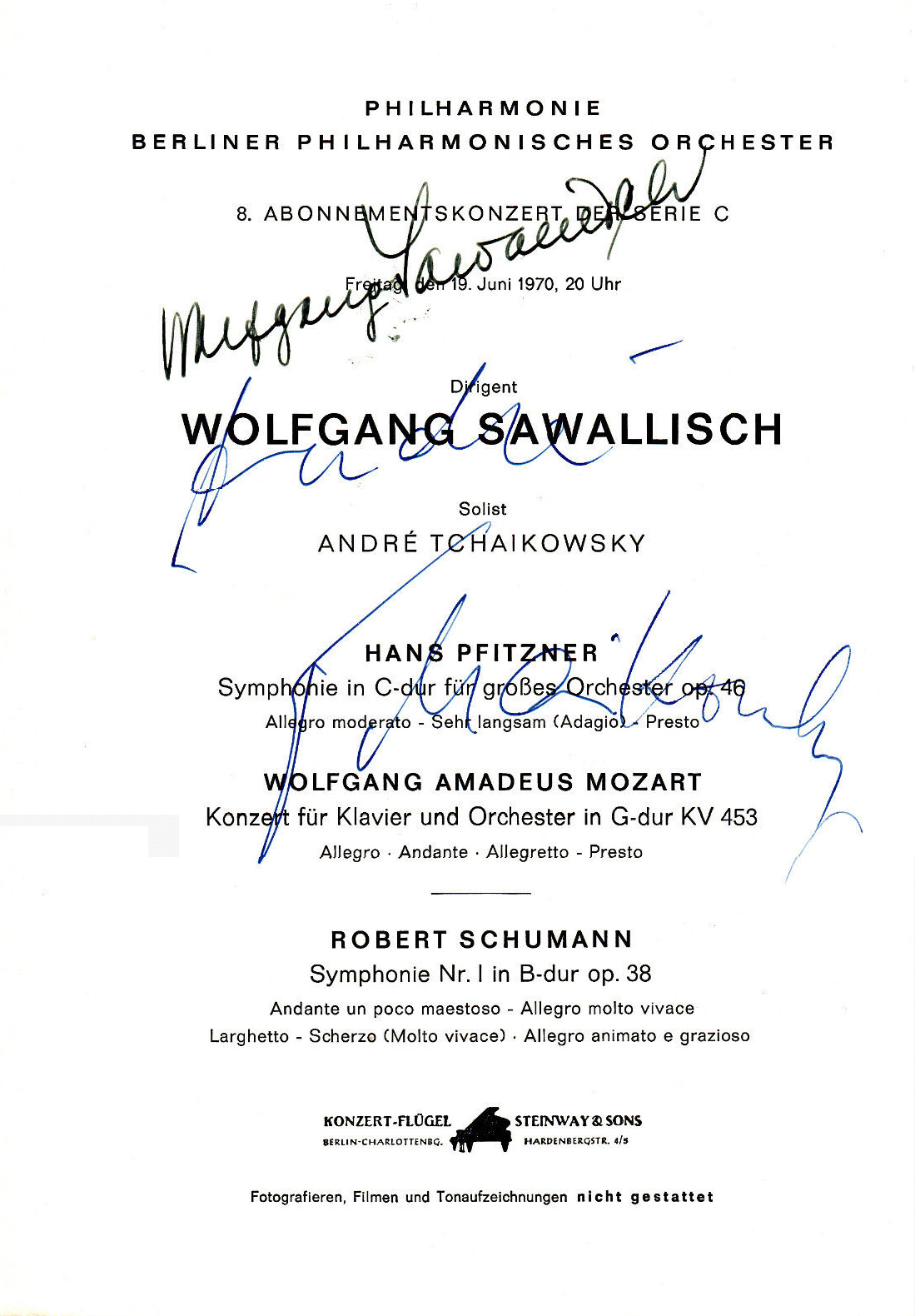
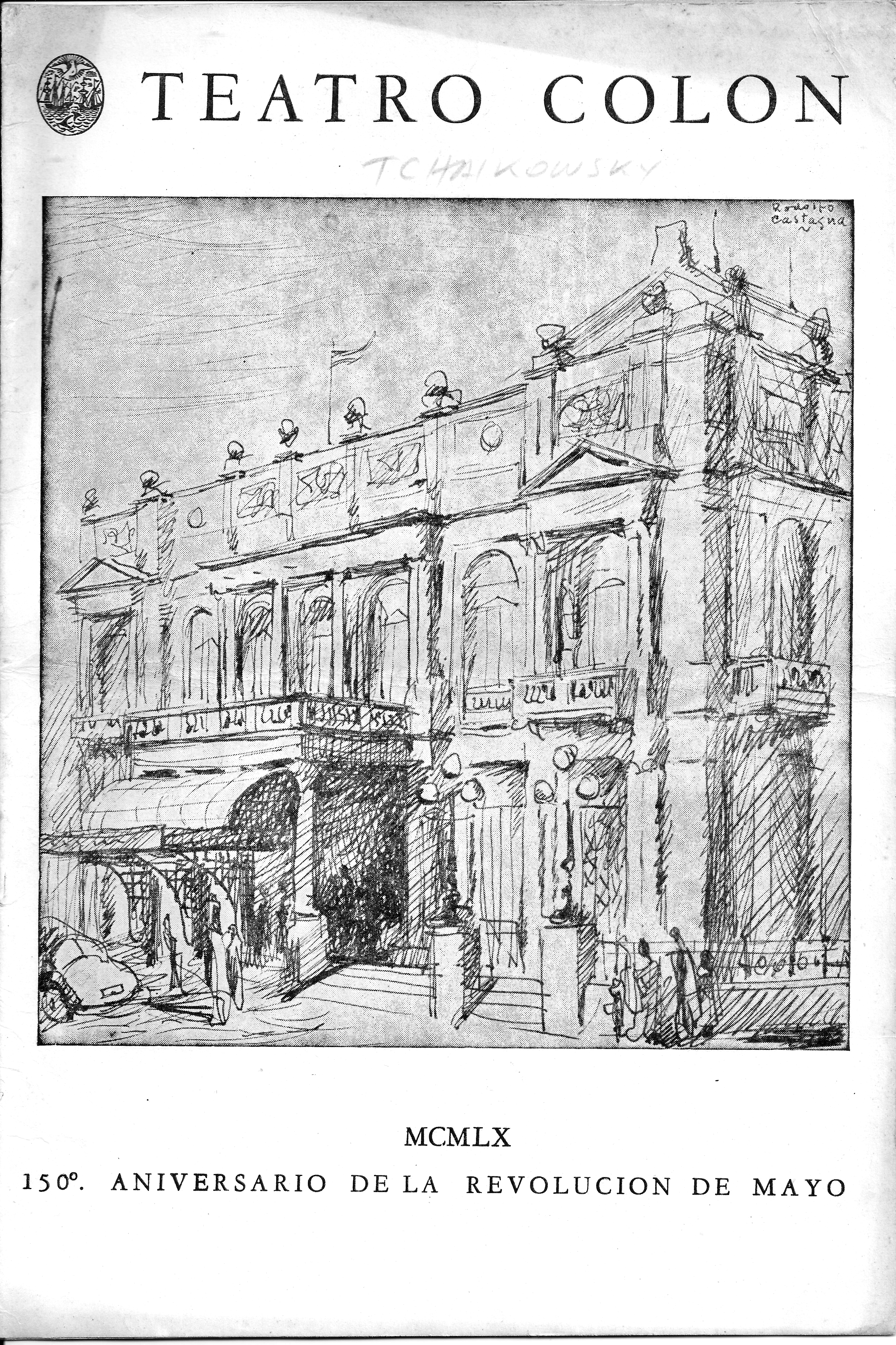
Autographed Concert Program
from June 1970
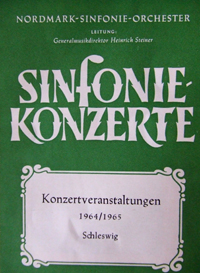
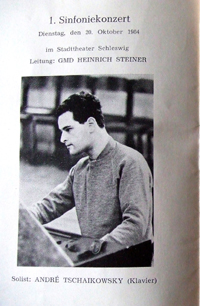
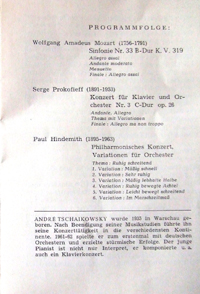
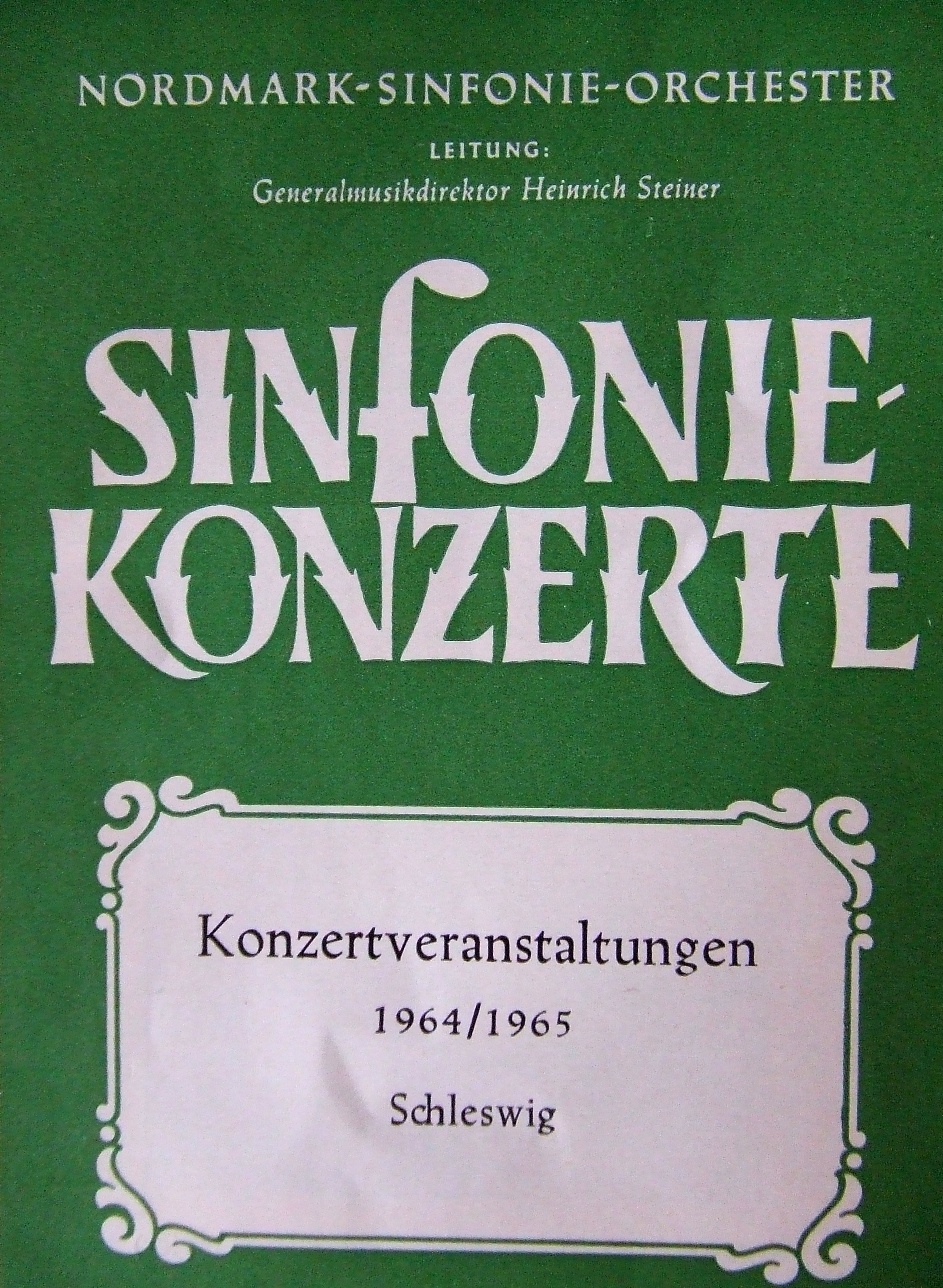
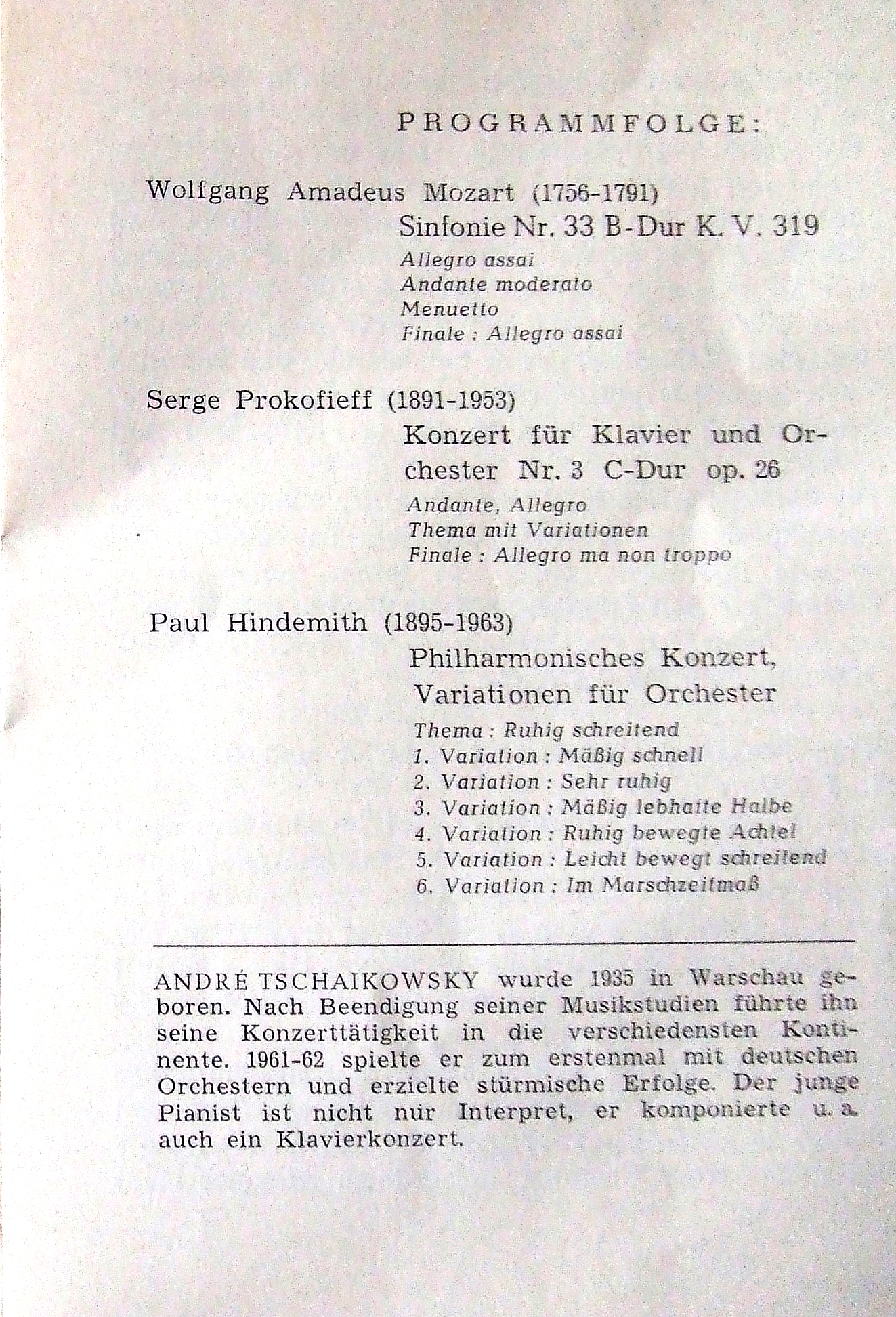
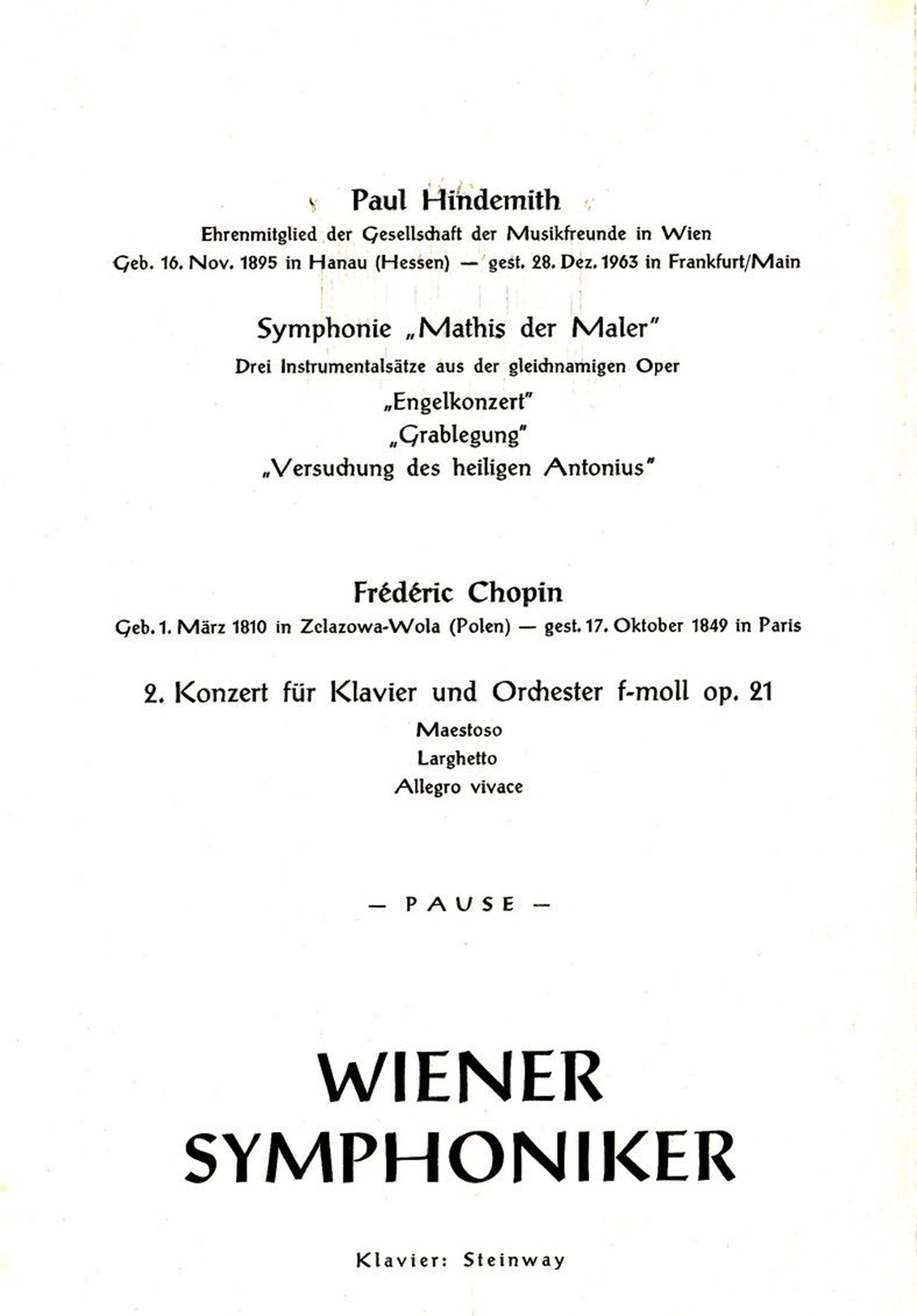
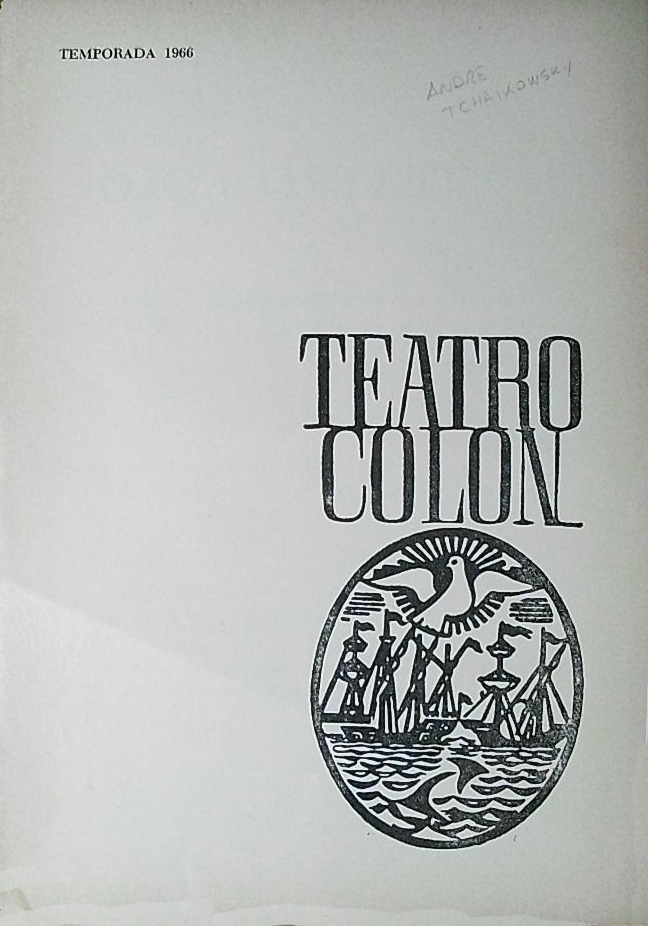
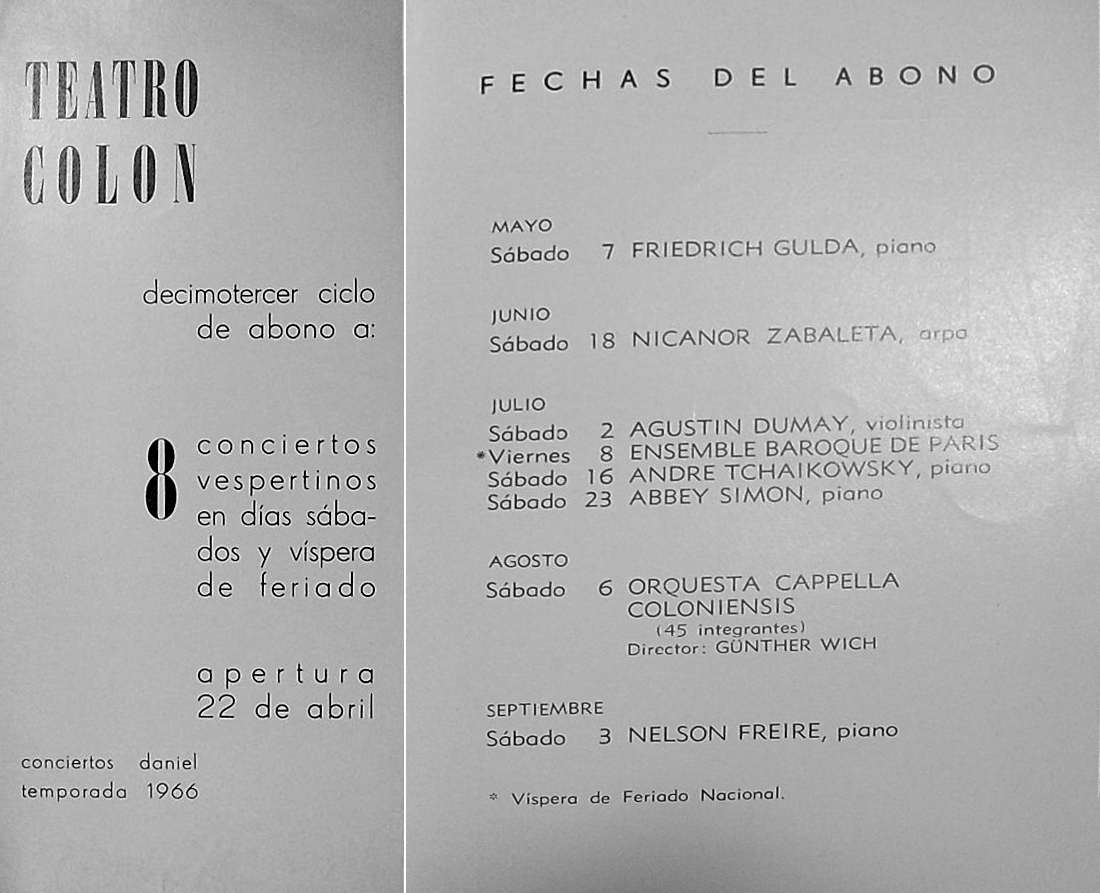
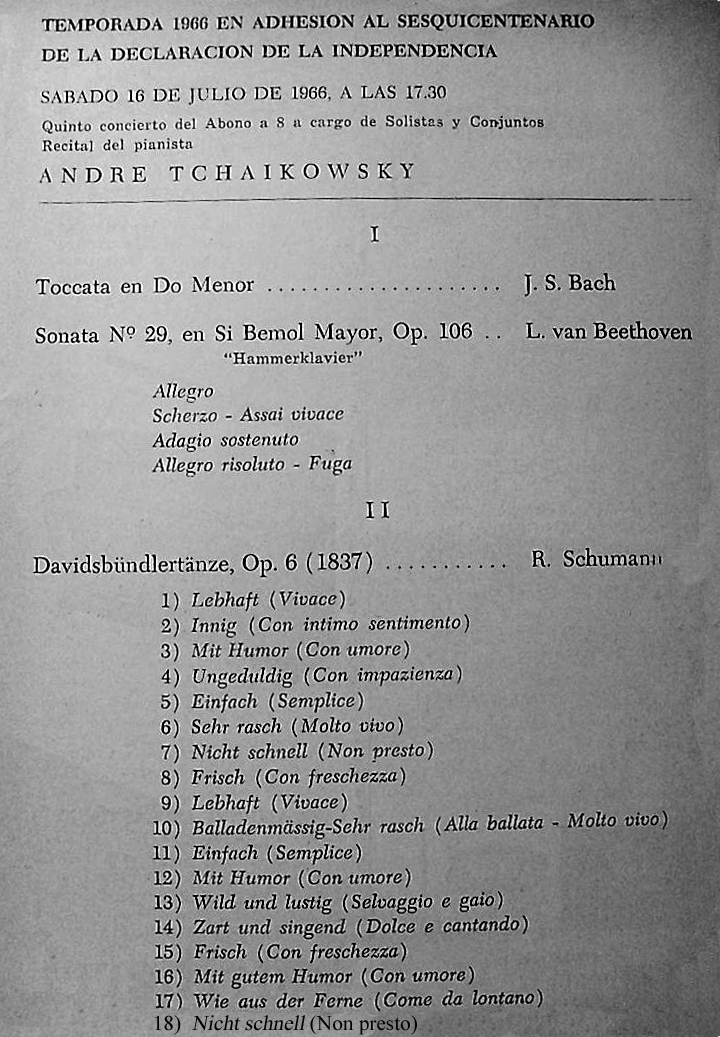
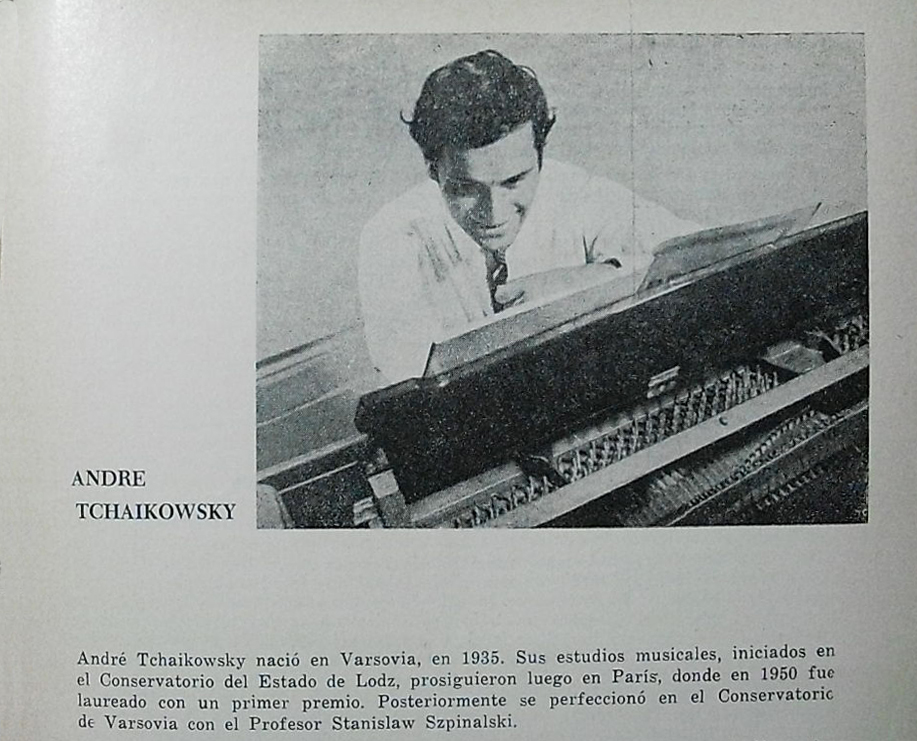
Concert Program
from October 1964
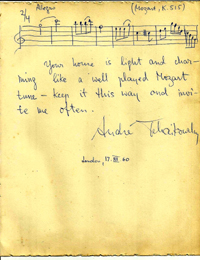
Dec. 17, 1960 note written by André that references the last
movement of the Mozart Quintet K.515 (4th movement) (the purpose of
the note is unknown)
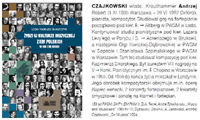
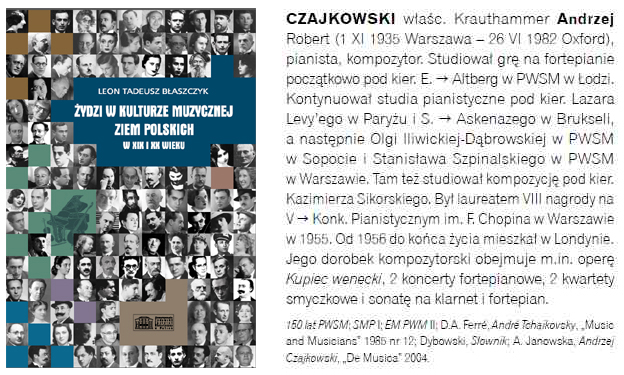
Entry in
the "Glossary of Jewish Composers of Music in 19th and 20th Century
Poland" (Nov. 2014)
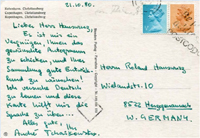
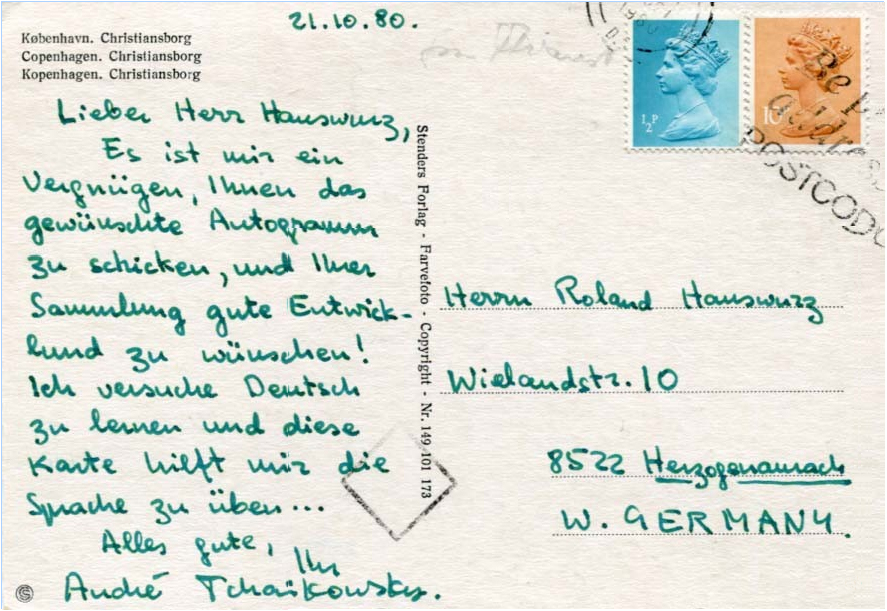
André
responds to an autograph request, writing in German
(Dear Hauswurz, It is my pleasure to send you the desired autograph,
and to wish your collection good development! I'm trying to learn German
and this card helps me to practice the language ... All the best, yours,
Andre Tchaikowsky)
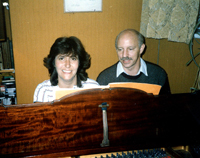
Pianist
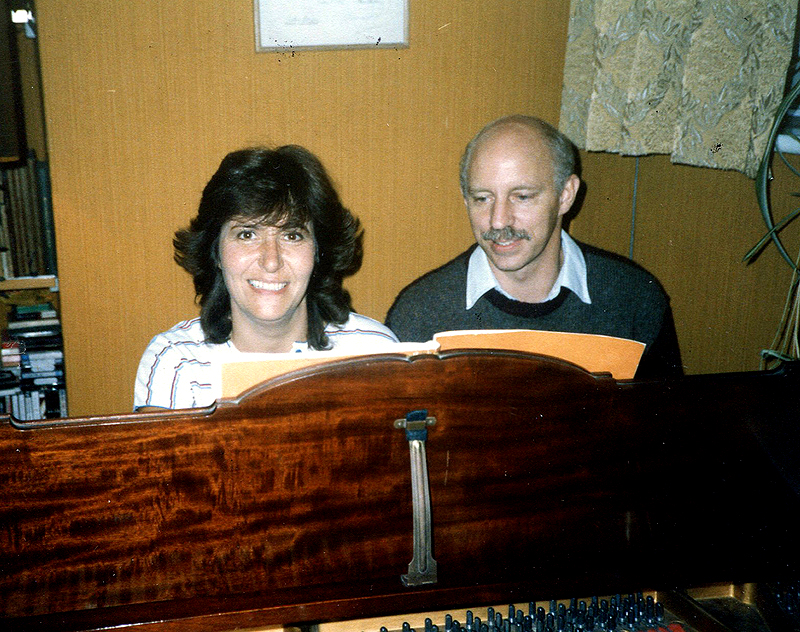
Norma Fisher and webmaster David A. Ferré (1986)
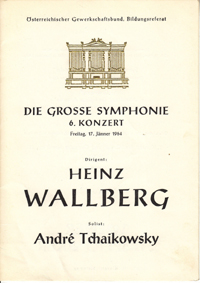
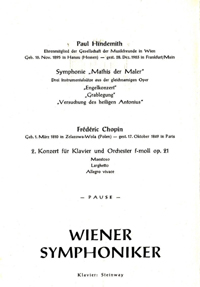
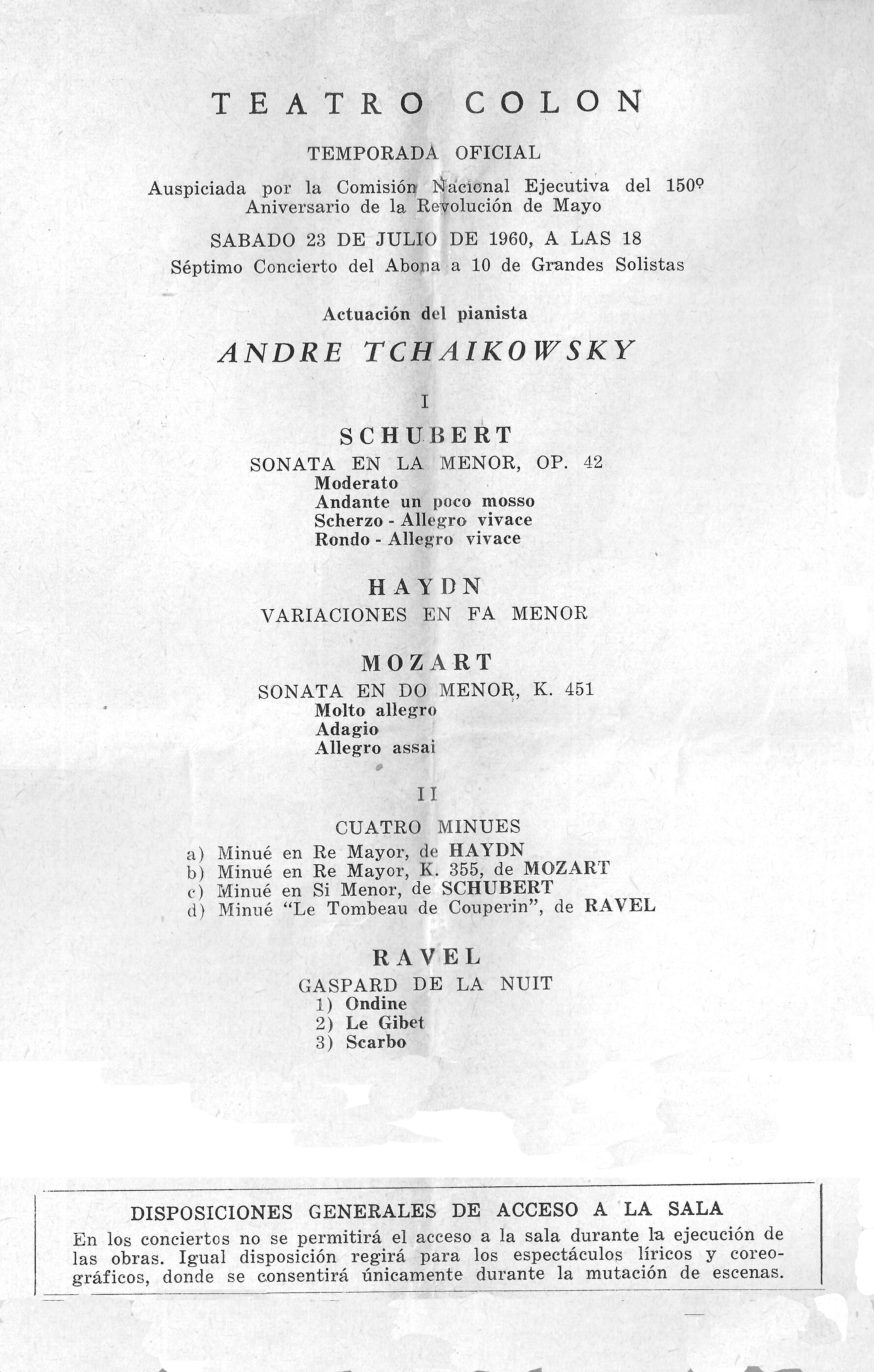
Music Program
(1964)
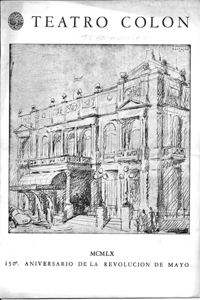
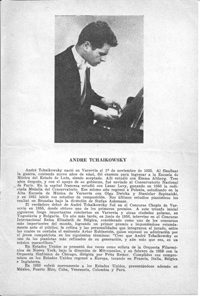
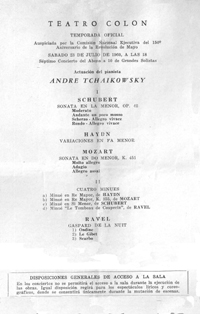
Music Program (1960)
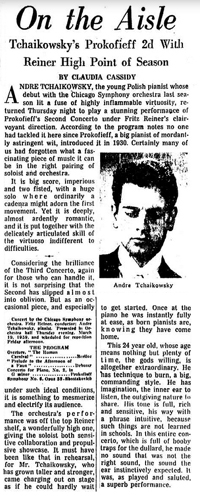
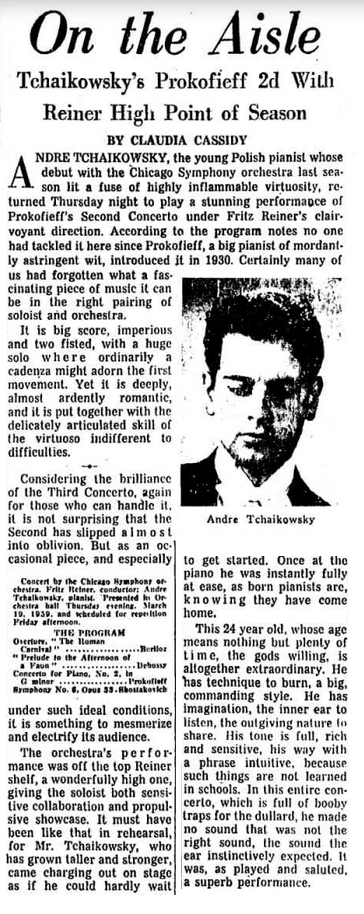
Concert Review (1958)
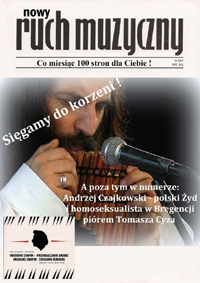
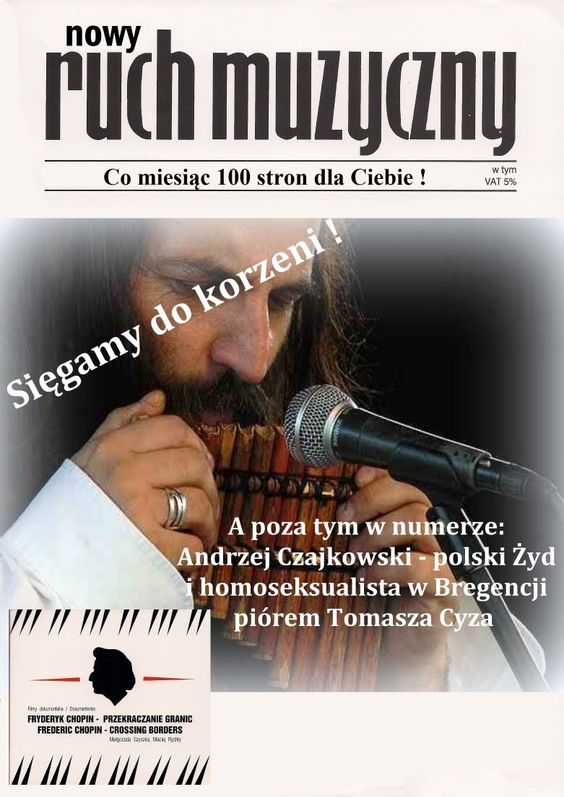
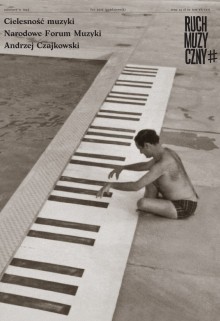
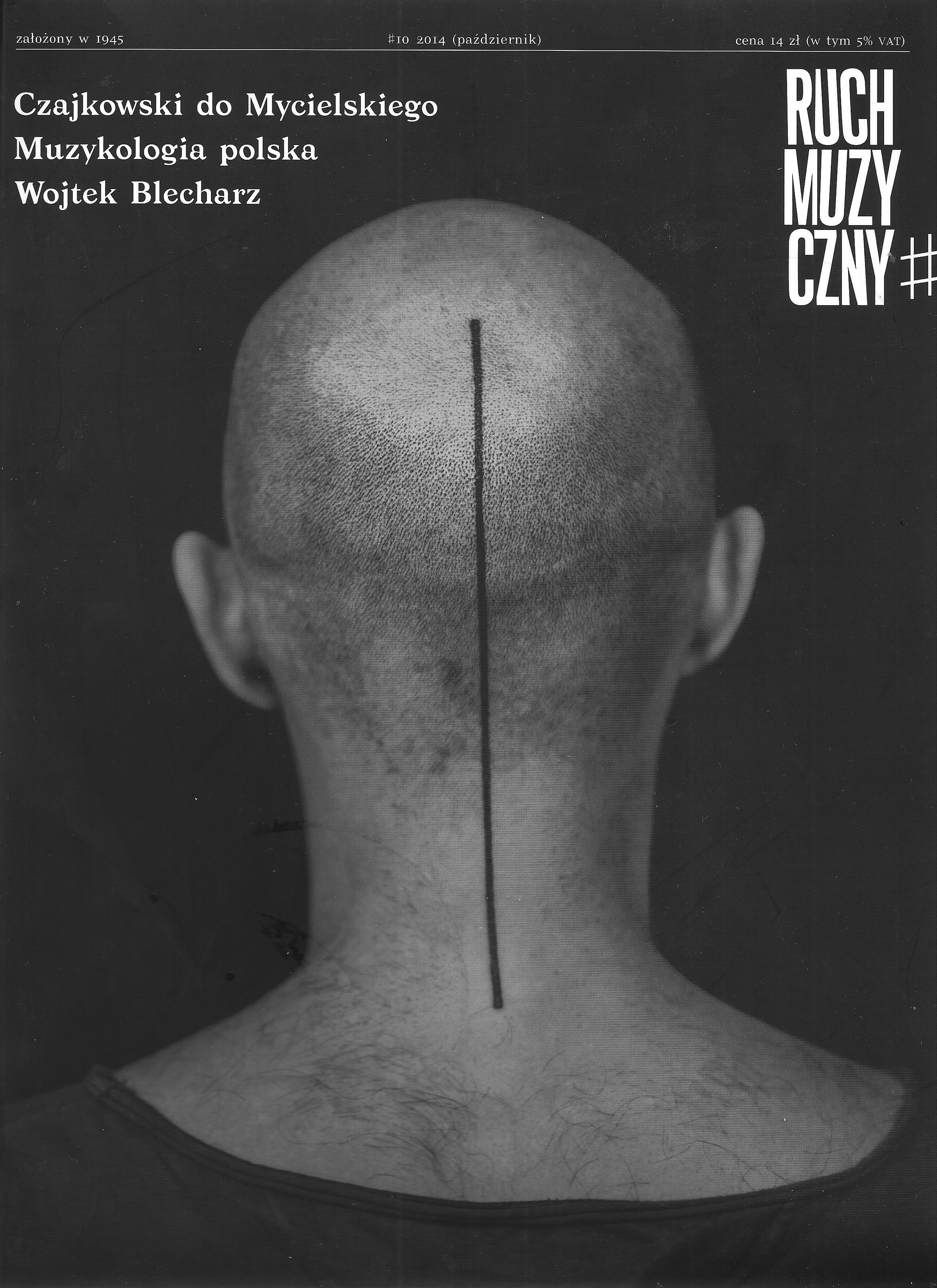
Ruch Muzyczny
(Musical Movement) magazine advertising. The cover reads, "In this
issue: Andrzej Czajkowski - a Polish Jew and a homosexual in Bregenz
written by Tomas Cyz"
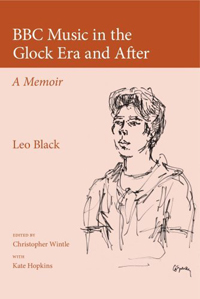
Quote: André
was definitely one of the great eccentrics; my favourite saying of his
concerned the “improving machine,” which he insisted the BBC
must have somewhere on the premises - “I come and make these awful
recordings, you put them in the improving machine for a few months and
they come out sounding wonderful!” The other great André-ism
should ring a bell with any honest pianist confronted by a passage marked
“espr.”: “I did not play it very well but I pulled a
very expressive face.”
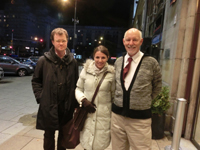
Aleksander
Laskowski, Dr. Anastasia Belina, David A. Ferré (webmaster) (2012)
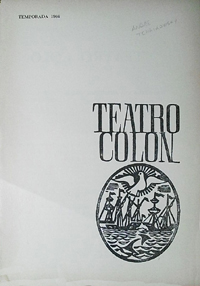
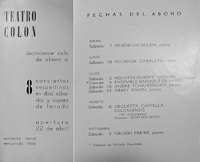
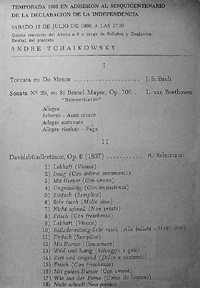
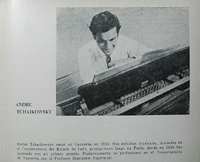
South American
Tour (1960s)
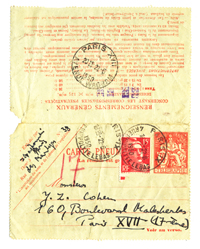
(1950)
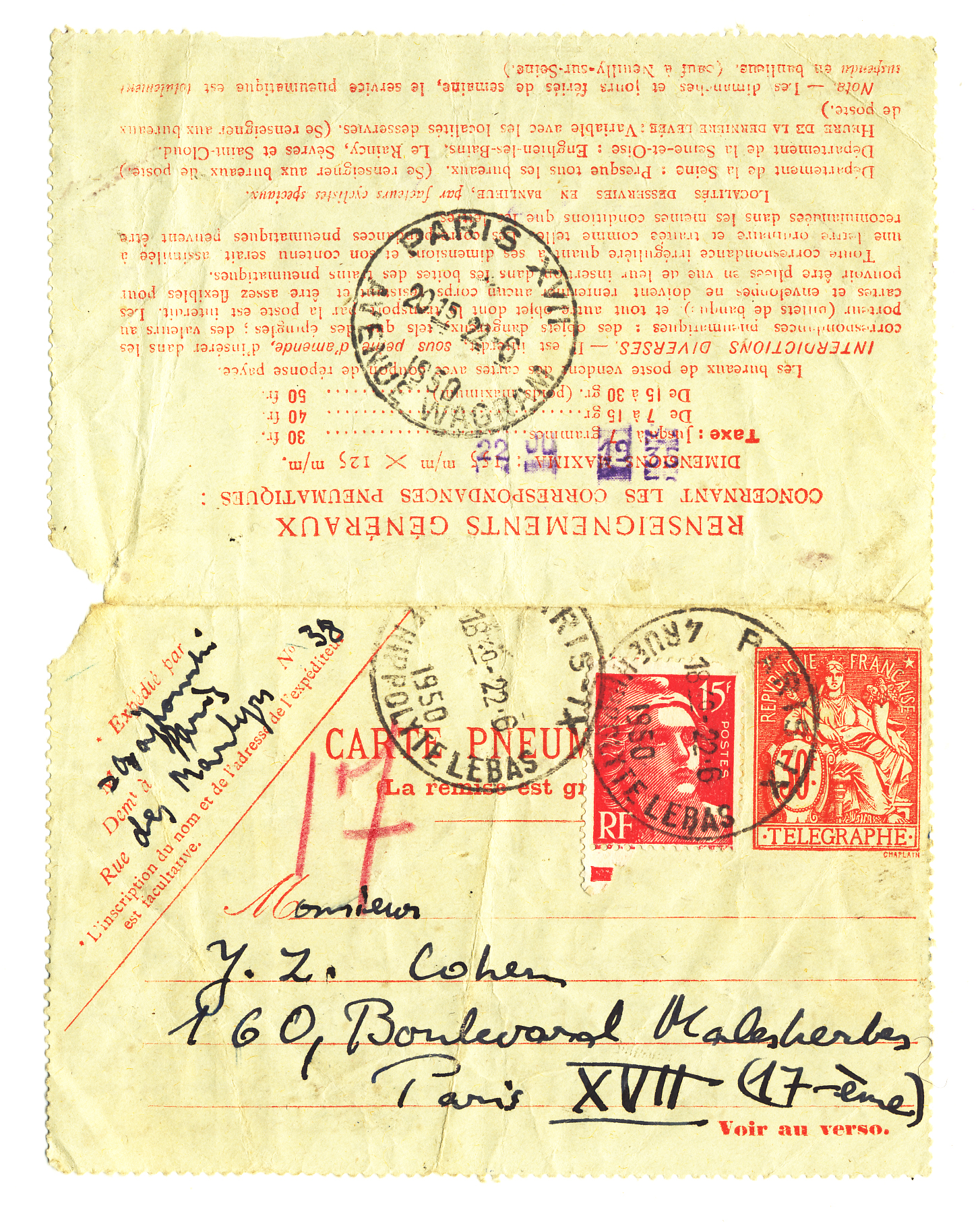
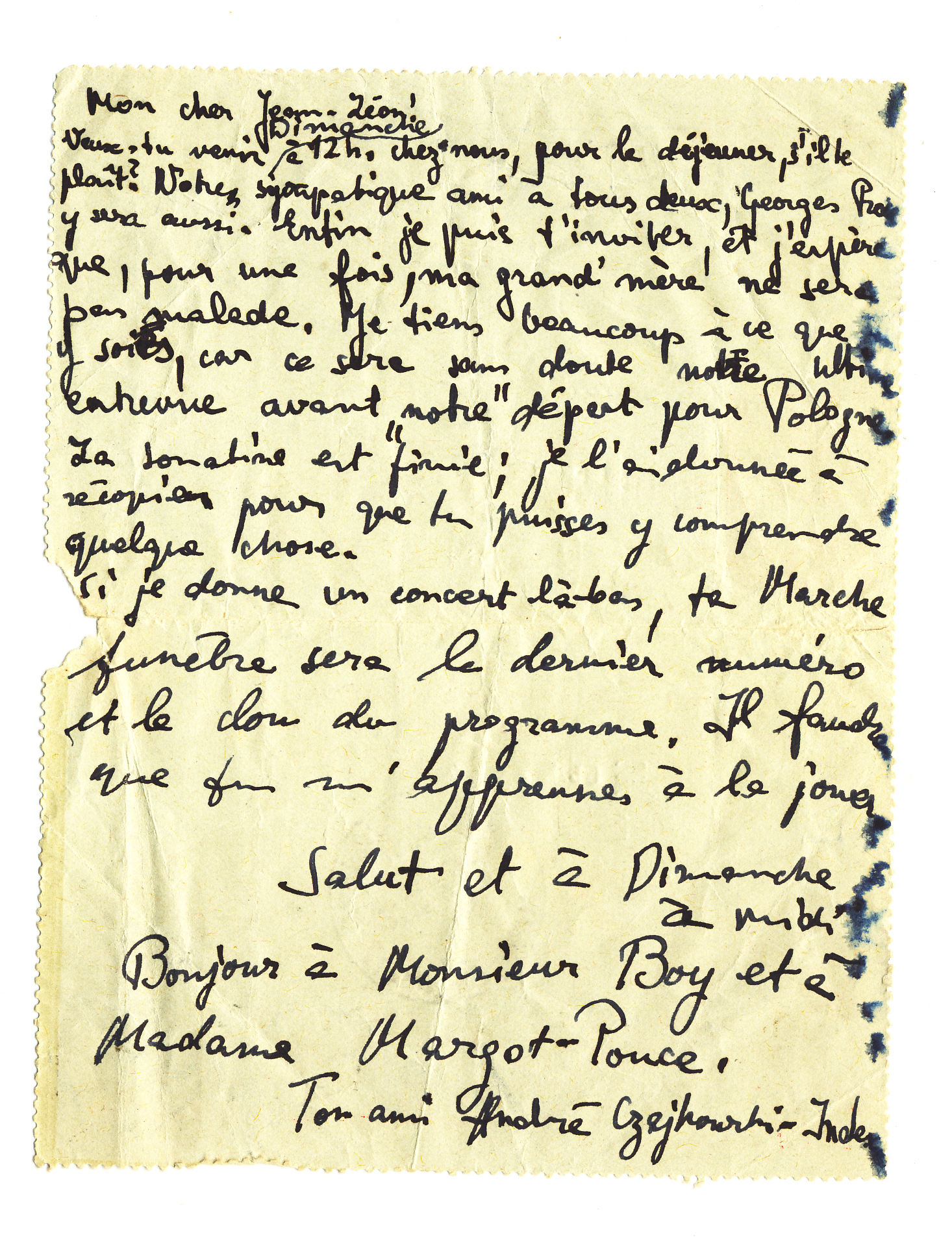
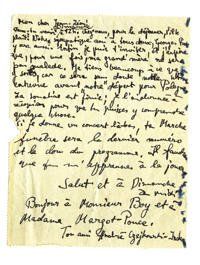
Letter from
Andrzej Czajkowski to
Jean-Léon Cohen
(A farewell letter with Andrzej returning to Poland)
My
dear Jean- Léon,
Would
you like to come on Sunday at midday to our place for lunch? Our lovely
friend George P(?) will be there also. Finally I can invite you, and
I hope that, for once, my grandmother will not be ill. I hope very much
that it will happen, because without a doubt this will be our last meeting
before our departure to Poland. The Sonatina is finished; I will find
something else to go with it. If I give a concert there, Marche Funebre
will be the last number in the programme. I will need to learn it.
Greetings
and until Sunday at midday.
Hello
from Monsieur Boy and Madame Margot-Pouce.
Your
friend,
André Czajkowski - Jew
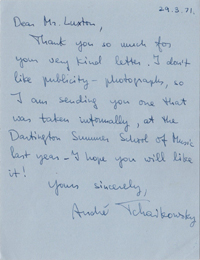
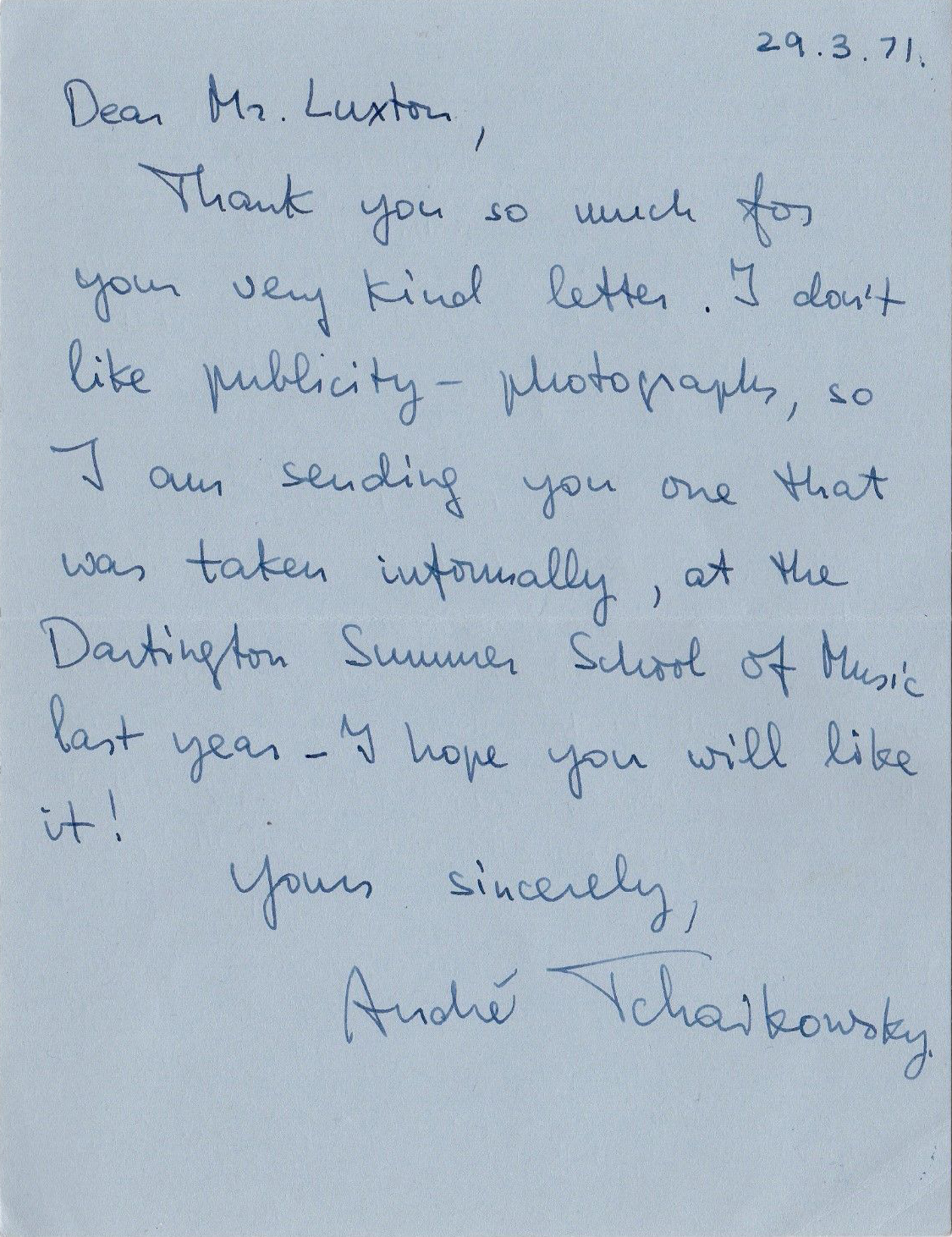
André letter to a fan (1971)
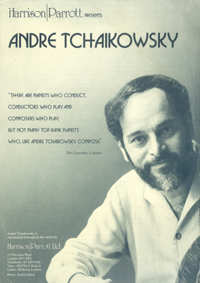
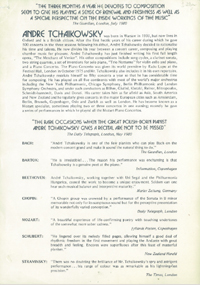
Harrison|Parrott
Promo (1976)
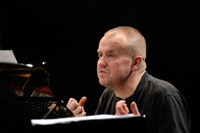
Polish pianist
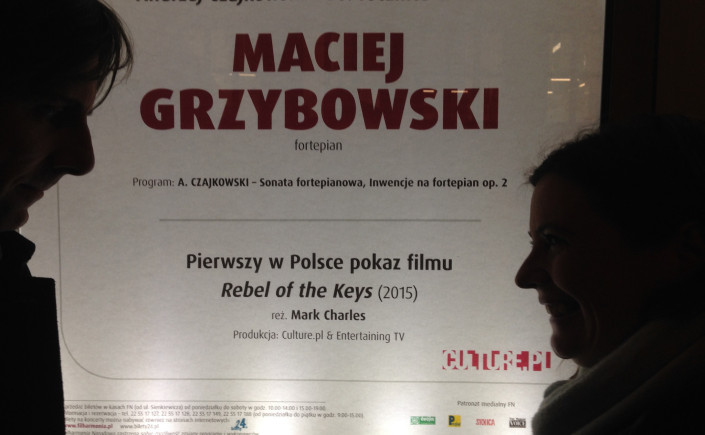
Maciej Grzybowski
(plays everything written by
Andre Tchaikowsky)
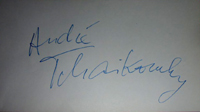
André
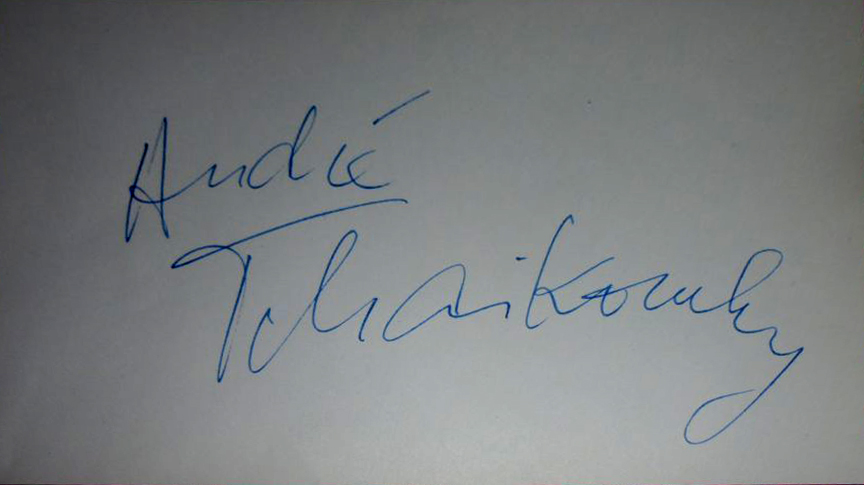
Autograph (date unknown)
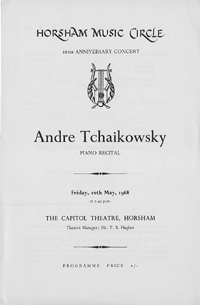
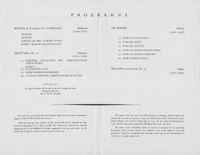
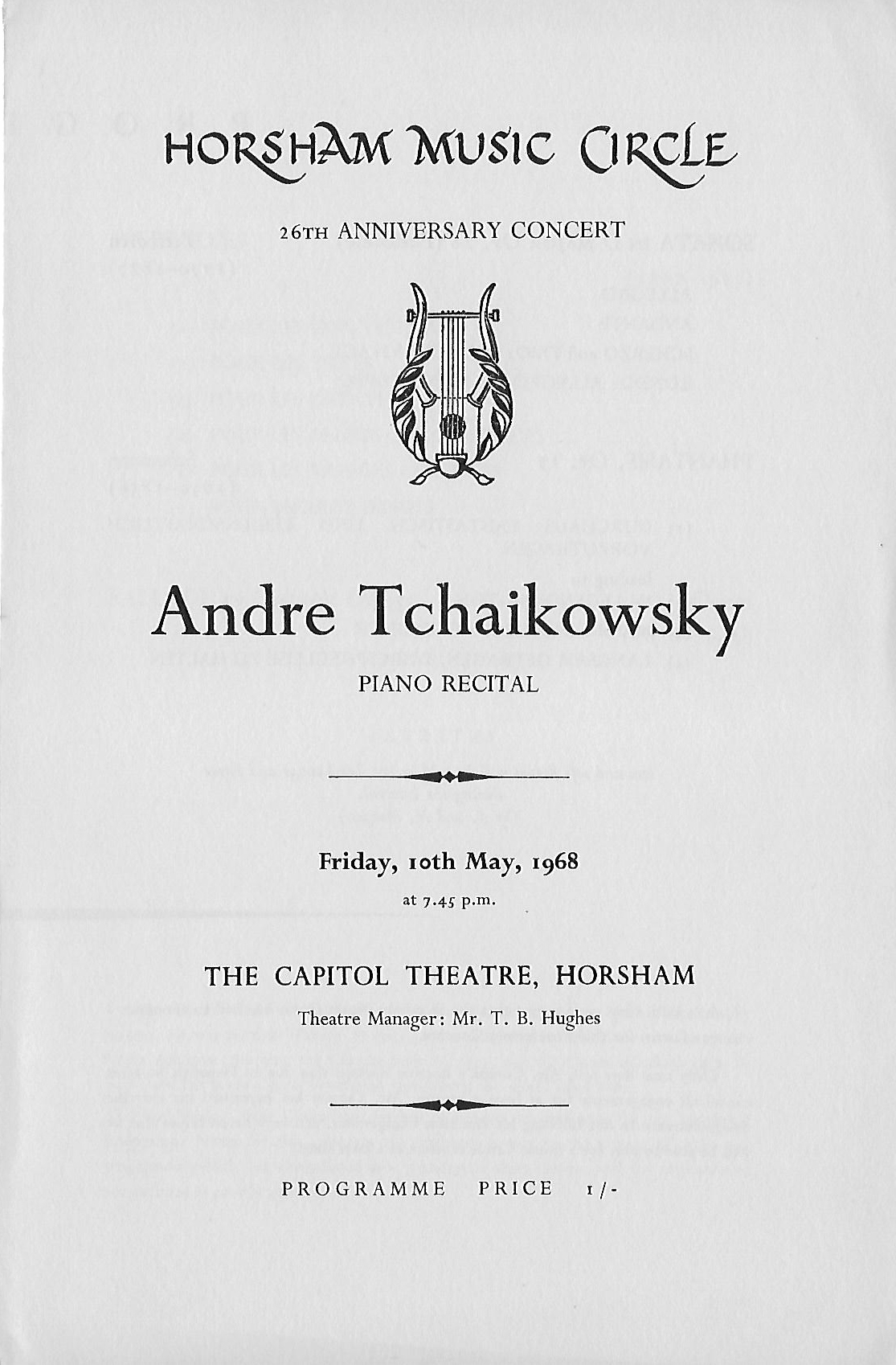
Horsham Music Circle Recital Program - May 10, 1968
(André subs for Clifford Curzon)
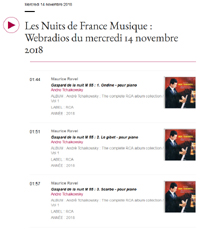
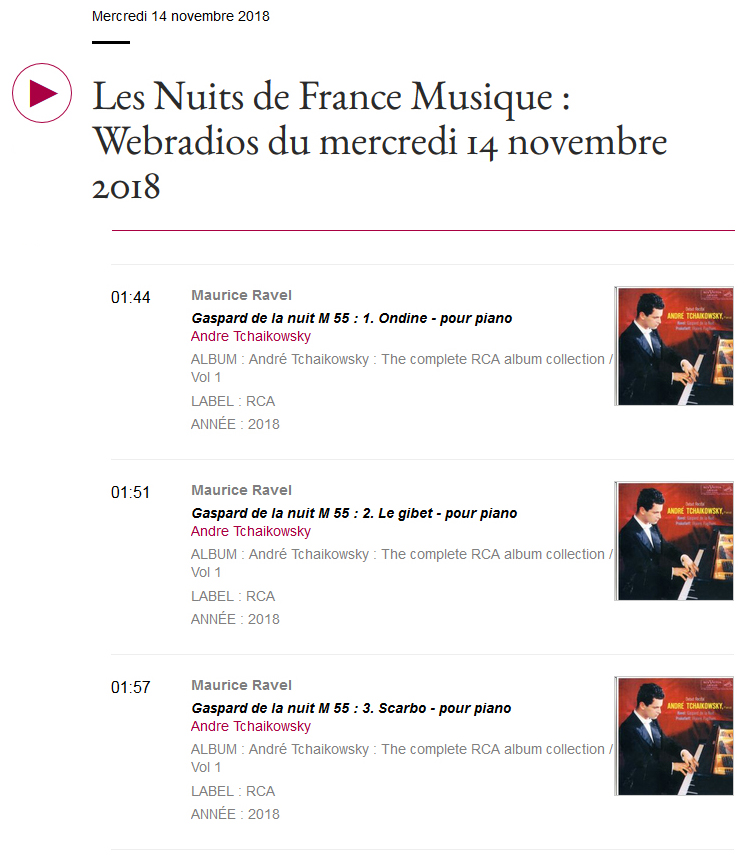
French Radio
Broadcasts (2018)
Radio
Show 1 of 5
Radio
Show 2 of 5
Radio
Show 3 of 5
Radio
Show 4 of 5
Radio
Show 5 of 5

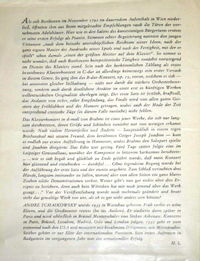
Austrian
Concerto Concert
September 2, 1964
Conductor: Hans Schneider
Beethoven Concerto No. 1
Brahms Concerto No. 2
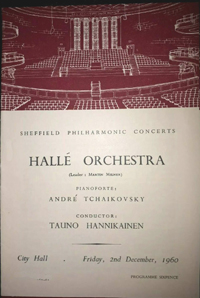
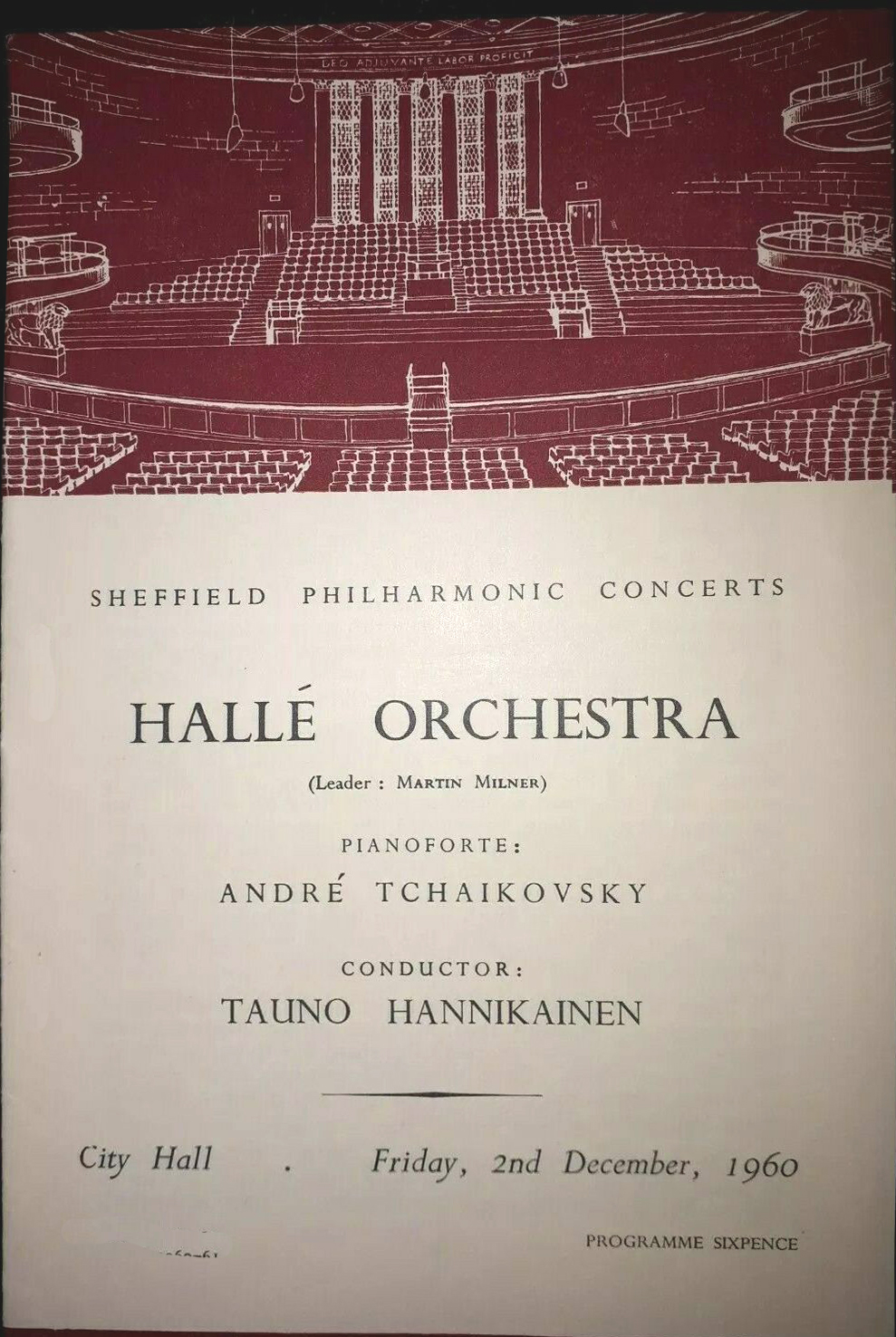
Hallé
Orchestra
December 2, 1960
Conductor - Tauno Hannikainen
Piano - Andre Tchaikowsky
Rachmaninoff - Rhapsody on a Theme of Paganini
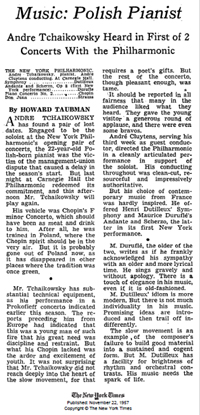
2nd Concert
in New York City (1957)
|
Miscellaneous
This
page lists various miscellaneous items related to the life of André
Tchaikowsky, including radio programs, concerts dedicated to André's
compositions, magazine articles, books, the skull
story (opens new window) and so forth. Each item is listed below
with the newest item first. In the left column are individual items
such as the Yad Vashem (Holocaust Museum in Israel) report of the death
of André's mother, Felicja Sandler [Rappaport] and some photographs.
|
Item
|
Date
|
Bookmark
|
Publication
- Analysis in André Tchaikowsky's [compositions]
|
August
2019 |
Click
Here |
| Radio
- Remembering André Tchaikowsky Pianist, KZSU 90.1 FM |
June
2018 |
Click
Here |
| Film
- Rebel of
the Keys, POLIN Museum, Warsaw, Poland |
Nov.
2017 |
Click
Here |
| Event
- Terry Harrison Memorial Concert |
Oct.
2017 |
Click
Here |
| Award
- David Pountney wins award for The Merchant of Venice opera |
June
2017 |
Click
Here |
| Lecture
- André Tchaikowsky, Polish, British, or Cosmopolitan? |
May
2017 |
Click
Here |
| Lecture
- André Tchaikowsky, Challenges for a Biographer |
May
2017 |
Click
Here |
| Film
- Rebel of the
Keys, New Zealand Showings |
Mar./Apr.
2017 |
Click
Here |
| Event
- Film (Rebel
of the Keys), Music (Sonnets), More... |
Mar.
2017 |
Click
Here |
| Film
- Rebel of
the Keys at JW3, London |
Feb.
2017 |
Click
Here |
| Film
- Rebel of
the Keys at JW3, London |
July
2016 |
Click
Here |
| Radio
- Andrzej Czajkowski, 1955 Chopin Competition Remembered |
April
2016 |
Click
Here |
| Concert/Film
- Happy Birthday André Tchaikowsky, 80 years old |
Nov.
2015 |
Click
Here |
| Concert
- Happy Birthday André Tchaikowsky, 80 years old |
Nov.
2015 |
Click
Here |
| Article
- Ruch Muzyczny, Andrzej Czajkowski Retrospective |
October
2015 |
Click
Here |
| Article
-Jewish Chronicle "Demons..." by Gloria Tessler |
June
2015 |
Click
Here |
| Radio
- NInA interviews Maciej Grzybowski about André T. |
May
2015 |
Click
Here |
| Article
- Ruch Muzyczny, A. Czajkowski: Pianista (Multiple) |
Jan.
2015 |
Click
Here |
| Articles
- Ruch Muzyczny, five articles about A. Czajkowski |
Nov.
2014 |
Click
Here |
| Exhibition
- "The Other Tchaikowsky" University of Warsaw |
Oct.
2014 |
Click
Here |
| Film
- The Rebel of
the Keys |
July
2014 |
Click
Here |
| Concert
- Andrzej Czajkowski, A brilliant nonconformist |
April
2014 |
Click
Here |
| Radio
- Andrzej Czajkowski, Artist Torn (Polish) |
March
2014 |
Click
Here |
| Concert
- "Project Czajkowski" Warsaw |
Feb.
2014 |
Click
Here |
| CD
Review - MusicWeb reviews "Music For Piano Volume 1" |
Feb.
2014 |
Click
Here |
| Radio
- "Music Matters" featuring André Tchaikowsky |
Feb.
2014 |
Click
Here |
| Review
- MusicWeb reviews "A Musician Divided" biography |
Jan.
2014 |
Click
Here |
| Review
- Music For Piano Vol. 1 "Album of the Week" |
Jan.
2014 |
Click
Here |
| Article
- André Tchaikowsky - Hamlet Pianist? (Polish) |
Dec.
2013 |
Click
Here |
| Concert
- Leeds Monographic Concert/Symposium |
Nov.
2013 |
Click
Here |
| Article
- Arab Times "Andre’s star rises after death" |
Oct.
2013 |
Click
Here |
| Conference
- Jewish Music Renaissance in Poland/Germany |
Sept.
2013 |
Click
Here |
| Play
- My Guardian Devil (English) |
July
2013 |
Click
Here |
| Book
- Moj Diabel Stroz, 3rd Edition (Polish) |
Aug.
2011 |
Click
Here |
| Book
- Excerpt from Inside Conducting by Chris Seaman |
June
2013 |
Click
Here |
| Concert
- Warsaw Monographic |
Oct.
2010 |
Click
Here |
| TV
Broadcast - André's Skull used in Hamlet (English) |
Dec.
2008 |
Click
Here |
| Article
- Hi-Fi i Muzyka Magazine (Polish) |
Sept.
2008 |
Click
Here |
| Article
- David Tennant as Hamlet uses Andre's skull |
July
2008 |
Click
Here |
| Concert
- Festival of Theatrical Music |
May
2008 |
Click
Here |
| Radio
- Rediscovering Czajkowski (English) |
Feb.
2008 |
Click
Here |
| Concert
- Geniusz Zapomniany? (Polish) |
Mar.
2006 |
Click
Here |
| Book
- The Woman from Hamburg / Hamlet |
Jan.
2006 |
Click
Here |
| Book
- Moj Diabel Stroz - 2nd Edition |
May
1996 |
Click
Here |
| Book
- Proofs of Existence book chapter |
Apr.
1996 |
Click
Here |
| Radio
- Study in Contract (English) |
July
1992 |
Click
Here |
| Book
- Moj Diabel Stroz - 1st Edition |
June
1988 |
Click
Here |
| Article
- de Musica Interview between Janowska and Ferre |
Sep.
1986 |
Click
Here |
| Article
- André Tchaikowsky (Music and Musicians) |
Dec.
1985 |
Click
Here |
| Article
- André Tchaikowsky (Musical Times) |
Nov.
1985 |
Click
Here |
| Images
- Book of Remembrance (Oxford Crematorium) |
June
1982 |
Click
Here |
| Documents
- André legally recognizes his father |
May
1980 |
Click
Here |
| Video
- Excerpt with Szymon Goldberg |
June
1974 |
Click
Here |
| Radio
- Bum at the Keyboard |
Oct.
1971 |
Click
Here |
| Video
- André Tchaikowsky and violinist Kyung Wha Chung (1970) |
June
1970 |
Click
Here |
| Radio
- Interview with André about piano competitions |
June
1967 |
Click
Here |
| Video
- André plays Prokofiev Concerto #3 |
Apr.
1962 |
Click
Here |
| Video
- Story of André playing the Ravel G Major Concerto (or not) |
March,
1960 |
Click
Here |
| Article
- Pontifical Catholic University of Peru, Bulletin |
July
1958 |
Click
Here |
|
Program - André's 1st USA Concert |
Oct.
1957 |
Click
Here |
| Video
- Clip of Andrzej Czajkowski, 1955 Chopin Competition |
Feb.
1955 |
Click
Here |
| Grave
- André's grandmother Celina |
Nov.
1955 |
Click
Here |
| Testimony
- Celina Czajkowska 1948 |
Feb.
1948 |
Click
Here |
| Testimony
- Celina Czajkowska 1947 |
June
1947 |
Click
Here |
| Testimony
- Andrzej Czajkowski 1947 |
June
1947 |
Click
Here |
| Images
- Grandmother Celina Sandler as a Beautician |
1928
- 1938 |
Click
Here |
(2019)
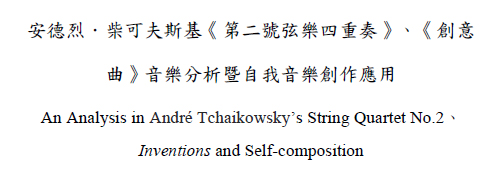
Thesis - Analysis in André Tchaikowsky's String Quartet No. 2,
Inventions, and Self-composition
Yi-han Hsiao, a composition student in Taiwan, writing her Master's
Thesis on the compositions of André Tchaikowsky, reported that
her thesis has been accepted, has been published, and she has achieved
his Master"s Degree. Congratulations to Yi-han. Written in Chinese,
with some small portions in English, you can see the entire thesis by
Clicking Here. This is a large
PDF file of 233 pages (40Mb).
 x x
(2018)
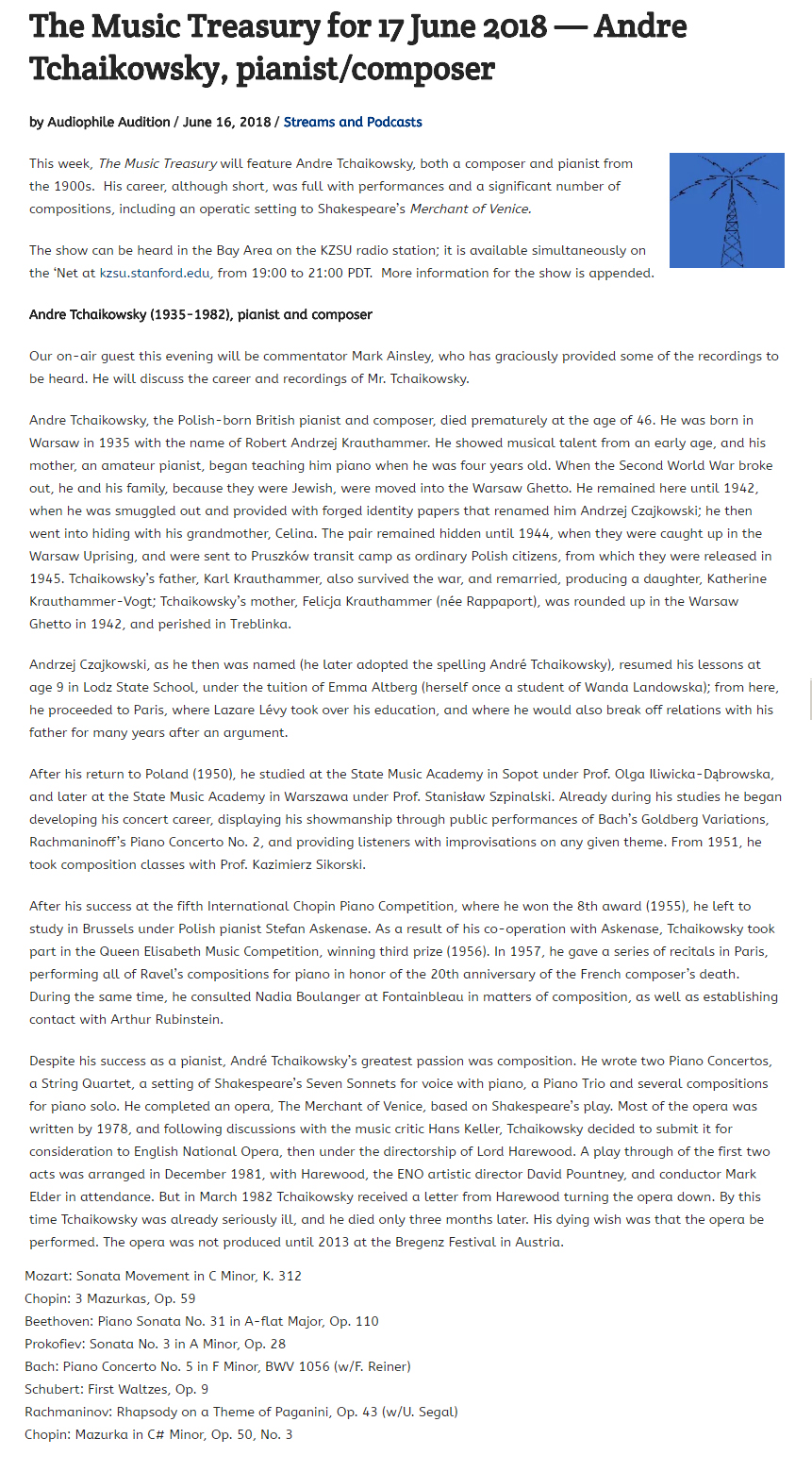
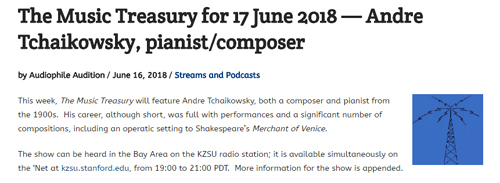
Radio: Remembering André Tchaikowsky, Pianist / KZSU 90.1 / Palo
Alto, California
A radio program broadcast on FM station KZSU 90.1 (the radio station
of Stanford University, Palo Alto, California) took place on Sunday,
June 17, 2018 and featured Andre Tchaikowsky as a pianist. Hosted by
Gary Lemco for his weekly program, The Music Treasury, the broadcast
also featured the well-known piano aficionado, Mark Ainsley, who added
valuable commentary to the program. Click
Here for program details (JPG file);
Click Here for the program audio (2 hours).
(2017)
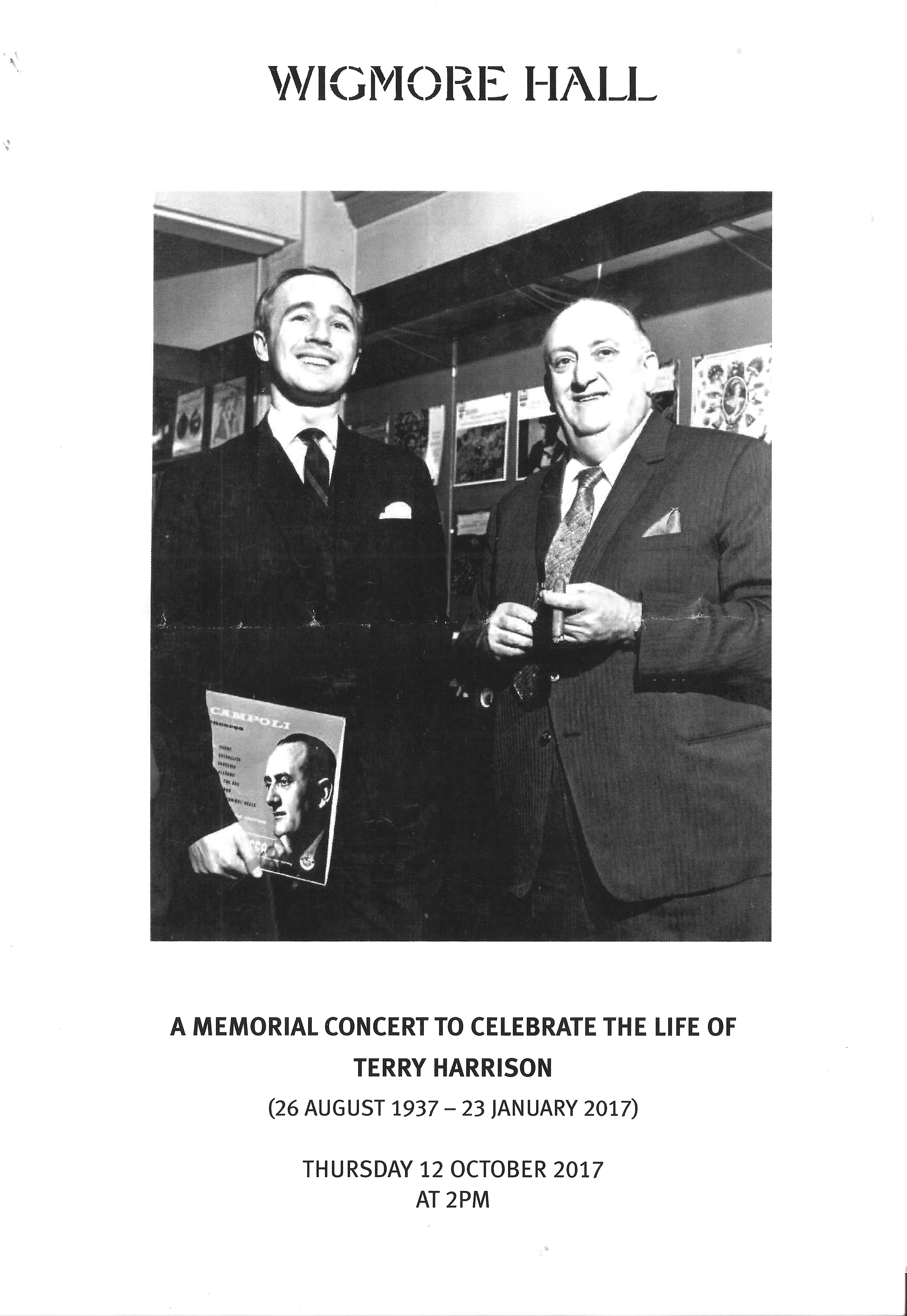
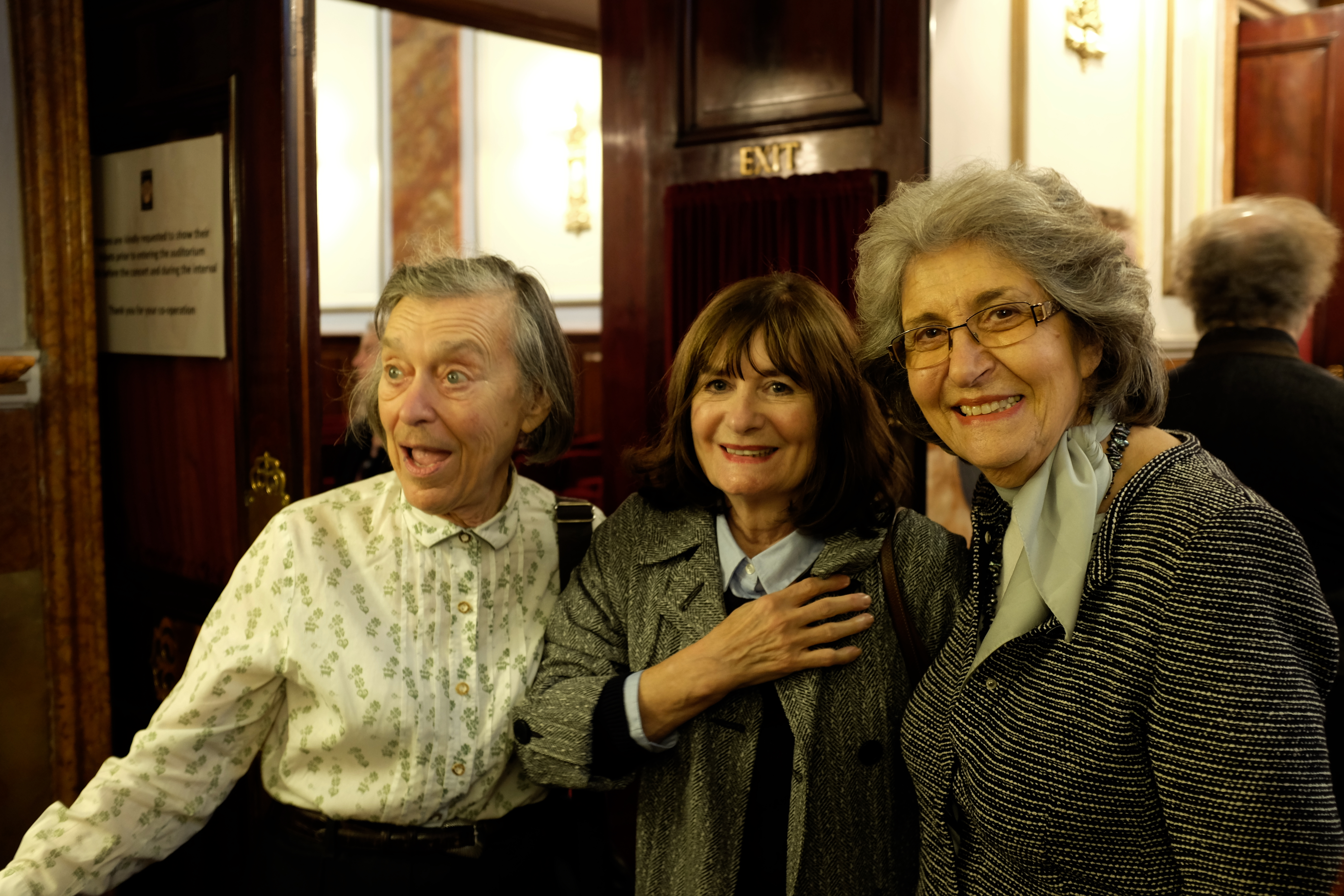
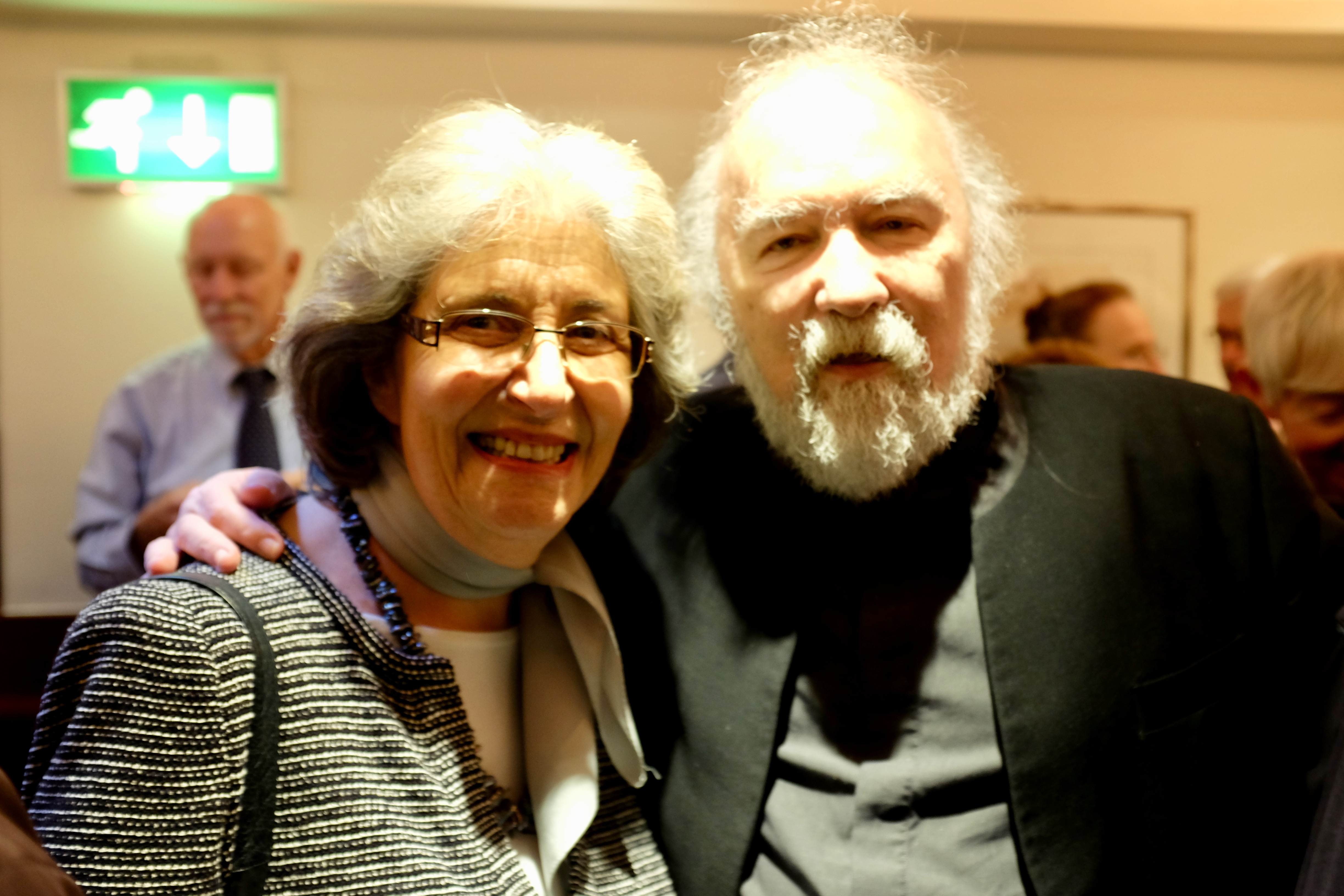
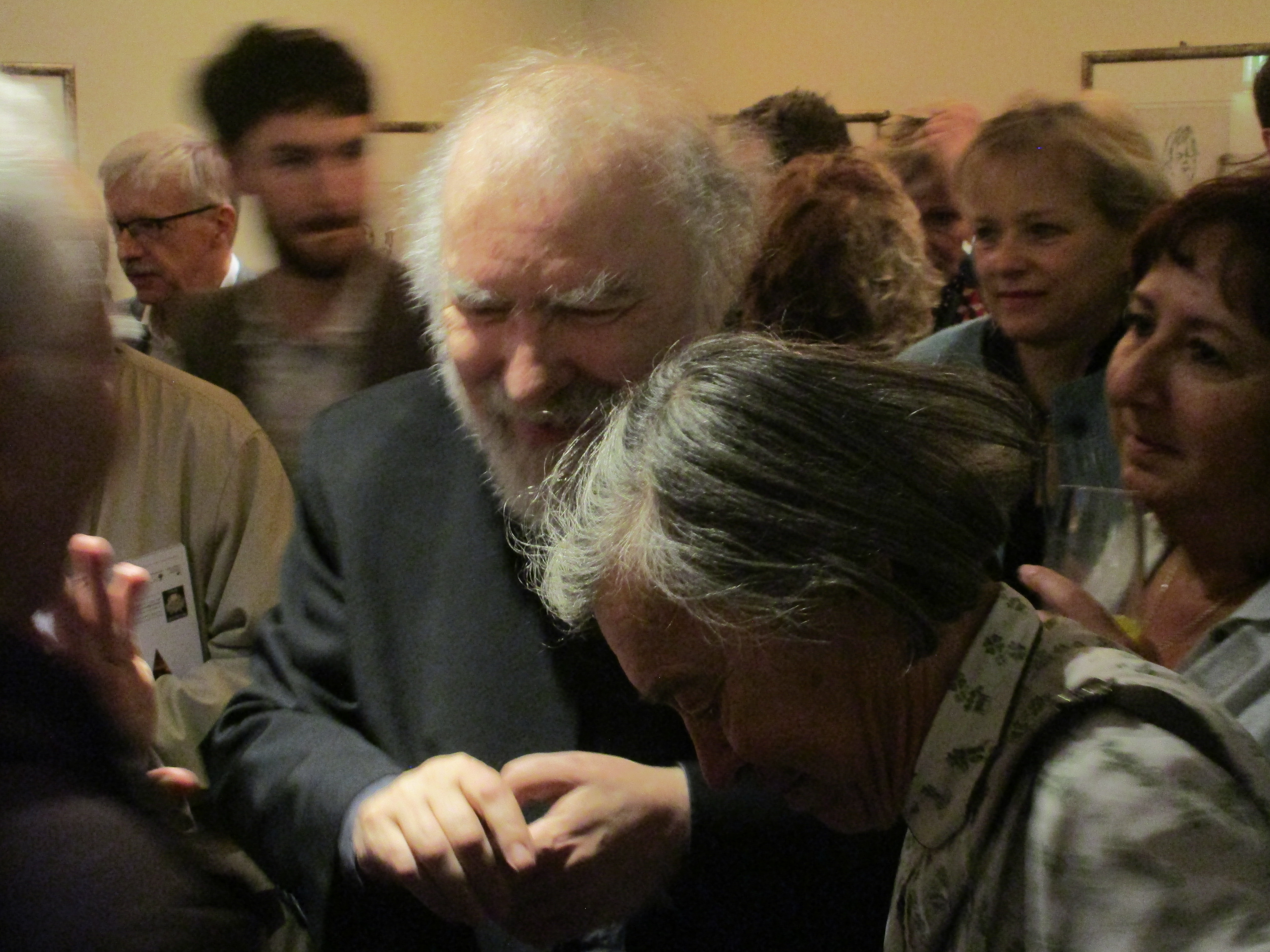
Event: Terry Harrison Memorial Concert / London
On October 12, 2017, the London Wigmore Hall was given over for a memorial
concert honoring Terry Harrison, who passed away in January 2017 at
the age of 79. Terry was Andre's longtime and some would say long-suffering
manager at the agency Harrison-Parrott. Indeed, Terry was the hero in
Andre's life, maintaining a concert career for a pianist who didn't
want, but needed a career. Click
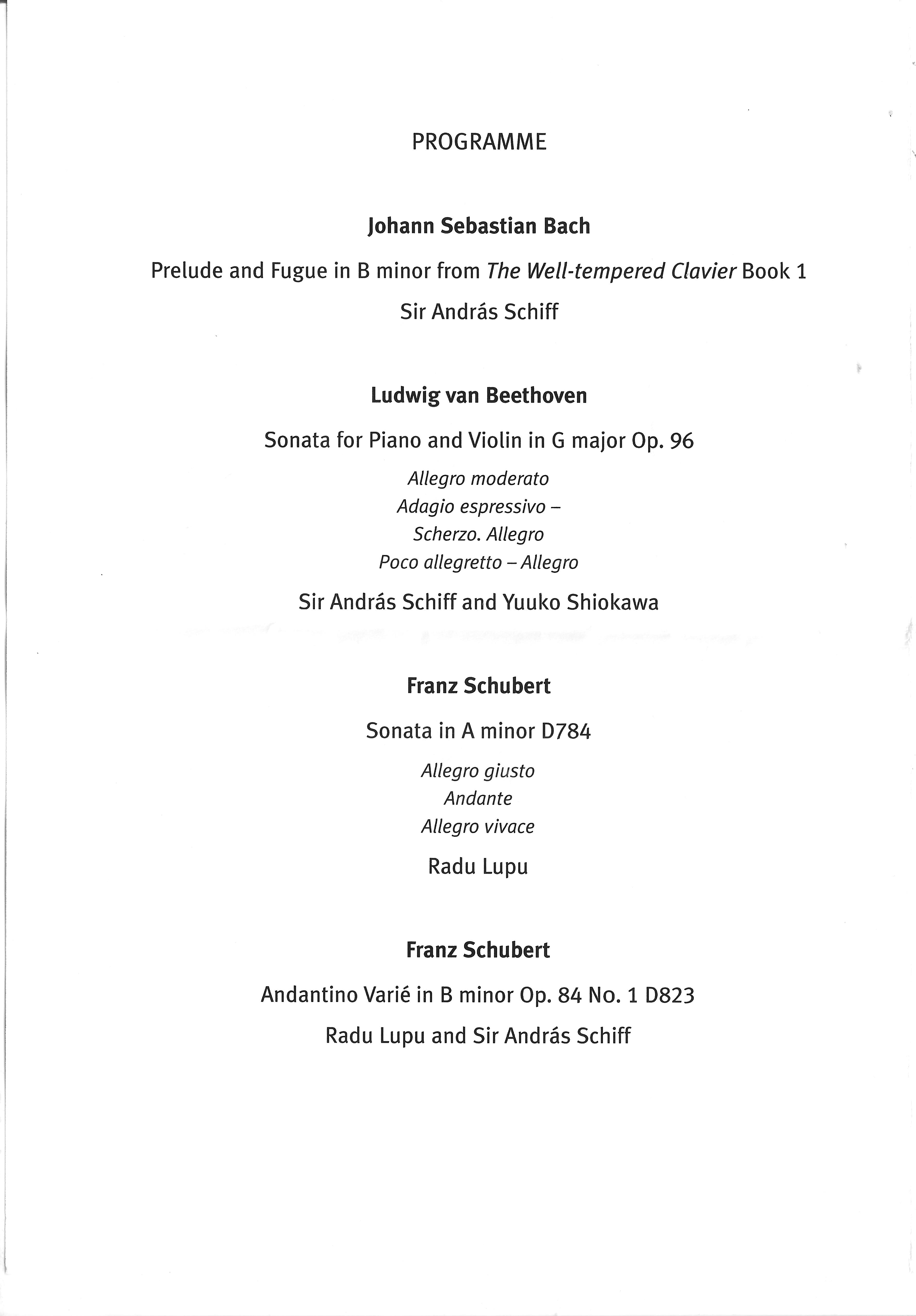
Here for a newspaper obituary for Terry. Below are some concert
details (played by Radu Lupu, András Schiff, and Yuuko Shiokawa)
and some candid photos from the concert reception (click any image for
a larger view). See
Terry in this TV broadcast that talks about Andre's skull used in
Hamlet.
|
|
|
|
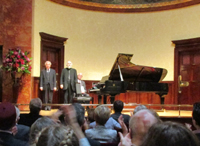
András Schiff, Radu Lupu
on stage
(l to r)
|
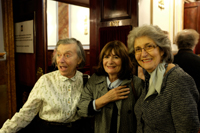 Judy
Arnold, Eve Harrison,
Judy
Arnold, Eve Harrison,
Norma Fisher (l to r) |
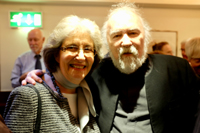 Norma
Fisher and Radu Lupu
Norma
Fisher and Radu Lupu
at the reception |
 Radu
Lupu and Judy Arnold
Radu
Lupu and Judy Arnold |
 András
Schiff and Judy Arnold
András
Schiff and Judy Arnold |
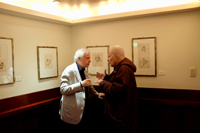
Schiff
and Stephen Kovacevich |
(2017)
Award: David Pountney wins award for The Merchant of Venice opera
The 3rd edition of the Polish award for musical criticism called "Konkurs
Polskich Krytykow Muzycznych" or KROPKA for short, was won by David
Pountney. Click
Here for the original award Internet link or Click
Here for an image file. This award to Pountney was the direct result
of his article for the The Guardian newspaper on 15 September 2016 titled
"André Tchaikowsky: from Warsaw to Belmont via a wardrobe."
Click
Here for the original Internet link for this article or Click
Here for an image file.
(2017)
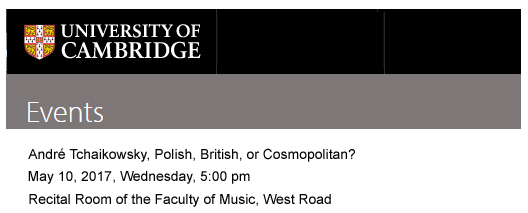
Lecture - André Tchaikowsky, Polish, British, or Cosmopolitan?
Cambridge (UK)
Cambridge University, Music Department, has announced a lecture scheduled
for May 10, 2017 titled André Tchaikowsky, Polish, British,
or Cosmopolitan? The presenter will be Dr.
Anastasia Belina-Johnson, author of "A
Musician Divided - André Tchaikowsky in his own words."
This lecture is a part of Colloquia
events, which are held on Wednesday evenings in the Recital Room
of the Faculty of Music, West Road. Events are followed by discussion
and a drinks reception with the speaker. Admission is free and open
to the general public.
(2917)
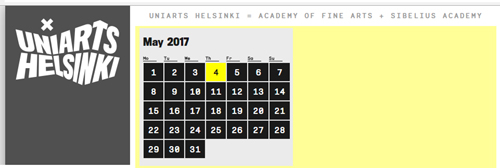
Lecture - André Tchaikowsky, Challenges for a Biographer, Helsinki,
Finland
Uniarts Halsinki presented a lecture on May 4, 2017 titled André
Tchaikowsky, Challenges for a Biographer. The presenter wasDr.
Anastasia Belina-Johnson, author of "A
Musician Divided - André Tchaikowsky in his own words."
(2017)
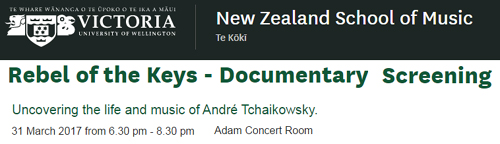
Film - Rebel of the Keys Wellington, NZ / Auckland, NZ
Producers of the documentary film about André Tchaikowsky called
Rebel of the
Keys, have announced two showings in New Zealand. The first
showing took place at the University of Wellington (Click
Here) on March 31st; the second showing took place at the Rialto
Cinemas Newmarket in Auckland (Click
Here) on April 3rd. Each showing included a Q&A session with
Dr. Anastasia Belina-Johnson, and in the case of the Auckland showing,
the Q&A session includes professor Heath Lees. To hear an interview
about Rebel of the Keys, see below or Click
Here for the Internet link.
(2017)
Event - Rebel of the Keys; Seven Sonnets; Lecture (London)
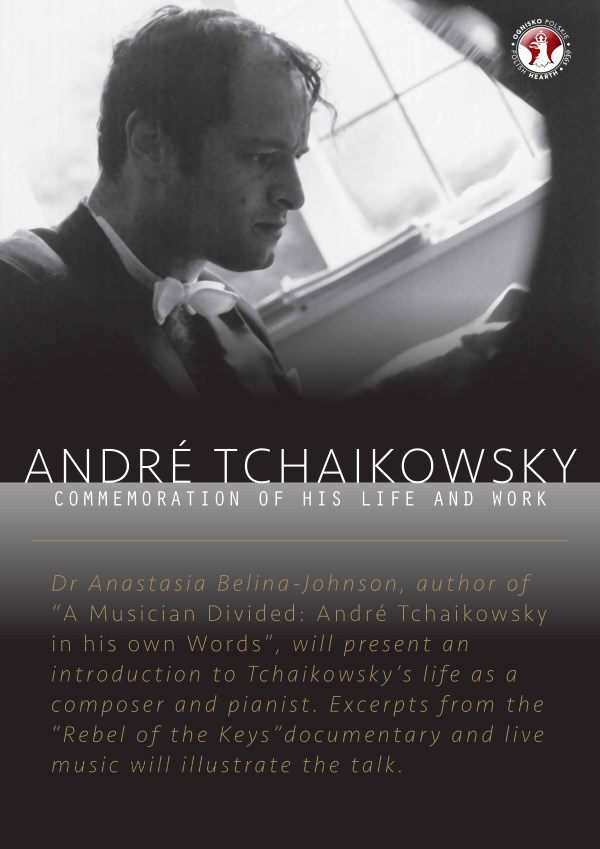
A portion of the André Tchaikowsky documentary, Rebel
of the Keys, was shown on March 24, 2017, at the Ognisko Polskie,
London, SW7. This program included an introduction to the life of André
Tchaikowsky by Dr.
Anastasia Belina-Johnson, author of "A
Musician Divided - André Tchaikowsky in his own words."
Live music of André Tchaikowsky's Seven
Sonnets of Shakespeare
(1967) was performed by Nico
de Villiers (piano) and Rosanna
Cooper (mezzo). Click
Here for a promotional description. There was a special performance
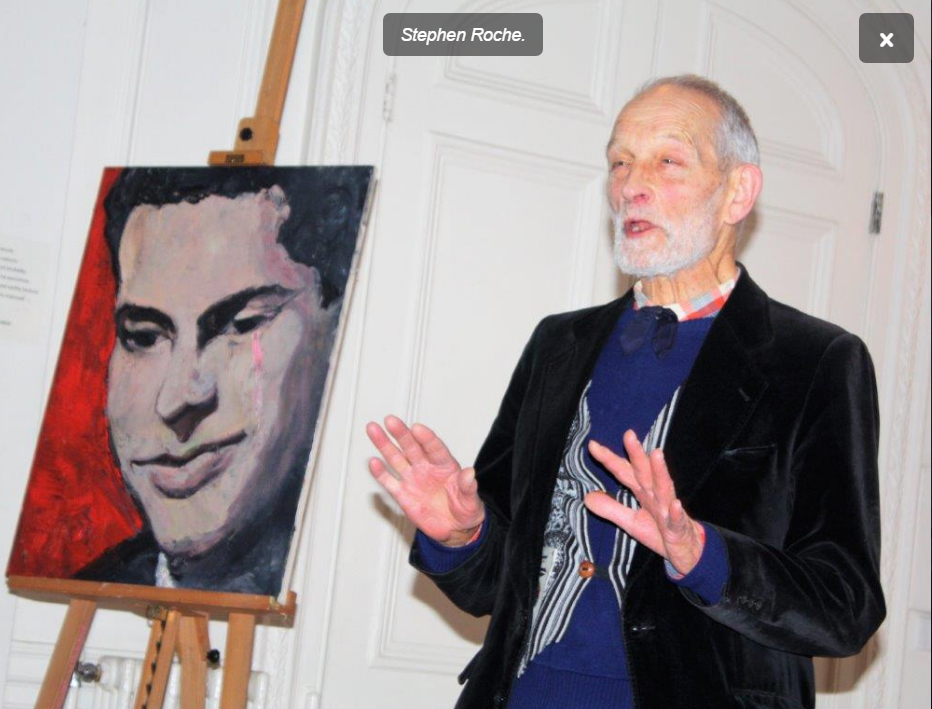
of a piano work that was dedicated to André, composed by Stephen
Roche and played by Henry Roche, plus
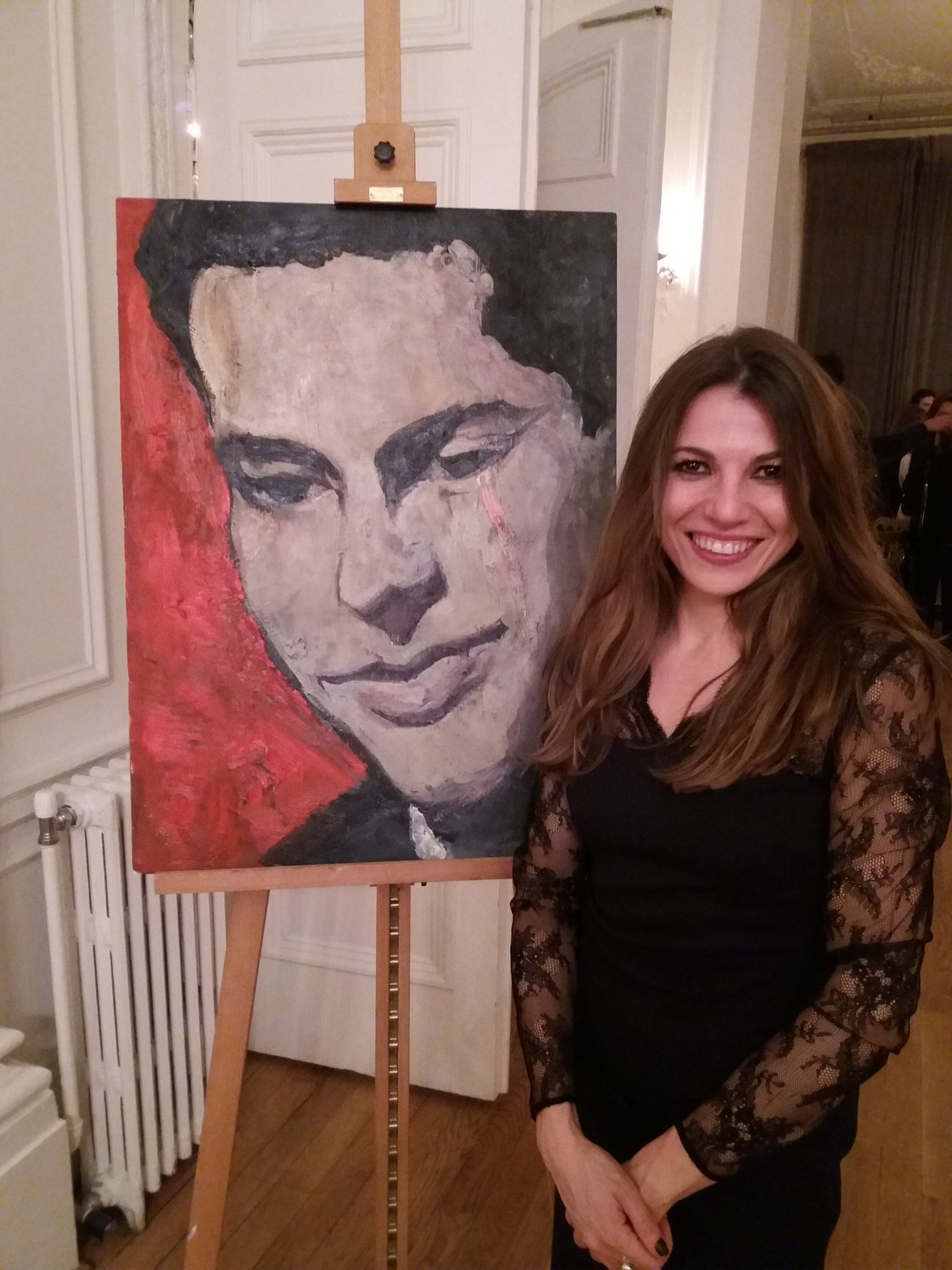
a well-known London artist, Rodolfo
Villaplana, displayed his painting of André. (This painting
is available for purchase and you can write to the artist directly -
Click Here.)
The event was reviewed by James Brewer and posted on a popular website.
Click Here for the website or Click
Here for an image file. This event also inspired a brief essay by
Alec Coles-Aldridge (Click
Here for pdf file). Images from the event appear below.
|
|
Click
Here for a YouTube Rebel of the Keys trailer
|
(2017)
Film - Rebel of the Keys (London)
The André Tchaikowsky documentary, Rebel of the Keys, is scheduled
for a repeat performance on February 7, 2017 at the JW3 London Jewish
Cultural Center. Click
Here for the Rebel of the Keys website; Click
Here for the JW3 announcement of the film.
|
|
Click
Here for a YouTube Rebel of the Keys trailer
|
(2016)
Film - Rebel of the Keys (London)
The first complete showing of the André Tchaikowsky documentary,
Rebel of the Keys, took place on July 11, 2016 at the JW3 London Jewish
Cultural Center. Click
Here for the Rebel of the Keys website; Click
Here for the JW3 announcement of the film; Click
Here for the Polish Culture announcement (in Polish); Click
Here for more about the film from the Polish Culture website.
|
|
Click
Here for a YouTube Rebel of the Keys trailer
|
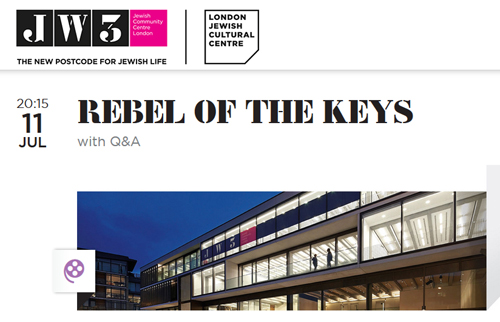
Click
Here to read the official posting about this showing on the Rebel
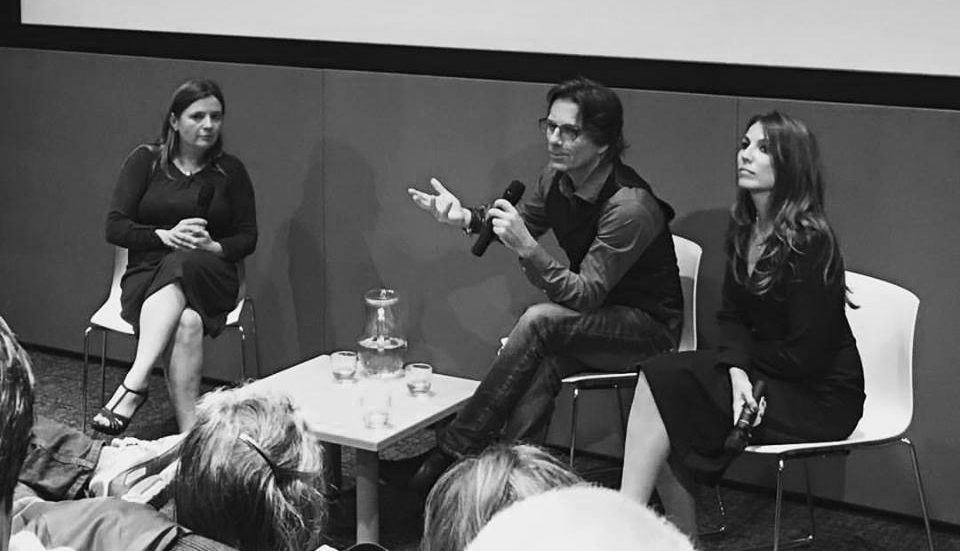
of the Keys website. (Image below is from the screening).
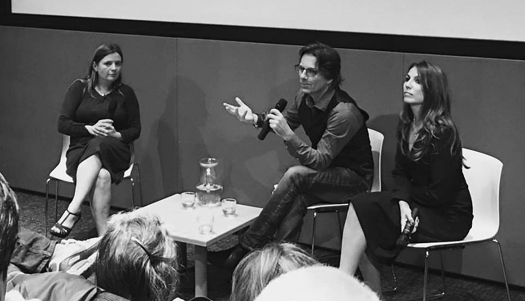
(left
to right, producer Liz Smith, filmmaker Mark Charles, commentator Dr.
Anastasia Belina-Johnson)
(2016)
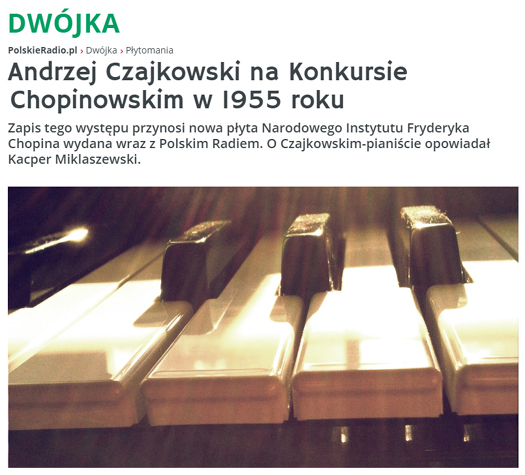
Andrzej Czajkowski, 1955 Chopin Competition Remembered
This Polskie
Radio Broadcast (in Polish) discusses the playing of Andrzej Czajkowski
at the 1955 Chopin Competition, where Andrzej won 8th prize. The source
of the music being played is from a Chopin
Institute CD (for music samples from the CD, Click
Here).
(2015)
Happy Birthday André Tchaikowsky, 80 years old (Warsaw)
An Andrzej
Czajkowski 80th Birth Anniversary Concert was celebrated in Warsaw on
November 30, 2015. Presented as part of the Warsaw Philharmonic 2015-2016
concert season and in cooperation with the Adam Mickiewicz Institute
15th Anniversary, the concert featured pianist Maciej
Grzybowski playing the André Tchaikowsky Sonata
for Piano and The
Inventions. The second part of the concert was a 60-minutes documentary
film (edited to 60 minutes from the original 90 minutes) about André
Tchaikowsky called Rebel
of the Keys. The film was produced by Entertaining:TV
with film maker Mark Charles. Click
Here for the complete event program (PDF file). Click
Here for a concert review in the original French; Click
Here for a concert review in English (via Google Translator). Click
Here for a film description on the culture.pl
website. Click images below for a larger view.
(2015)
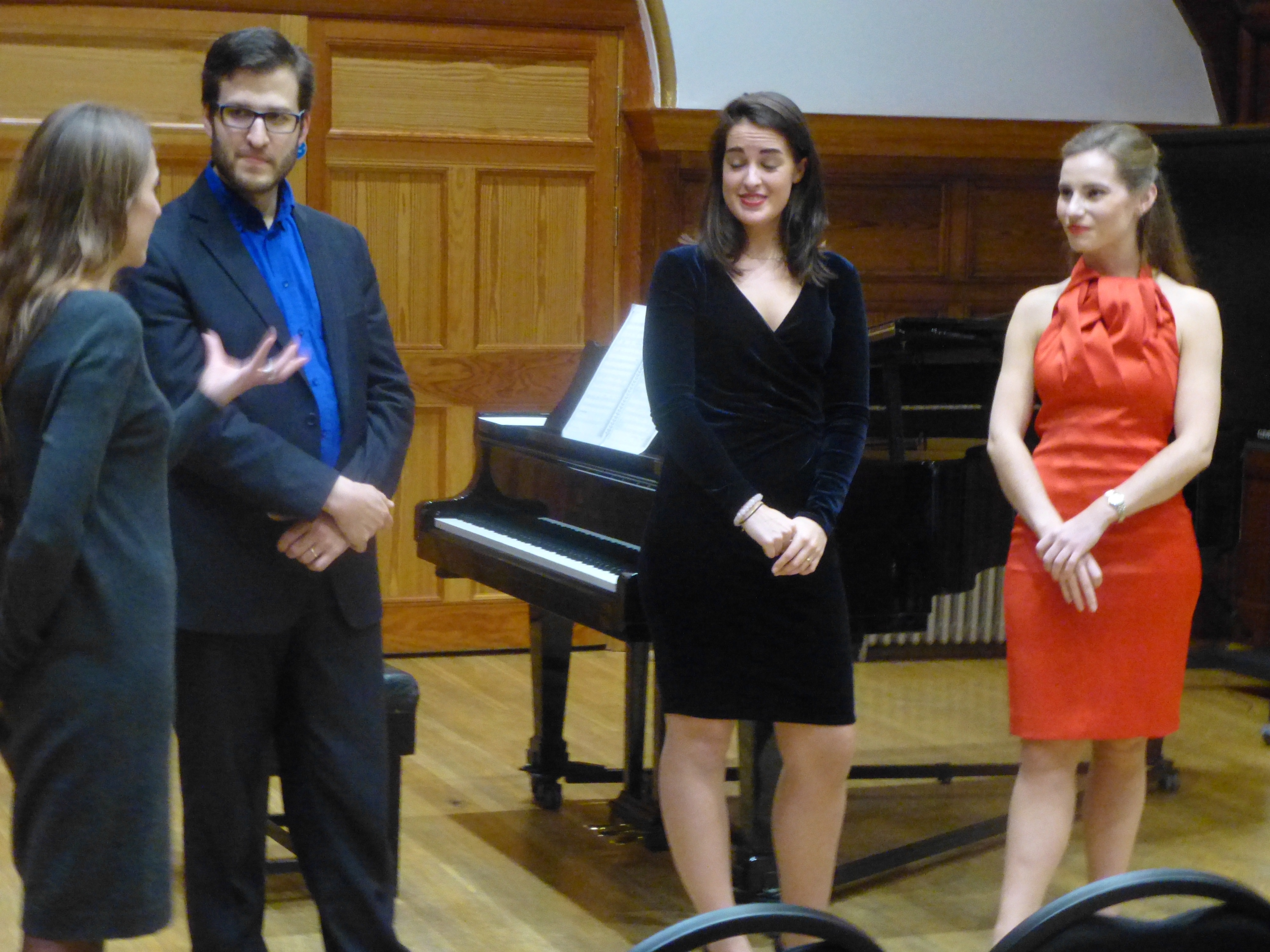
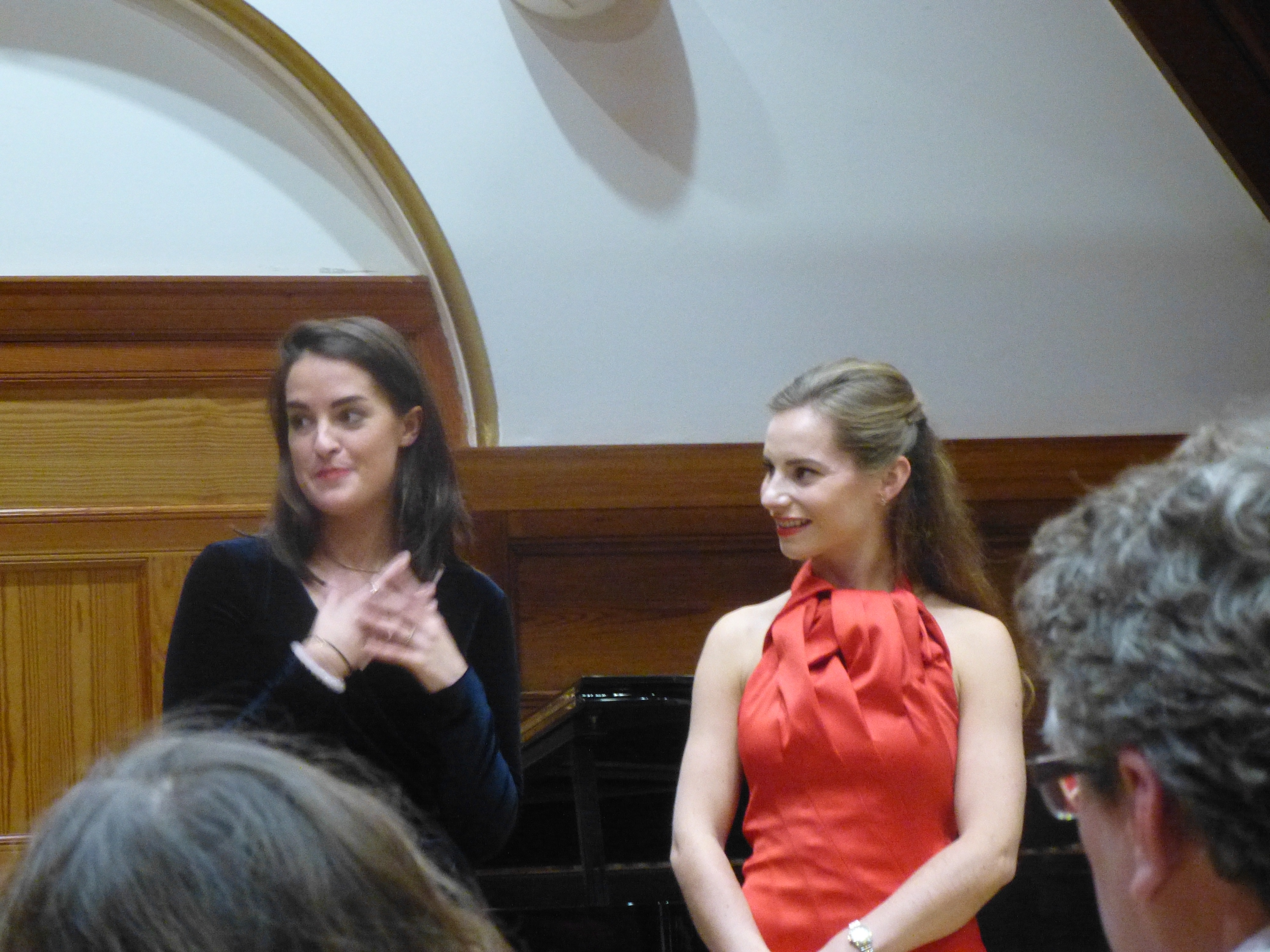
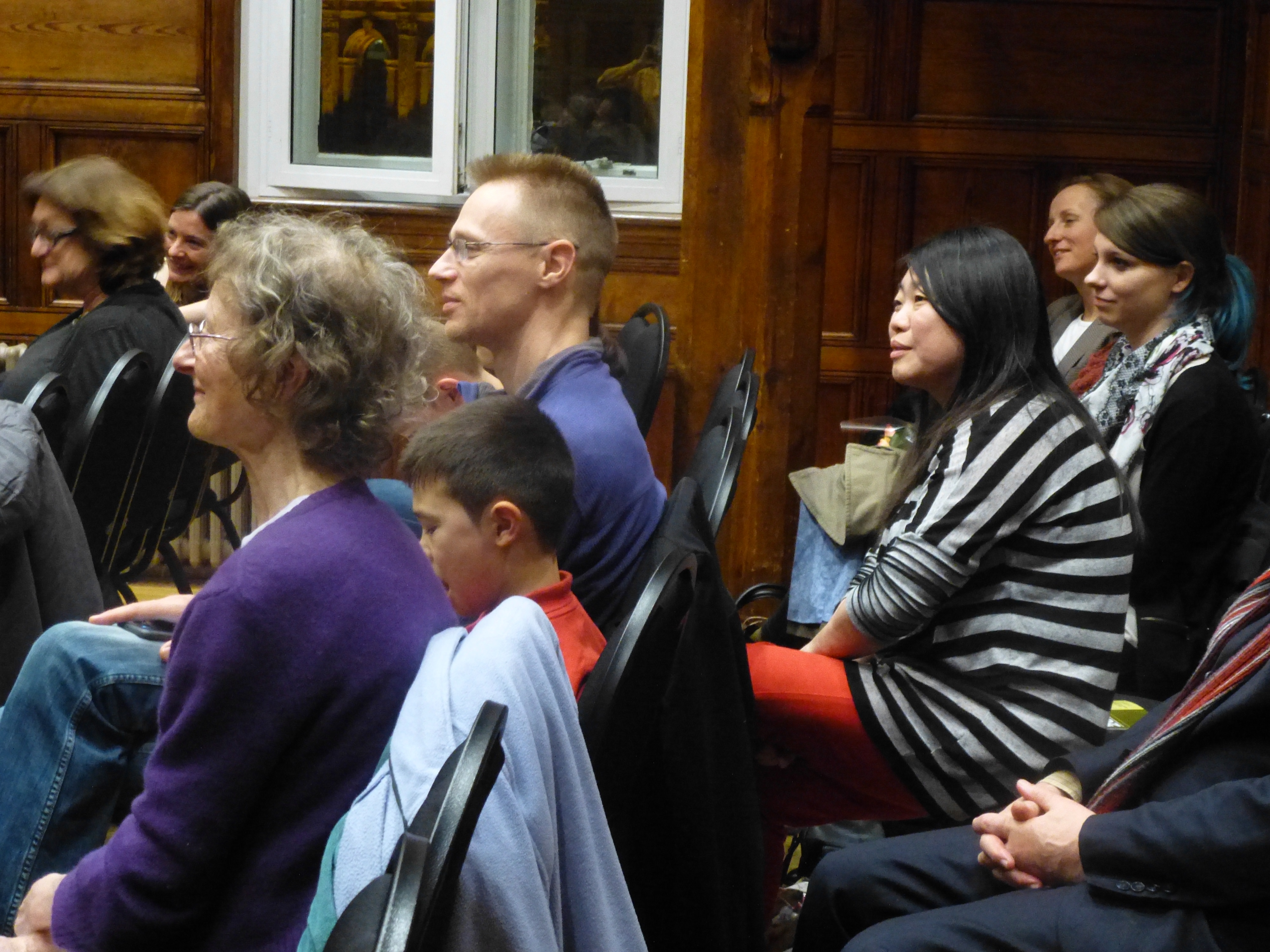
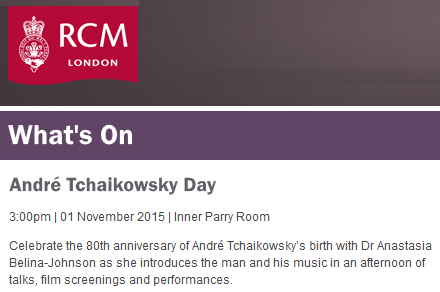
Happy Birthday André Tchaikowsky, 80 years old (London)
Candid photos from the November 1st, 2015 Happy Birthday André
Tchaikowsky Concert. Works performed included Ariel,
Seven
Sonnets of Shakespeare, and excerpts from the film, Rebel
of the Keys. Thanks to Judy Arnold for these photographs. Click
Here to see the program and all the participants (PDF file) including:
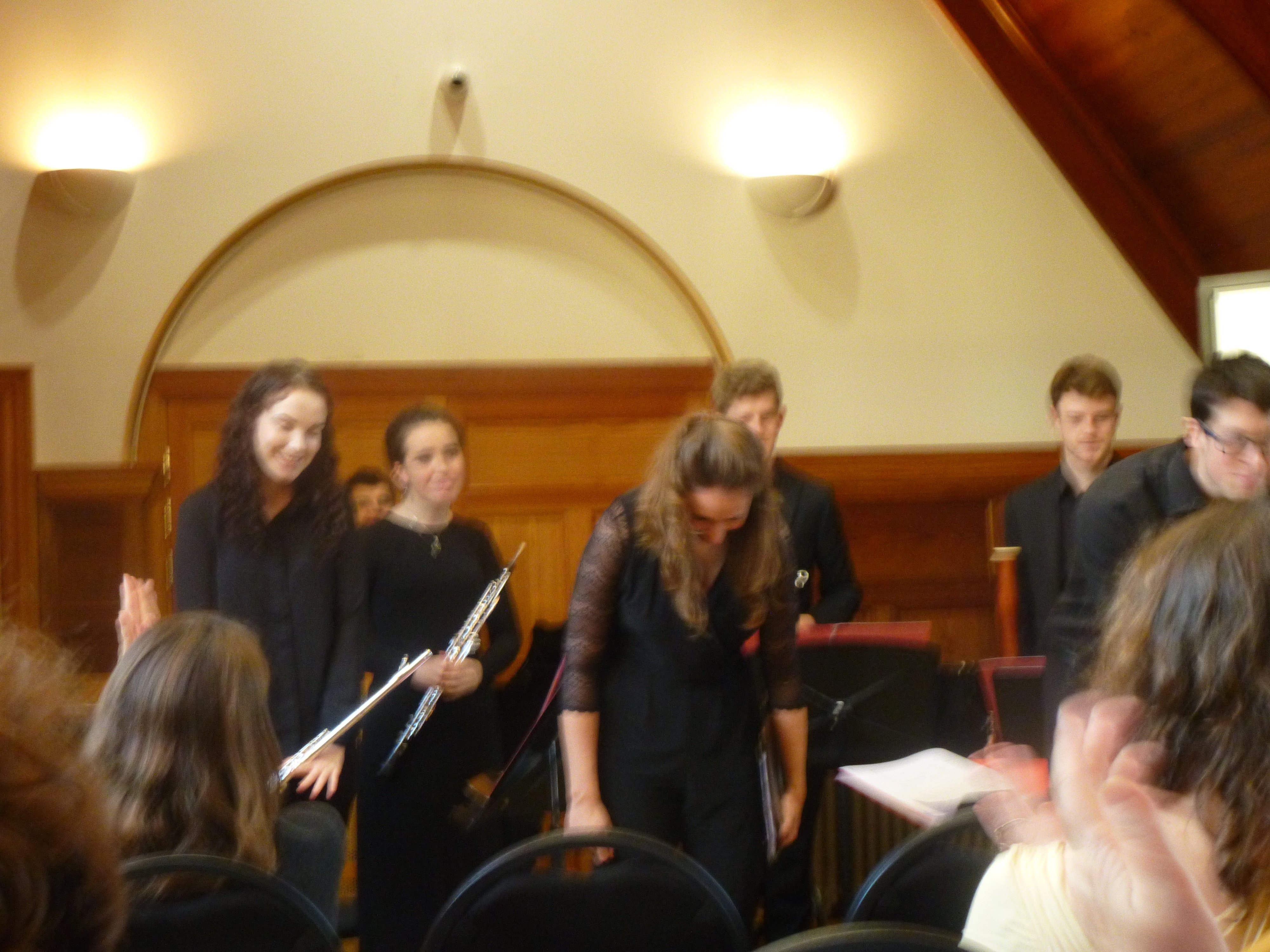
Mark Bibbins conductor, Amy Lyddon mezzo-soprano, Jonna Järvitalo
flute, Sarah Bence oboe, Melissa Youngs clarinet, Joel Ashford horn,
Peter Bolton bassoon, Catrin Meek harp, Svetaslav Todorov piano/celeste,
Nico de Villiers piano, Sarah Lenny mezzo-soprano, and Rosanna Cooper
mezzo-soprano.
|
|
|
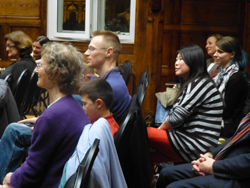
General
Audience
View
|
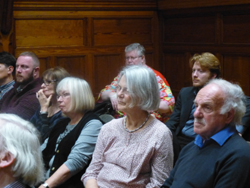
(left
to right) Lewis
Mitchell, Eve Harrison, Kaarina Meyer, Angela Ross-Kokoszka,
and Frank Anderson
|
|
|
|
|
|
|
(2015)
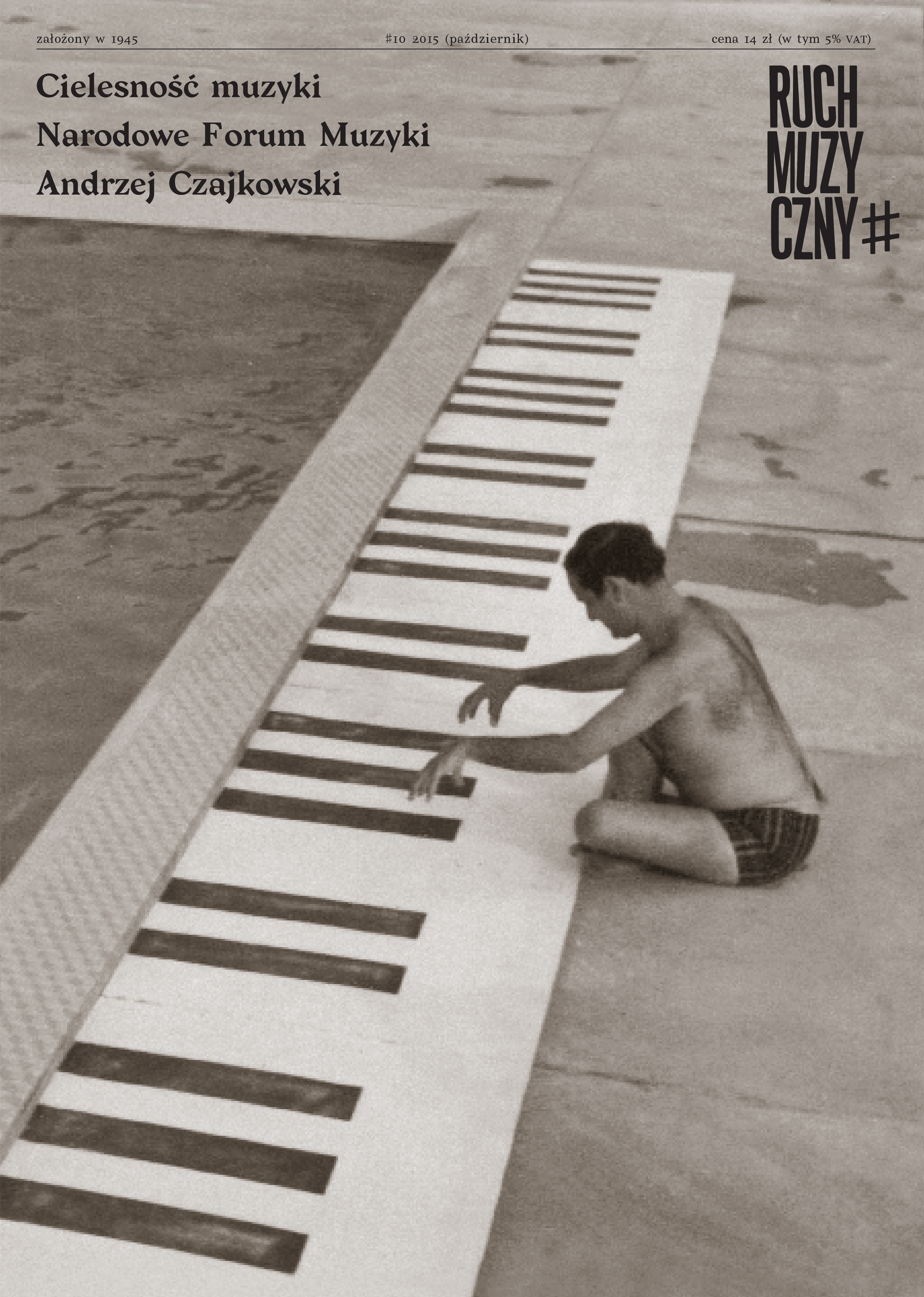
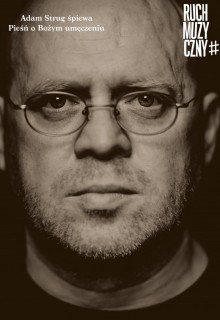
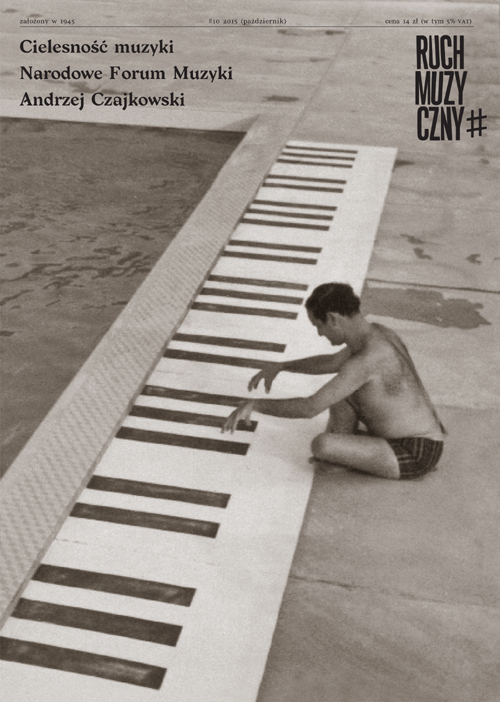
Ruch Muzyczny, Andrzej Czajkowski Retrospective
The classical music magazine of Poland, Ruch Muzyczny (Musical Movement)
for their October 2015 issue featured a cover photograph of Andrzej
Czajkowski from New Zealand and important articles detailing the life
of Andrzej Czajkowski. Links to the articles in the magazine appear
below (in Polish):
Warsaw
Survivor | My Guardian Devil
1,
2, 3,
4 | Sideline
Remarks | Musician
Torn
(2015)
The Jewish Chronicle "Demons that so haunted and then inspired
a survivor"
Appearing in the June 8, 2015 edition of the Jewish Chronicle is this
article by Gloria Tessler. Click
Here for the online version from the Jewish Chronicle website, or
Click Here for a PDF version
of the article.
(2015)
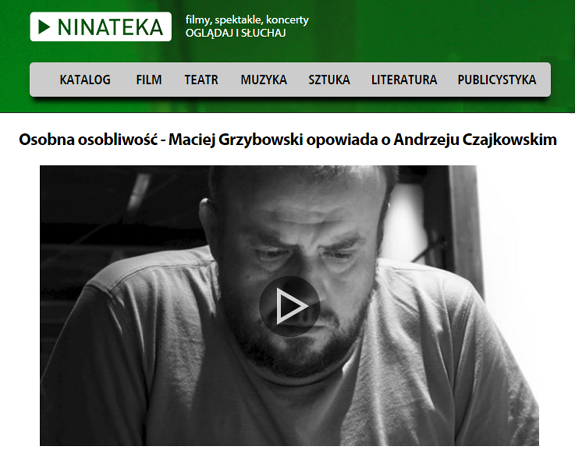
Narodowy Instytut Audiowizualny (NInA) interviews Maciej Grzybowski
The Narodowy Instytut Audiowizualny (National Audiovisual Institute)
interviewed pianist Maciej
Grzybowski in advance of his May 30, 2015 recital celebrating the
dedication of a new NIna facility. This recital program includes The
Inventions by André Tchaikowsky. Click
Here for the NInA website, or Click
Here for an mp3 audio file.
(2015)
Ruch Muzyczny Magazine - Andrzej Czajkowski: Pianista (Parts 1 to 12)
The January 2015 issue of Ruch
Muzyczny (Musical Movement) magazine featured part of 1 of a multi-part
article called Andrzej Czajkowski: Pianista. Written in Polish by pianist
Maciej
Grzybowski, this series of articles (in Polish) is available using
the links below:
Ruch Muzyczny
January 2015 - Andrzej Czajkowski: Pianista (1 of 12) - Click
Here
Ruch Muzyczny February 2015 - Andrzej Czajkowski: Pianista (2 of 12)
- Click
Here
Ruch Muzyczny March 2015 - Andrzej Czajkowski: Pianista (3 of 12) -
Click
Here
Ruch Muzyczny April 2015 - Andrzej Czajkowski: Pianista (4 of 12) -
Click
Here
Ruch Muzyczny May 2015 - Andrzej Czajkowski: Pianista (5 of 12) - Click
Here
Ruch Muzyczny June 2015 - Andrzej Czajkowski: Pianista (6 of 12) - Click
Here
Ruch Muzyczny July 2015 - Andrzej Czajkowski: Pianista (7 of 12) - Click
Here
Ruch Muzyczny August 2015 - Andrzej Czajkowski: Pianista (8 of 12) -
Click
Here
Ruch Muzyczny September 2015 - Andrzej Czajkowski: Pianista (9 of 12)
- Click
Here
Ruch Muzyczny October 2015 - Andrzej Czajkowski: Pianista (10 of 12)
- Click
Here
Ruch Muzyczny November 2015 - Andrzej Czajkowski: Pianista (11 of 12)
- Click
Here
Ruch Muzyczny December 2015 - Andrzej Czajkowski: Pianista (12 of 12)
- Click
Here
(2014)
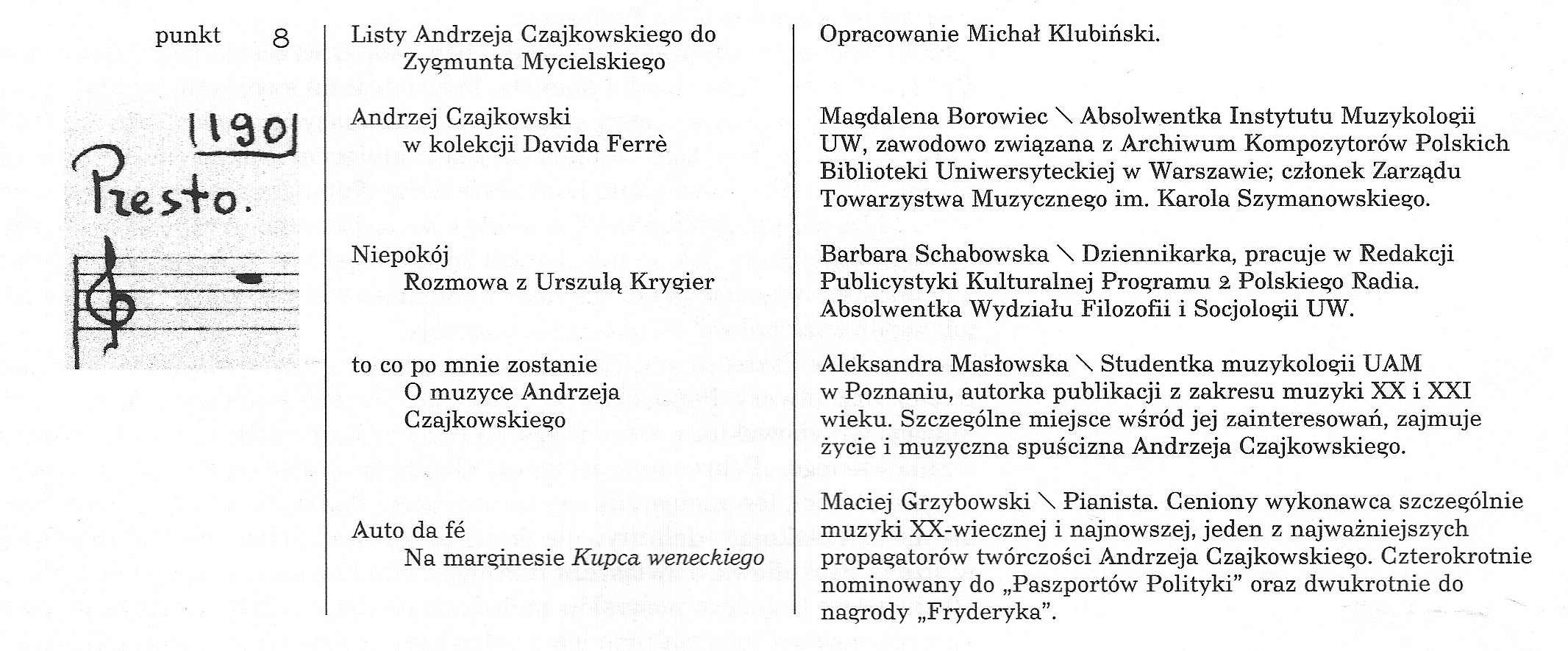
Ruch Muzyczny Magazine - Five articles remembering Andrzej Czajkowski
The November 2014 issue of Ruch
Muzyczny (Musical Movement) magazine featured five individual articles
centered on remembering Andrzej Czajkowski by Michal Klubinski, Magdalena
Borowiec, Barbara Schabowska, Aleksandra Mazlowska, and Maciej Grzybowski
(in Polish). Click
Here for a PDF copy of the articles.
(2014)
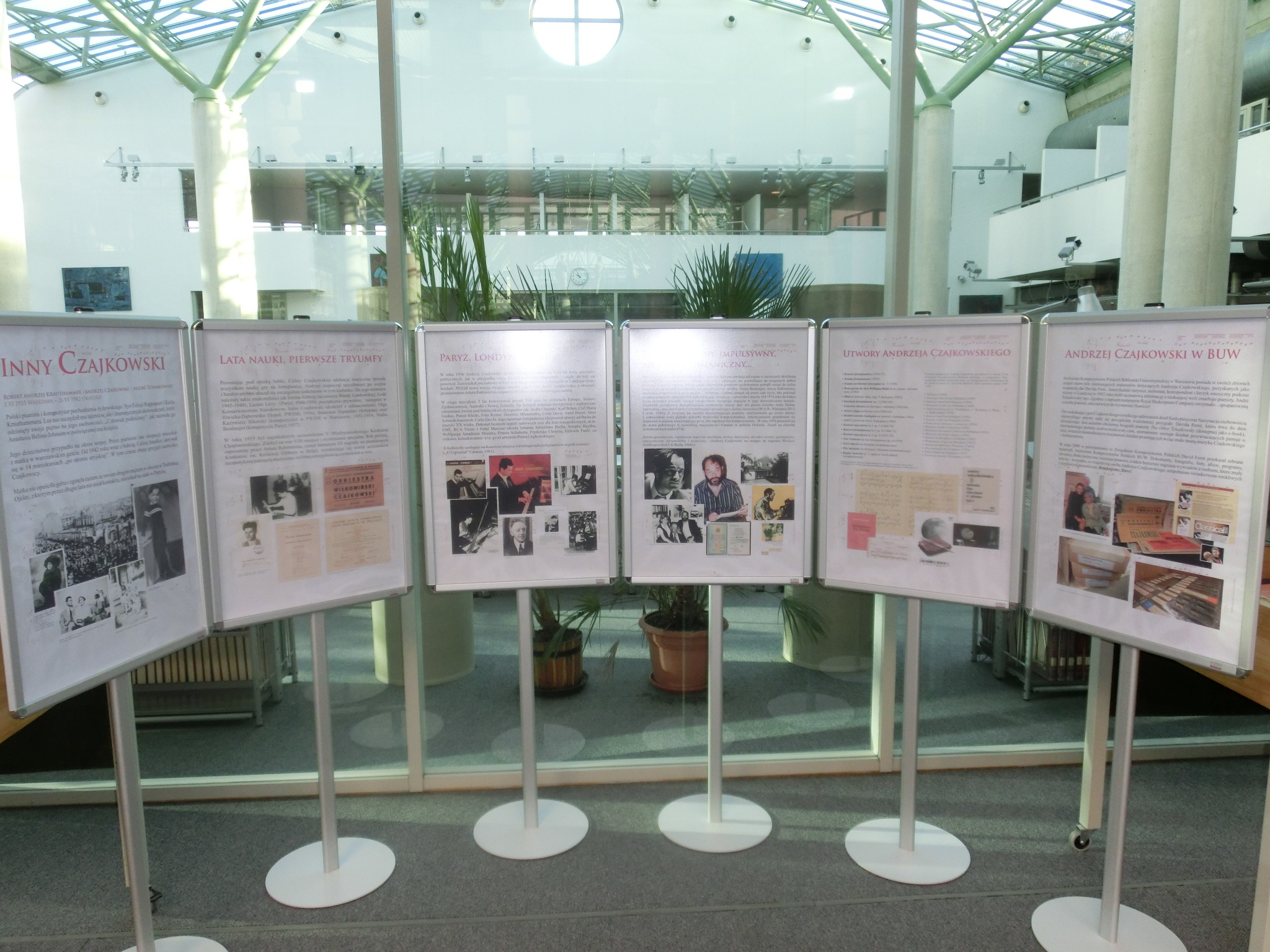
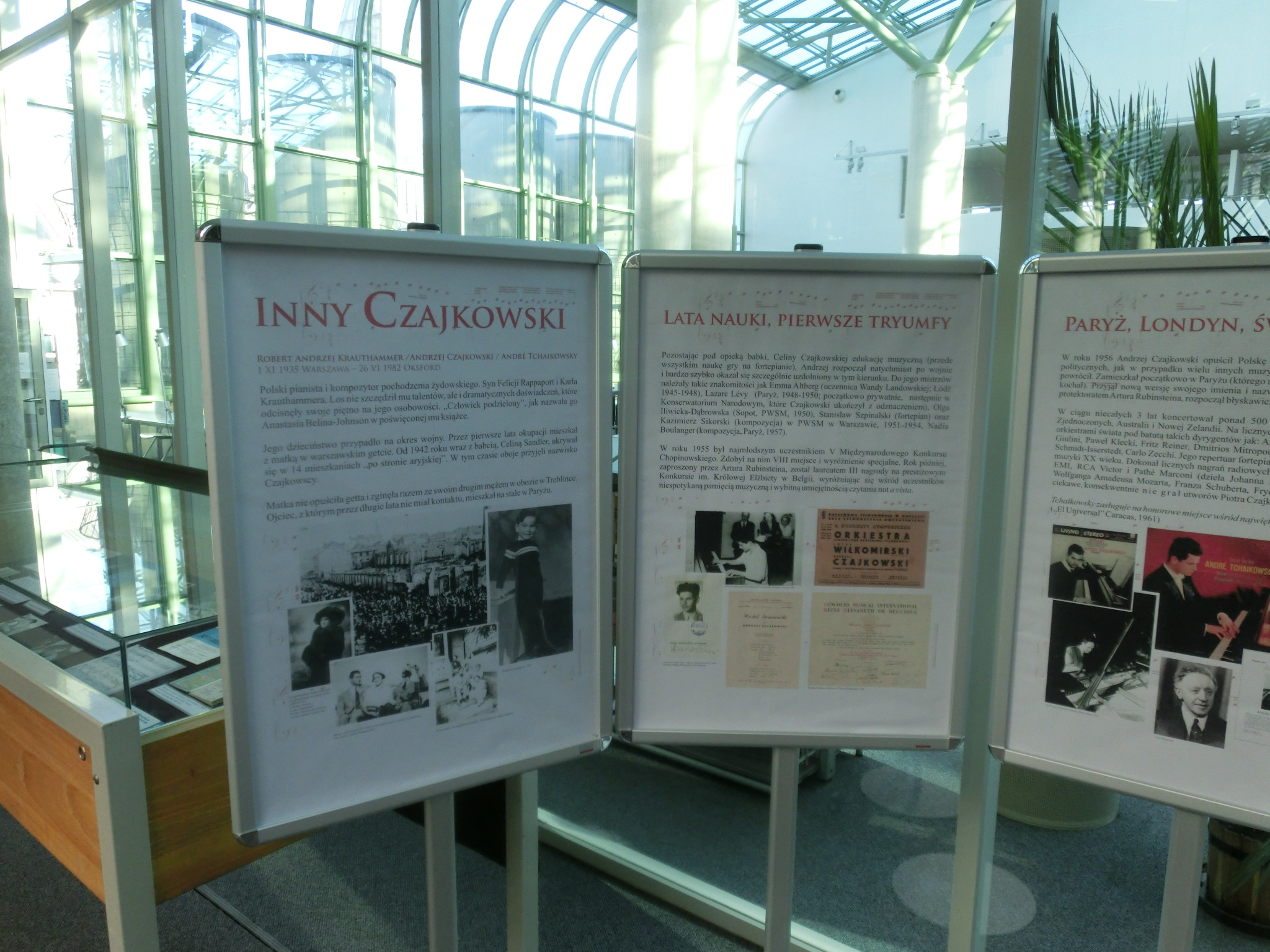
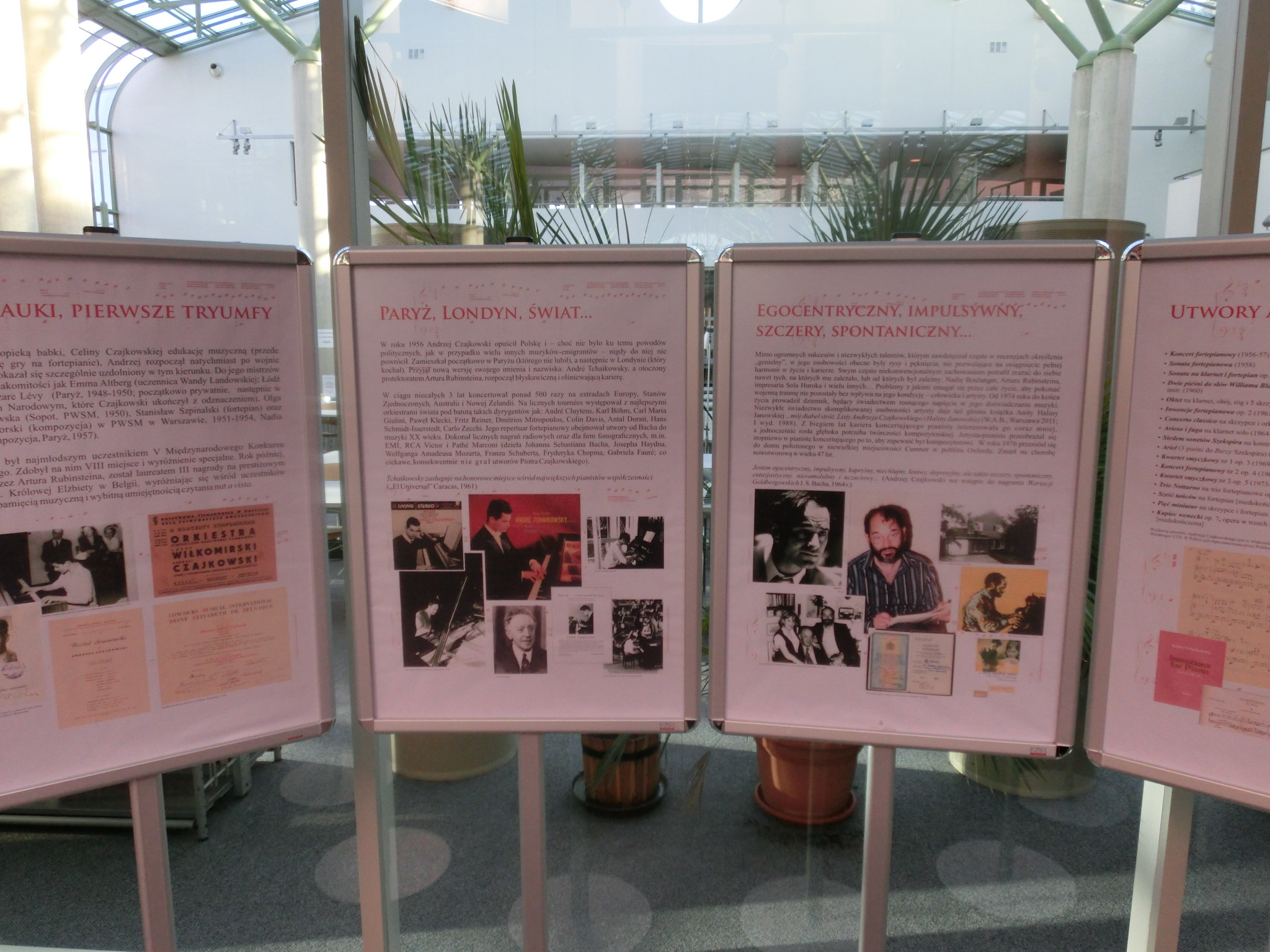
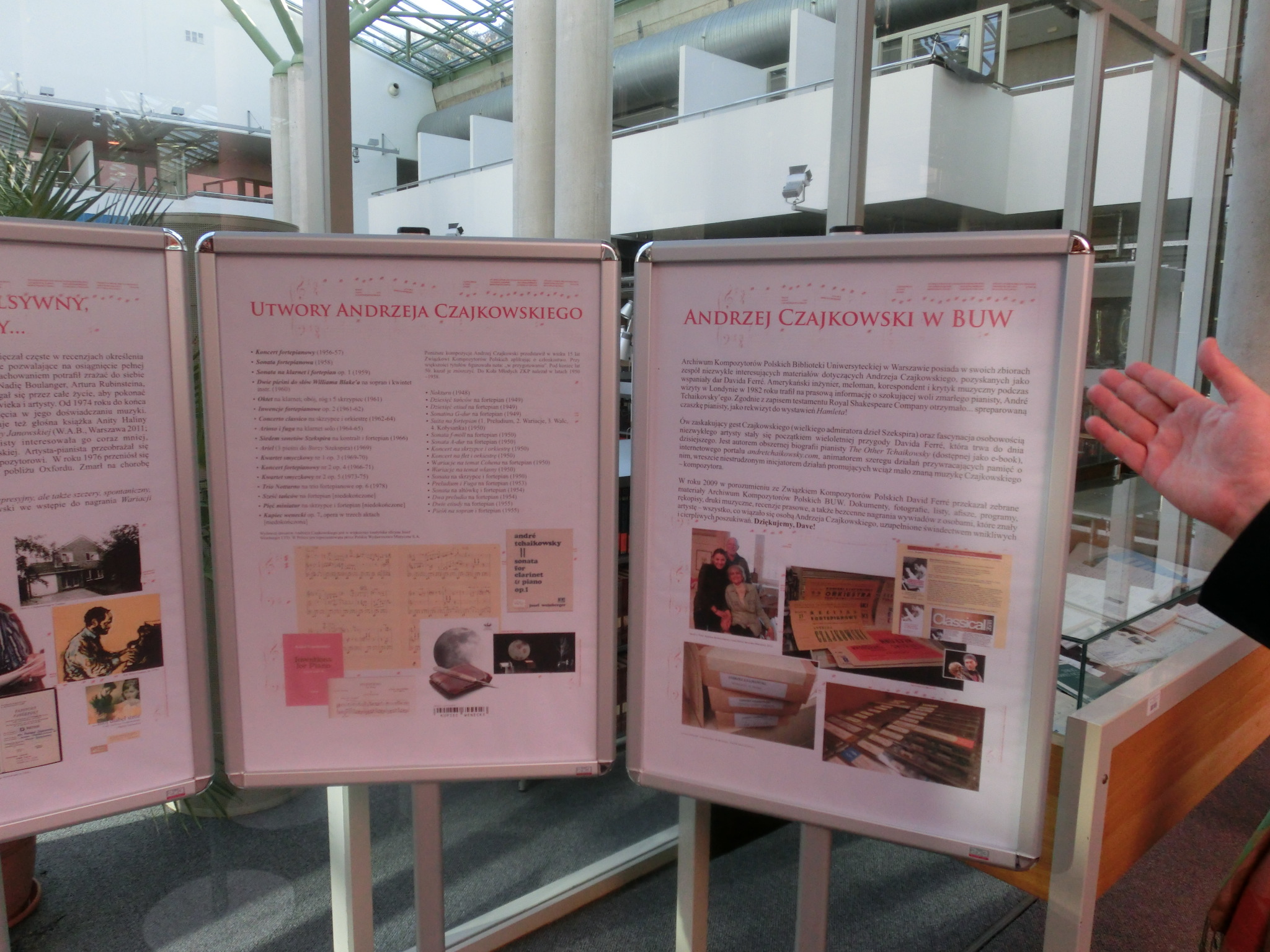
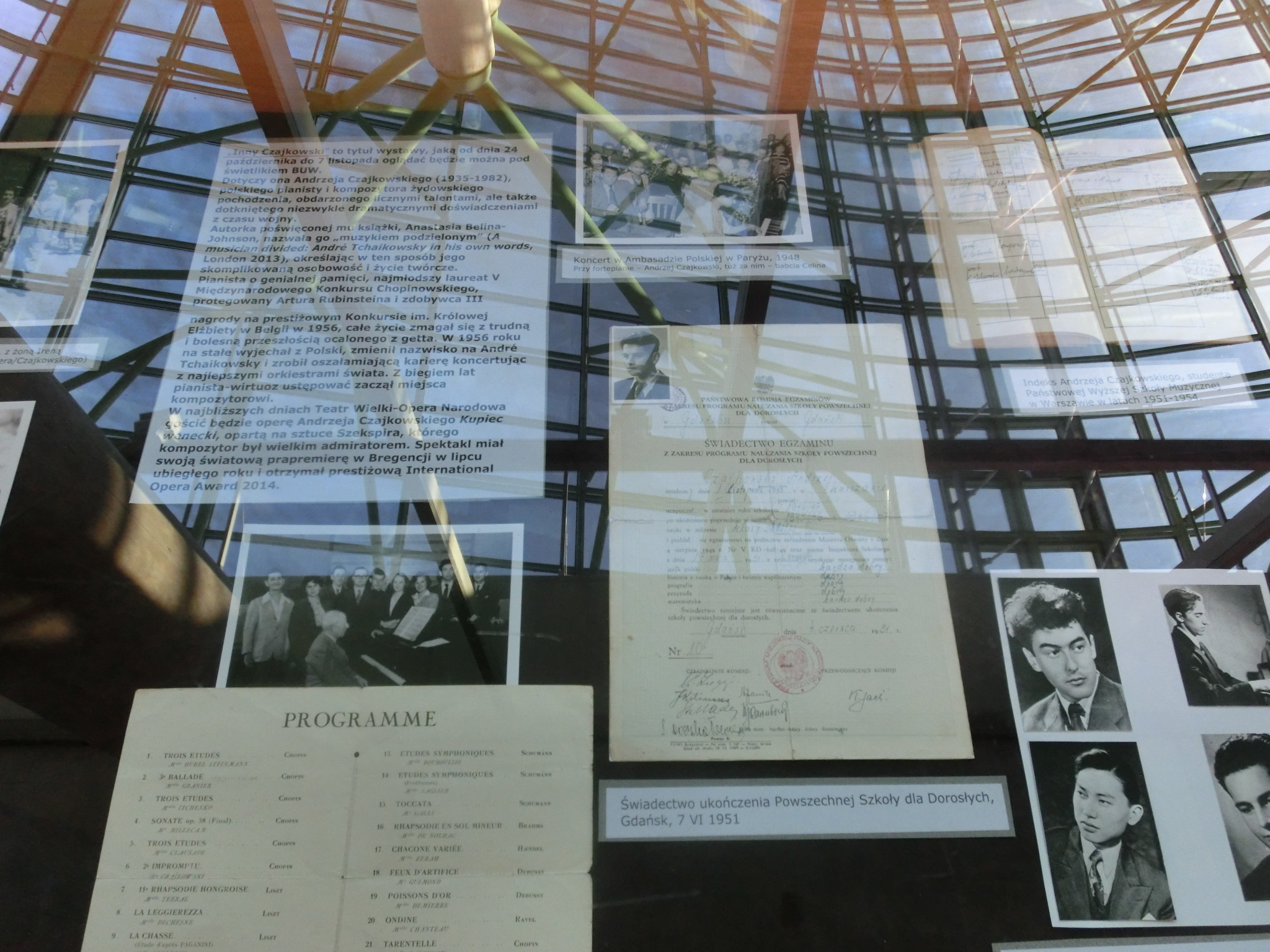
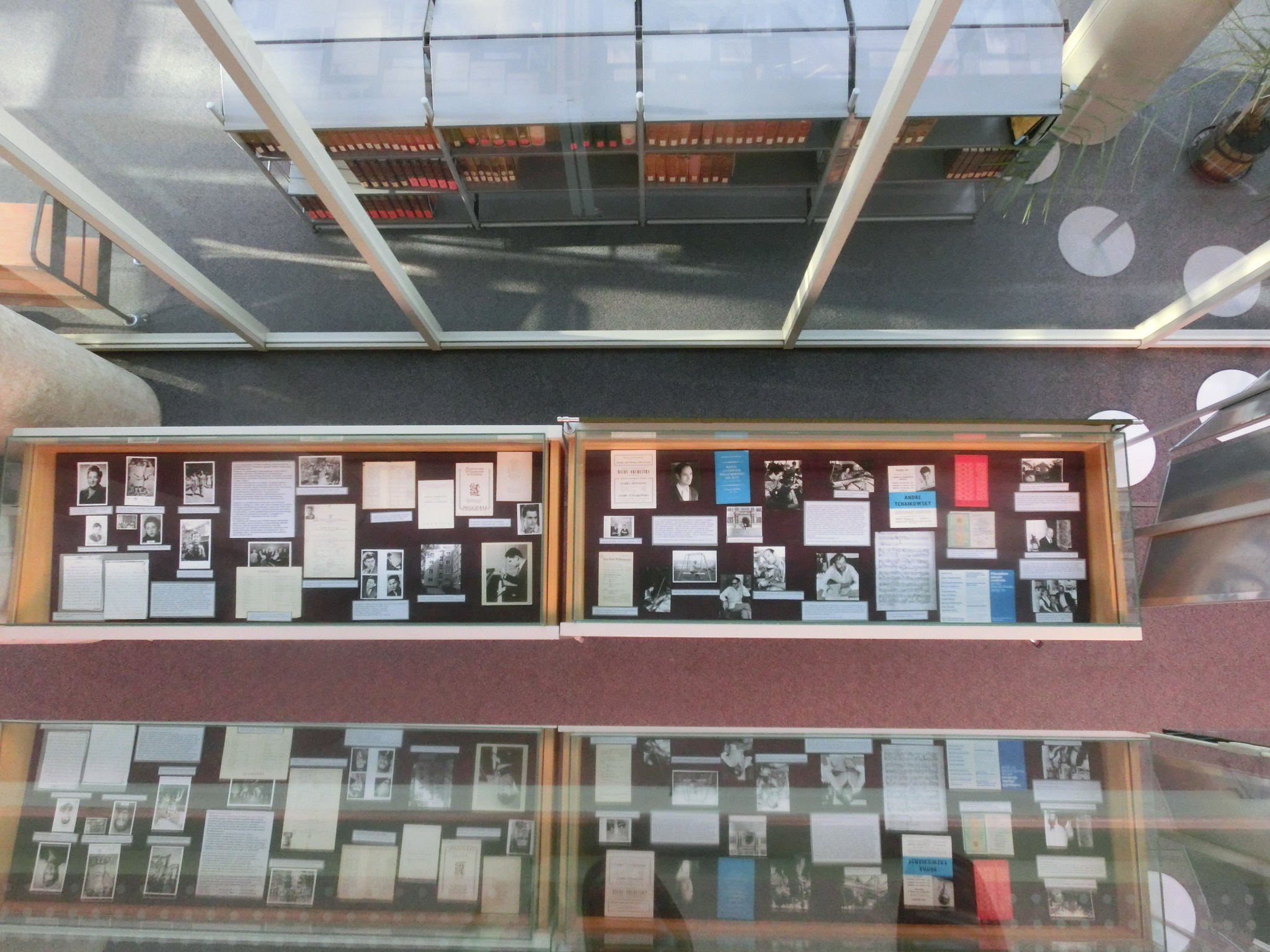
Exhibition - "The Other Tchaikowsky" University of Warsaw
A special
exhibit from the University of Warsaw Andrzej Czajkowski Archive was
displayed to coincide with the presentation of the Andrzej Czajkowski
opera performances of October 2014 at the Warsaw Opera House. Curator
Magdalena Borowiec titled the exhibit: "The Other Tchaikowsky,"
which was given a prominent place within the library complex and was
visited by 100s of interested persons. Click
Here for a webpage announcing the exhibit; click any photo below
for a more detailed display.
(2014)
Documentary "Rebel of the Keys"
A London production company, Entertaining:TV,
has announced the title of their upcoming film-length documentary about
André Tchaikowsky called "Rebel of the Keys." Click
Here for the documentary website. The director of the documentary
is Mark Charles and producer is Liz Smith. Click
Here for a film description on the culture.pl
website. Screenings will be announced on the Rebel of the Keys website.
Entertaining:TV has also produced a short video: "The Other Tchaikowsky"
on Vimeo (Click
Here). Also produced was a 45-minute version of "The Other
Tchaikowsky" that was broadcast on Austrian Television with German
subtitles. Lastly, on the DVD
release of the opera "The Merchant of Venice," there is
a 50-minute documentary "Journey to Bregenz - The Planning of an
opera."
|
|
Click
Here for a YouTube Rebel of the Keys trailer
|
(2014)
Andrzej Czajkowski - Legend of a brilliant nonconformist
The Fryderyk
Chopin University of Music in Warsaw, Poland is hosting a conference
"Chamber Music with Piano" on April 5 and 6, 2014. The Andrzej
Czajkowski portion of the conference takes place on April 6th at 16:30
with a discussion group featuring pianist Maciej Grzybowski, author
Anita Halina Janowska, violinist Wanda Wilkomirska, and professor Jerzy
Marchwinski. The topic is "Andrzej Czajkowski - Legend of a brilliant
nonconformist." This is followed directly with a concert of Andrzej
Czajkowski's music at 18:00 with pianist Maciej Grzybowski and students
of the university. The main works scheduled for performance are the
Sonata
for Clarinet and Piano and the Trio
Notturno. Click Here
for a program of events (PDF file).

(2014)
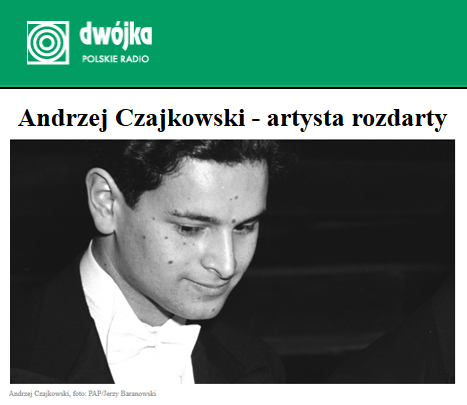
Radio - Andrzej Czajkowski, Artysta Rozdarty [Artist Torn] (Polish)
Broadcast on March 17, 2014 on Polskie Radio Dwójka, this 2-hour-length
radio documentary (in Polish) includes commentary by Dr. Anastasia Bellina-Johnson
(author of the new biography "A Musician Divided: André
Tchaikowsky in His Own Words,") Anita Janowska, Józef Kanski,
Jerzy Marchwinski i John O’Brien, Maciej Grzybowski, David Pountney,
Michal Bristiger, Katarzyna Naliwajek-Mazurek i Jacek Kaspszyk, and
Aleksandre Laskowski. Click
Here for the original radio webpage; Click
Here for original radio webpage as a *.jpg image.
Hear Complete
broadcast as an *.mp3 file: artist_torn.mp3
(100Mb) (nominal 2 hours)
|
Radio
excerpts from "Andrzej Czajkowski, Artysta Rozdarty"
|
|
John
O'Brien (in English)
Andrzej Czajkowski's love of Shakespeare
mp3 file (2 min) - Click
Here
|
Katarzyna
Naliwajek-Mazurek (in Polish)
On Andrzej Czajkowski's music
mp3 file (3 min) - Click
Here |
Jacek
Kaspszyk (in Polish)
Remembering Andrzej Czajkowski
mp3 file (3 min) - Click
Here |
Andrzej
Chlopecki (in Polish)
On Andrzej Czajkowski Piano Concerto Op. 4
mp3 file (5 min) - Click
Here |
Halina
Janowska (in Polish)
Remembering Andrzej Czajkowski
mp3 file (4 min) - Click
Here |
Jerzy
Marchwinski (in Polish)
On his knowledge about Andrzej Czajkowski
mp3 file (2 min) - Click
Here |
Józef
Kanski (in Polish)
On the talent of Andrzej Czajkowski
mp3 file (4 min) - Click
Here |
Michal
Bristiger (in Polish)
On the creativity of Andrzej Czajkowski
mp3 file (2 min) - Click
Here |
(2014)
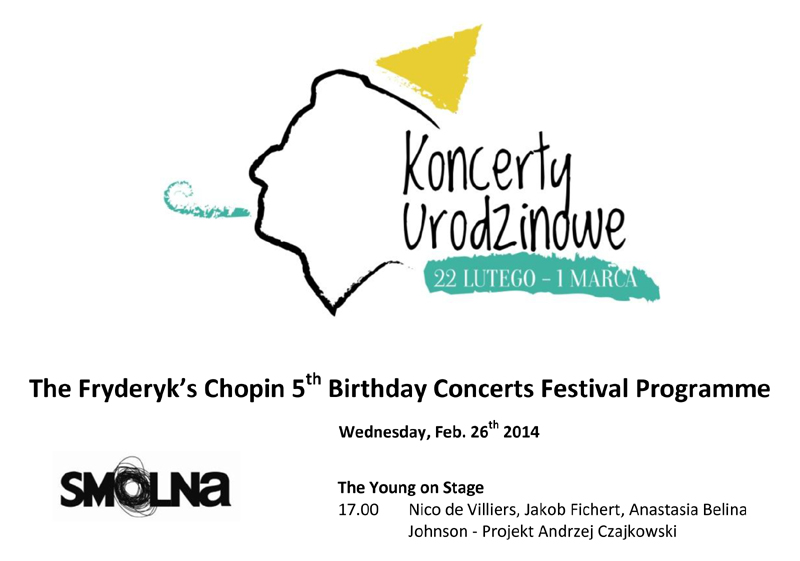
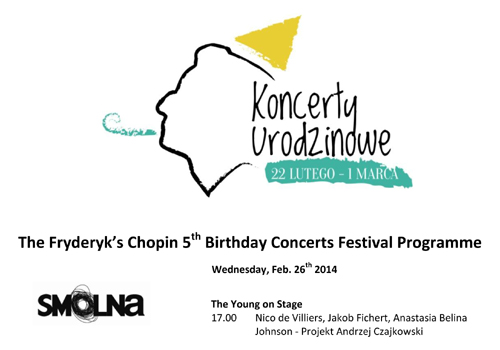
"Project Czajkowski" Warsaw Concert
Celebrating Chopin's birthday, smolna.org presented a 5th annual series
of free concerts between February 22nd and March 1st, 2014. A concert
on February 26th was called "Project Czajkowski" and featured
pianists Jakob Fichert and Nico de Villers, playing the music of André
Tchaikowsky, with commentary given by Dr. Anastasia Belina Johnson (simultaneous
translation to Polish by Hanna Milewska). Click
Here to learn more about smolna.org; Click
Here to view the concert-series poster. Click
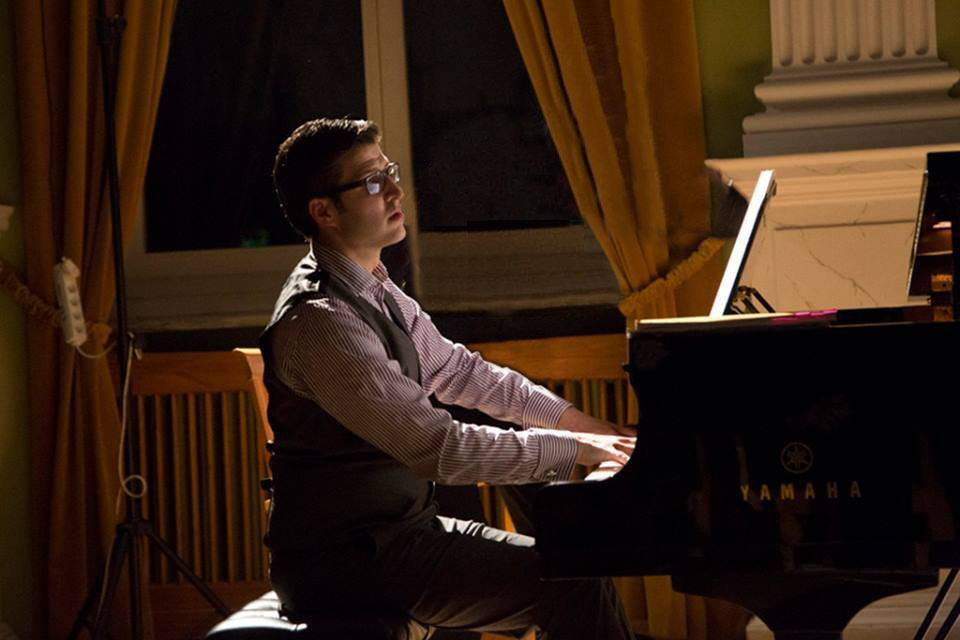
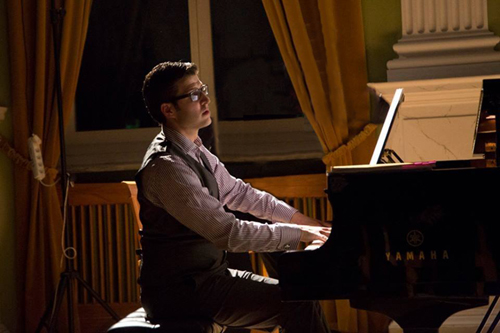
Here for venue photograph. Below, Nico de Villers in performance,
playing the André Tchaikowsky Sonata for Piano.
(2014)
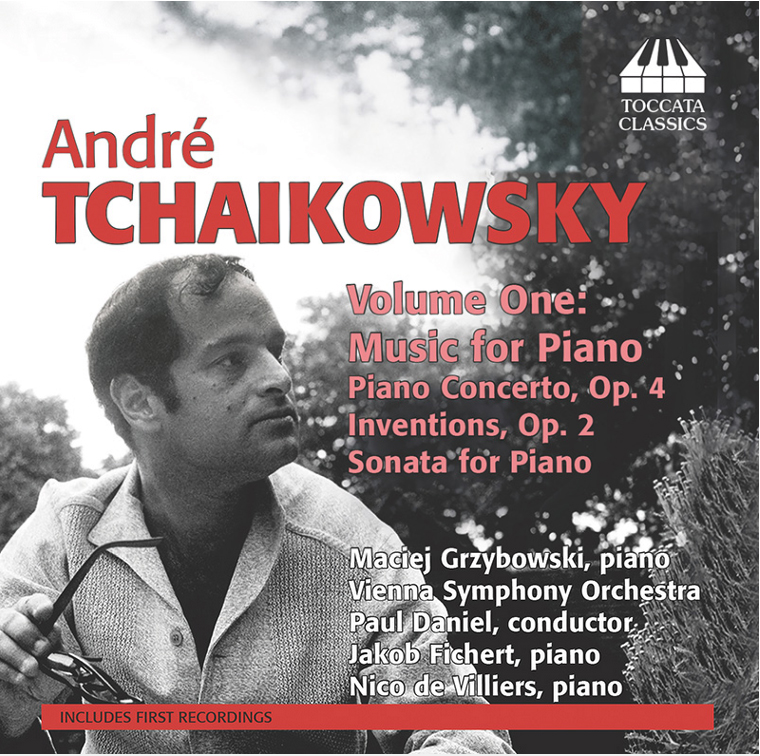
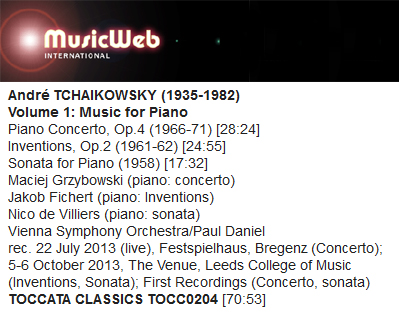
MusicWeb International Reviews Volume 1: Music for Piano CD
Stephen Greenbank reviews the first music CD dedicated to the compositions
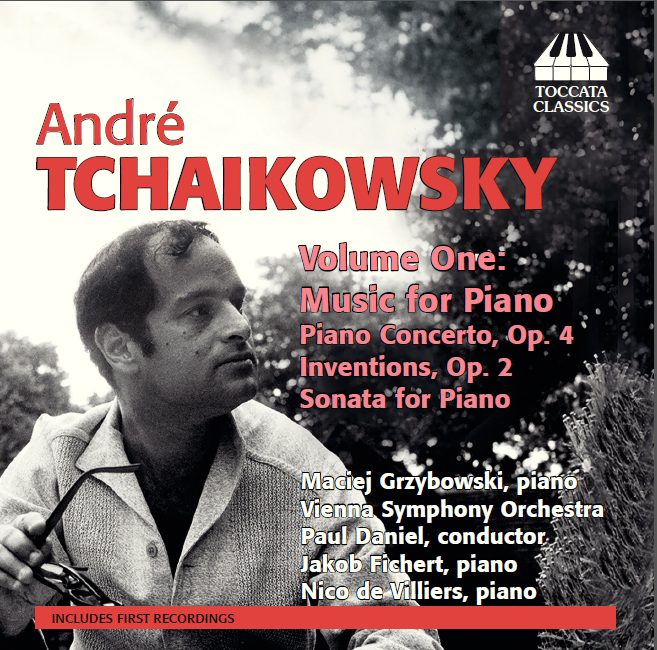
of André Tchaikowsky. Included on the CD are the Piano Concerto
Opus 4, The Inventions, and Piano Sonata. Click
Here to learn more.
(2014)
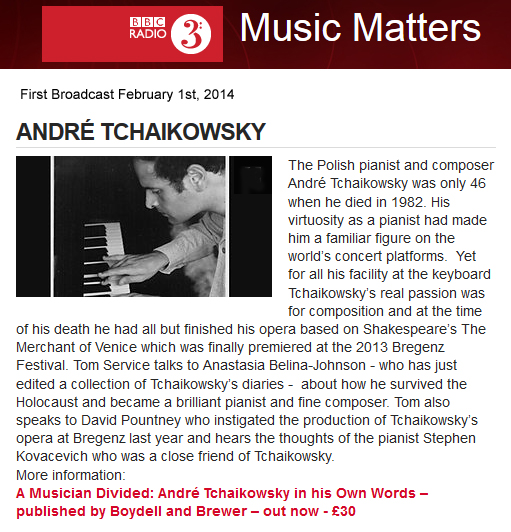
Music Matters Radio Broadcast
From the BBC website for the broadcast: "Polish composer and pianist
André Tchaikowsky is the subject of a new book by Anastasia Belina-Johnson,
Tom talks to the author as well as pianist Stephen Kovacevich and opera
director David Pountney about this fascinating yet complex musician."
Click
Here for the online link to the broadcast; Click
Here for an mp3 file of the broadcast (André Tchaikowsky
portion only) or use the player feature below.
(2014)
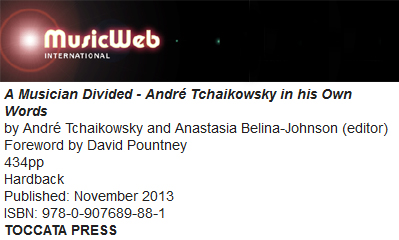
MusicWeb International Reviews "A Musician Divided"
Stephen Greenbank reviews the new biography: "A Musician Divided
- André Tchaikowsky in his Own Words," edited by Dr. Anastasia
Belina-Johnson, with a Forward by David Pountney. Click
Here to learn more.
(2014)
André Tchaikowsky Music For Piano Volume 1 "Album of the
Week"
Featured on the popular Norman Lebrecht "Slipped Disc" website
(Click
Here), Toccata Classics release of André Tchaikowsky Music
for Piano Volume 1 received 4 out of 5 stars in this review (Click
Here). Another version on the Culture.pl website (Click
Here - in English).
(2014)
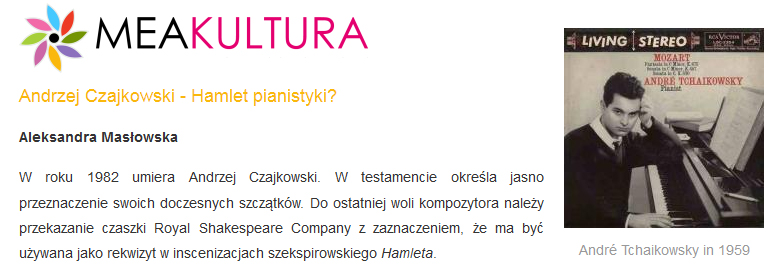
Andrzej Czajkowski-Hamlet pianistyki? (Polish)
Informative article from MEAKultura website by Aleksandra Maslowska
(Click
Here). For PDF version, Click
Here. Written in Polish.
(2013)
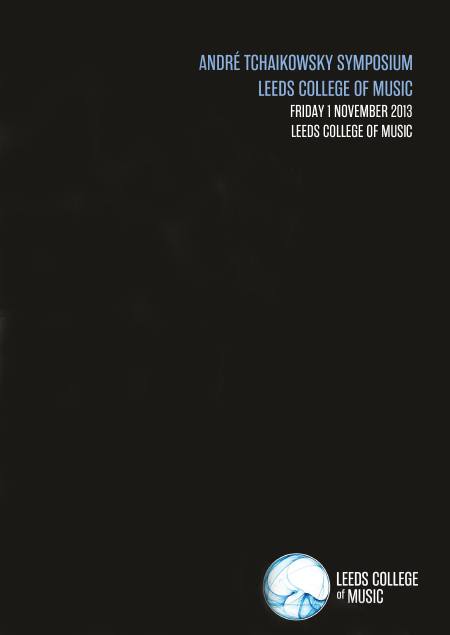
Leeds Monographic Concert and Symposium
André's biographer, Dr. Anastasia Belina-Johnson, who is also
a Head of Classical Music department at Leeds College of Music and a
member of LUCOS (Leeds University Centre for Opera Studies), organized
a concert on André Tchaikowsky's birthday (November 1st, 2013)
dedicated to his compositions (he would have been 78 years old).
Featured was:
The Symposium
on the same day was from 10am until 4pm and included speakers such as
David
Pountney, the Artistic Director of Welsh National Opera; Anastasia
Belina-Johnson revealed her newly published biography of André
called: A Musician Divided: André Tchaikowsky in his own Words
(published by Toccata Press); a new CD of André Tchaikowsky piano
music was released by Toccata
Classics. Click
Here for the event program (PDF file).
|
|
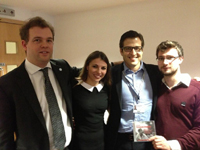
Performers
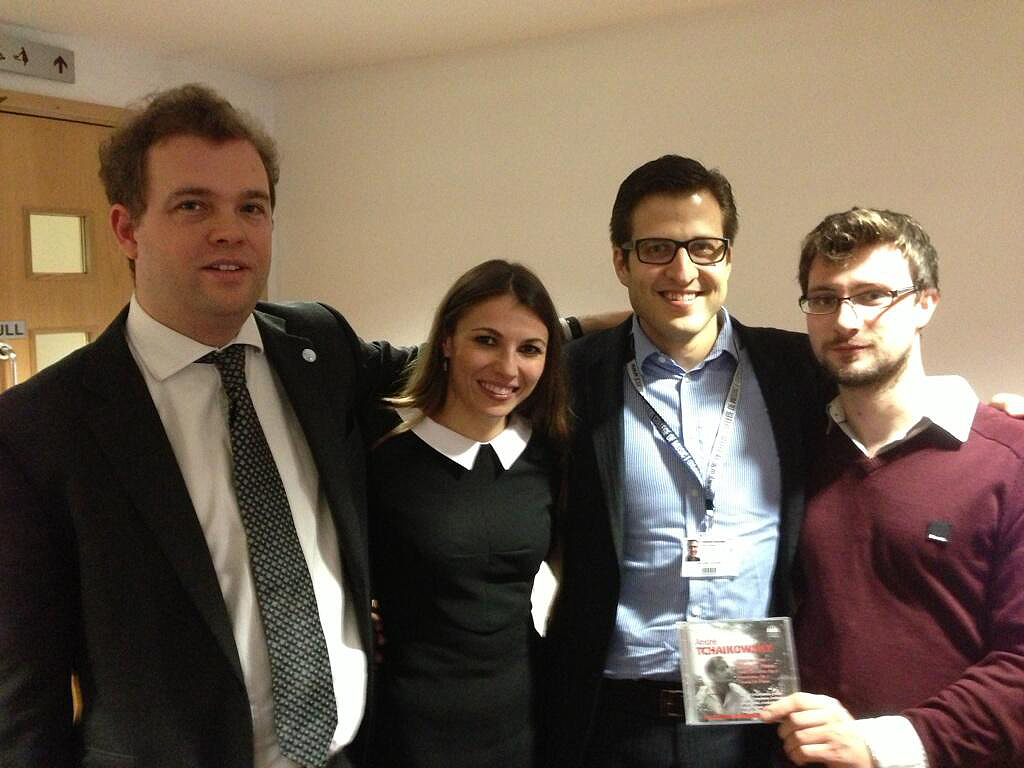
and contributors (left to right) Jacob Fichert, Anastasia Belina-Johnson,
Nico de Villiers, and Mark Rogers (recording engineer for the
Toccata Classics CD).
|
(2013)
Arab Times article "Polish artist Andre’s star rises after
death"
Published by the Arab Times, Monday, October 28, 2013, is this news
article by Cezary Owerkowicz. Mr. Owerkowicz is chairman of the Kuwait
Chamber of Philharmonia and talented pianist. Click
Here to read the article (pdf).
(2013)
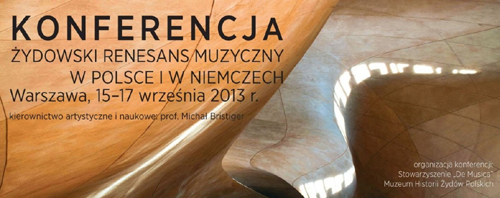
The Jewish Music Renaissance in Poland and Germany
On September 15-17, 2013, the De Musica Association and the Museum of
the History of Polish Jews presented an international conference devoted
to the music of Jewish composers and the influence of Jewish culture
in music. Papers and lectures included the works of Seweryn Barbag,
Mieczyslaw Weinberg and Andrzej Czajkowski. Click
Here for the program in English ; Click
Here for the program in Polish.
(2013)
My Guardian Devil (The Play)
Besides featuring the world premiere of André's opera, The
Merchant of Venice, the 2013 Bregenz (Austria) Festival also included
eight other André Tchaikowsky compositions, a 2-day Symposium
on the life and times of André Tchaikowsky, and several "Poetry
and Music" events. For the first Poetry and Music event on July
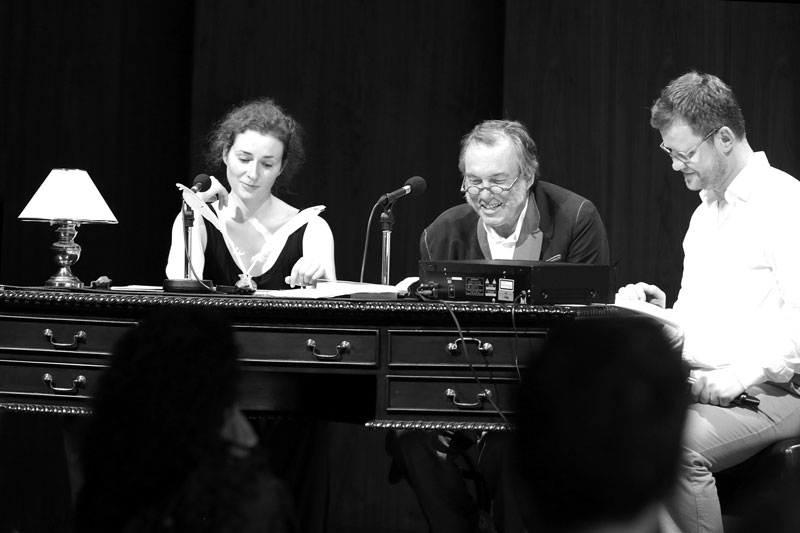
20, 2013, the play "My Guardian Devil" was performed in English
by "Narrator" Aleksander Laskowski of the Adam Mickiewicz
Institute (who also translated the play from Polish), then "André"
was David Pountney intendant of the festival, while "Halinka"
was actress Geertje Boeden. The play was based on the book, Moj Diabel
Stroz (My Guardian Devil) by Anita Janowska (see below). A transcript
of the play is in preparation. (As one who was in attendance, this was
a gripping and hilarious event, and more must be done to see this on
stage.)
|
|
|
(André)
Dear Funnyface, I'm in New York and found your three letters.
I read them in the wrong order and got everything mixed up. Then
I picked my nose and drew some conclusions: Halinka, you can't
leave Marek now. Even if we spent fifty years together, had more
children than Haydn symphonies and made love in every possible
position, it won't work. |
(2013)
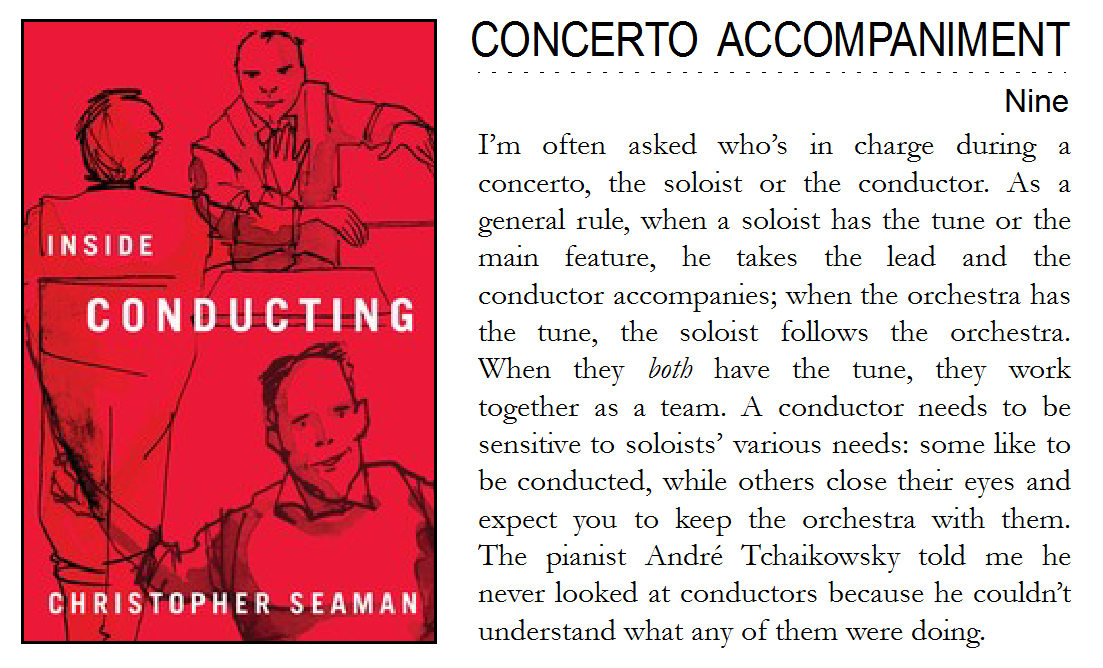
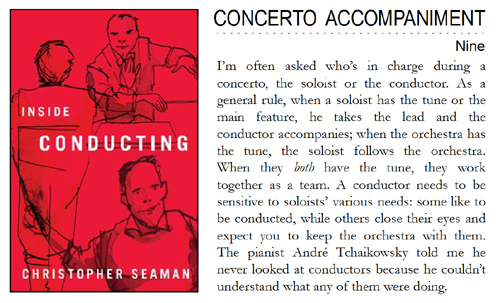
Quote from Christopher Seaman's book, Inside Conducting
Published in June 2013 and reviewed by The Spectator (Click
Here), Chapter Nine includes the quote: "What do conductors
actually do? Some are skeptical. The Polish pianist André Tchaikowsky
told Christopher Seaman that he never looked at conductors ‘because
he couldn’t understand what any of them were doing’."
(2011)
Moj Diabel Stroz (My Guardian Devil)
An updated and enhanced 3rd edition of Moj Diabel Stroz hit the
Polish bookstores in early July, 2011 (see information on previous 1988
and 1996 editions below). Published by W.A.B. as part of the Fortuna
i Fatum (Fortune and Fate) series of books that features vivid portraits
of interesting characters with diaries, letters, and memories of those
who knew them. This book (in Polish) may be purchased from W.A.B. (Click
Here), or other online books sellers such as Empik (Click
Here). (An English version is in preparation.)
Culture.pl
Click
Here for online review of the 3rd edition by the Culture.pl website
for Literature (in Polish only).
Remigiusz
Grzela (Polish novelist, poet and playwright): "These letters
between Andrzej Czajkowski and Anita Halina Janowska are a case without
precedent. I have never read of such correspondences. He, an artist
suffering in long periods of depression, who is homosexual and a child
of the ghetto, while she, trained in criminology and psychology of crime,
is a dreamer escaping from realism. They exchanged letters for more
than 20 years, which are full of love, sometimes hatred, worship, pain,
strife, humiliation, contempt, and masochism. What a read!"
Anna
Bojarska (Polish author): "I read this book in one breath,
with the highest admiration, and I would implore people, for heaven's
sake, do the same!"
Roswitha
Matwin-Buschmann (German author and translator): "This exchange
of letters is one of the most fascinating books I have ever read. This
is an authentic document of history 'written by life' that has become
- after selections by Halina with the consent of Andrzej - literature,
because the sensitivity, incorruptible intelligence, capacity for critical
reflection on himself, and then the intellectual horizons and undeniable
literary talent of both authors. You can read this book entrusted to
us in two dimensions: as an intimate confession and as a human gripping
psychological novel."
Wislawa
Szymborska (Polish author, recipient of the 1996 Nobel prize for
literature): "You have made me enormously happy with this book.
So little is known about Andrzej Czajkowski, that this correspondence
provides an invaluable source of information on him, as a musician and
as a person... Besides that, it is a genuine love story, about the difficult,
complicated, but constantly revived relations between two remarkable
people."
Jacek
Borowski (Newsweek Magazine) "They fall in love in the mid-50s
at the Warsaw Conservatory, but he goes abroad, starts a brilliant career
as a pianist, travels the world, nay, even changes his sexual orientation.
And she's getting married again and again, each time caring for the
dying-in-agony husbands, but also raising a daughter. Both have ambitious:
he begins to compose, and she completes a PhD. Over the years, they
send each other letters in which they profess their love. Feelings in
the letters are not only divulged, but also analyzed. Why and what do
they love? Do you love love itself? A must read for anyone who has ever
loved." Click
Here for the original online article (in Polish).
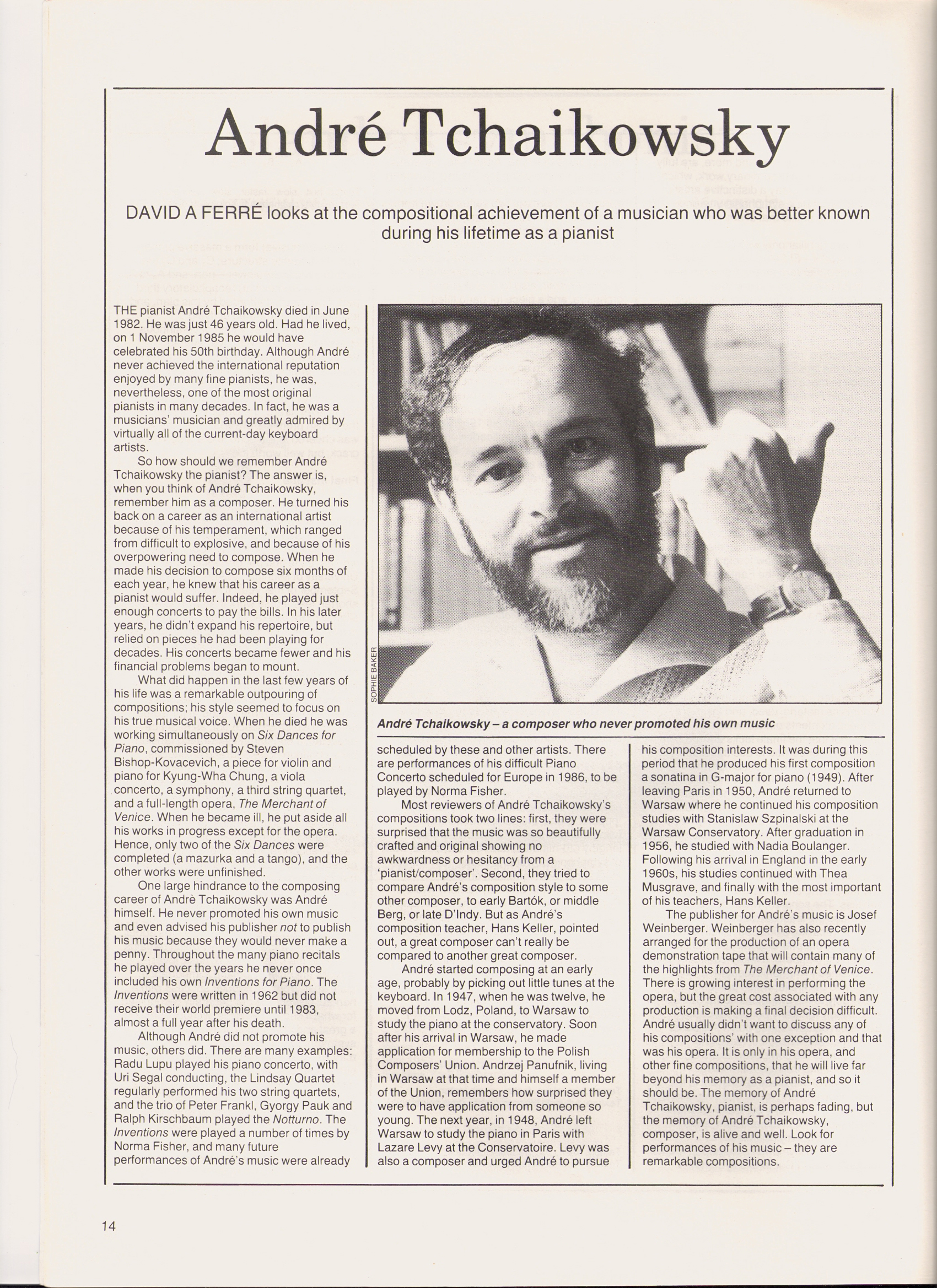
(2010)
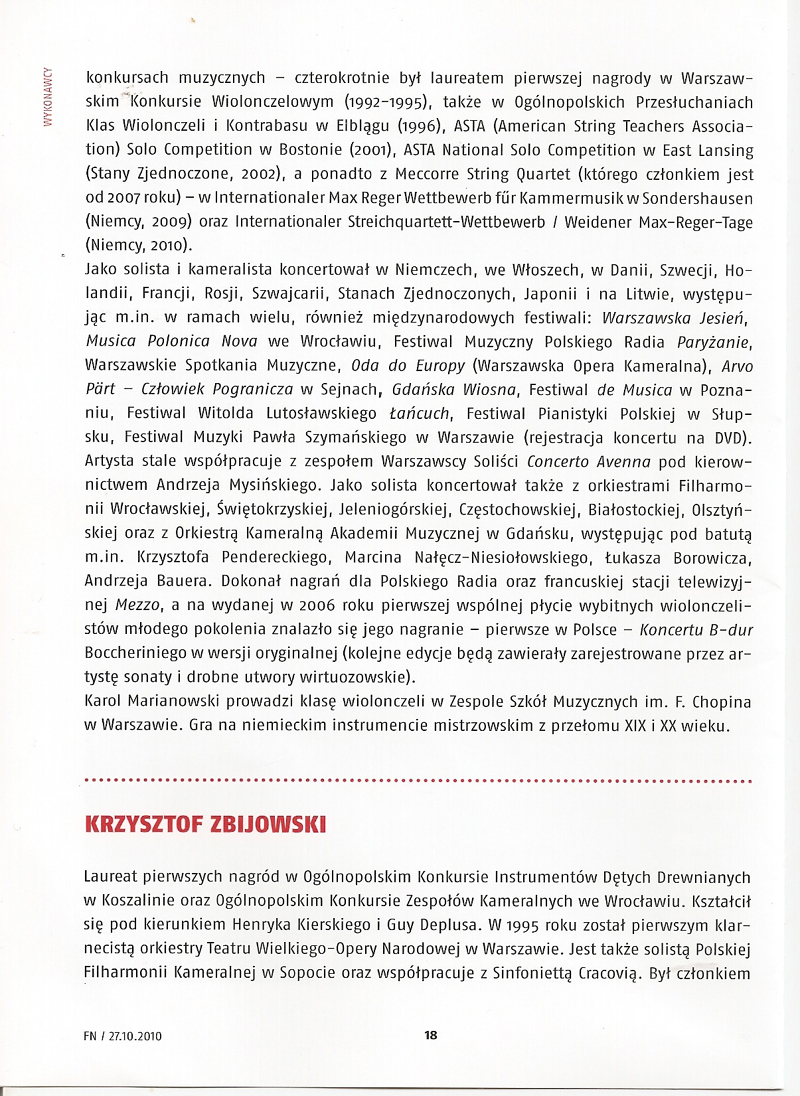
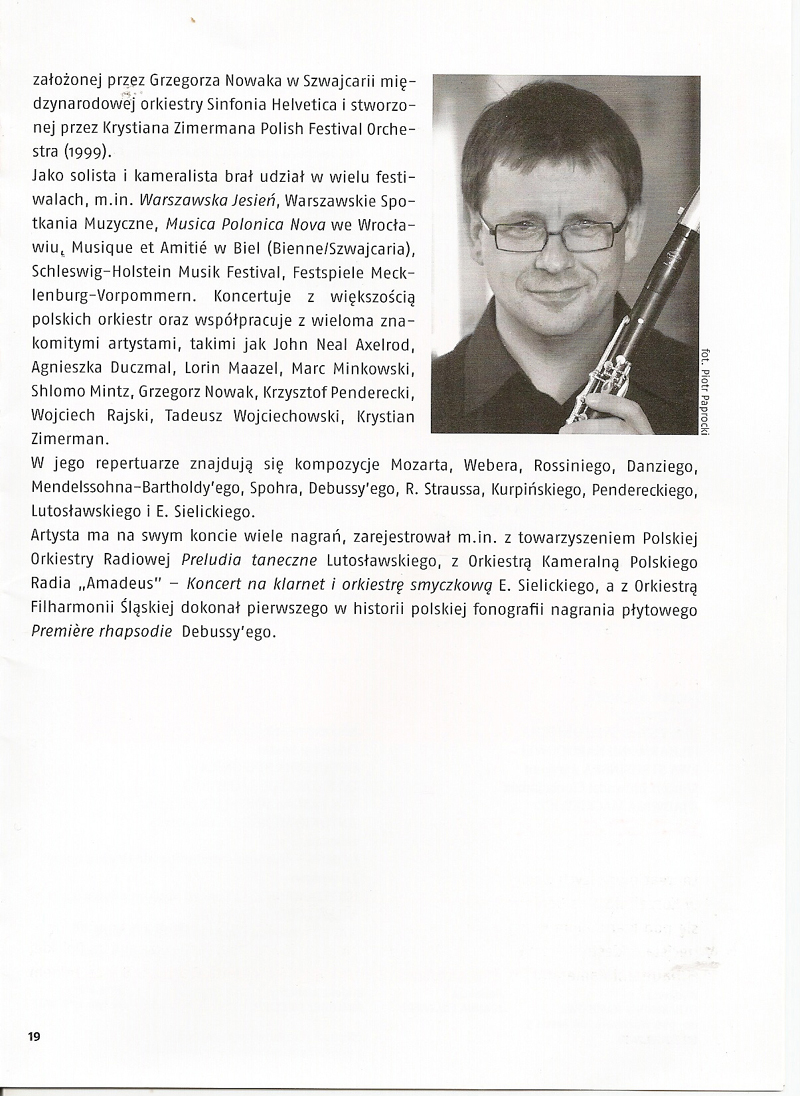
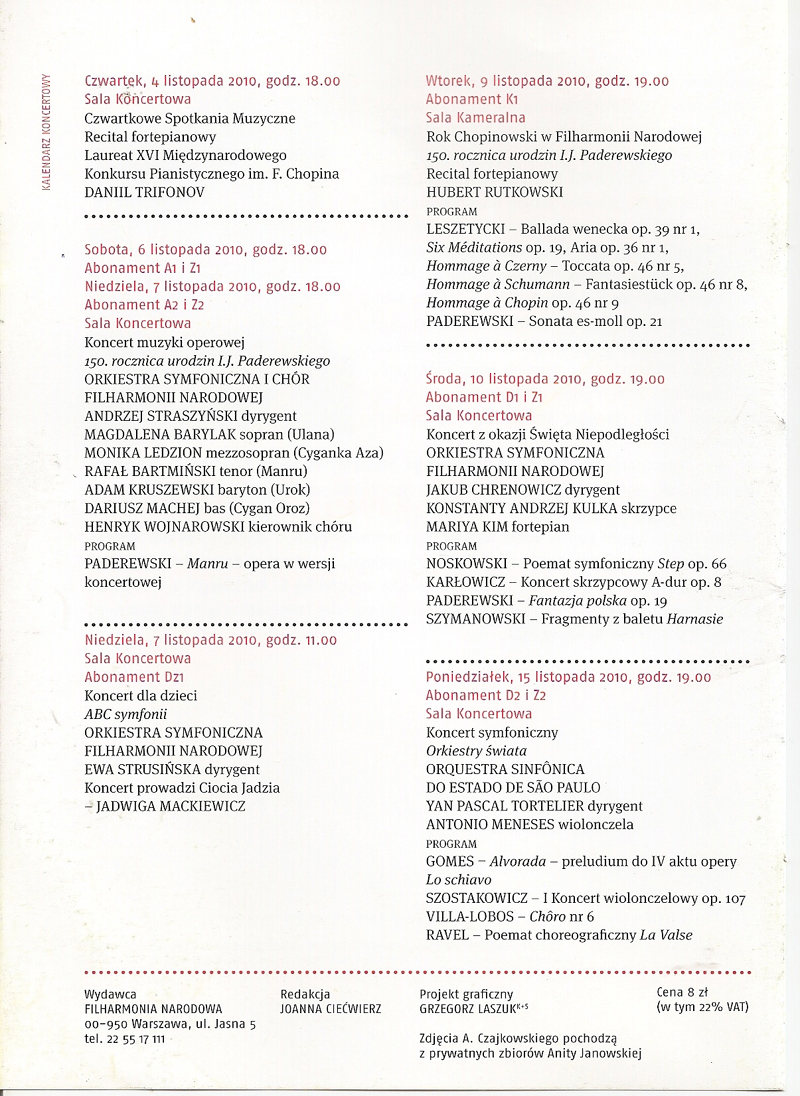
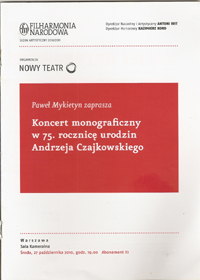
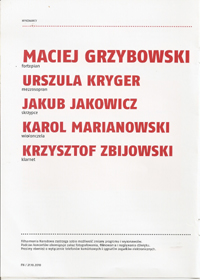
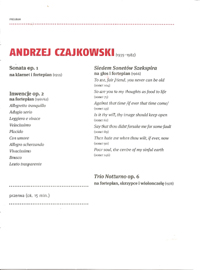
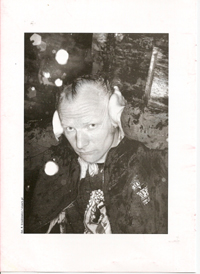
Warsaw Monographic Concert of Andrzej Czajkowski Music
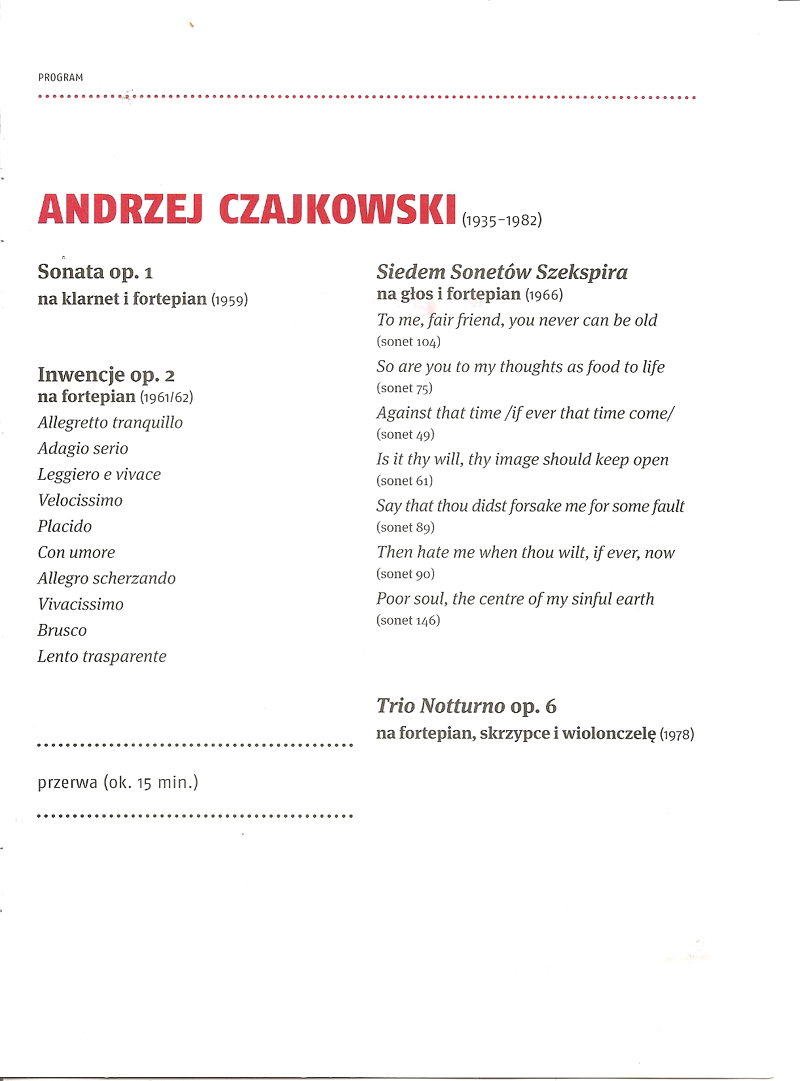
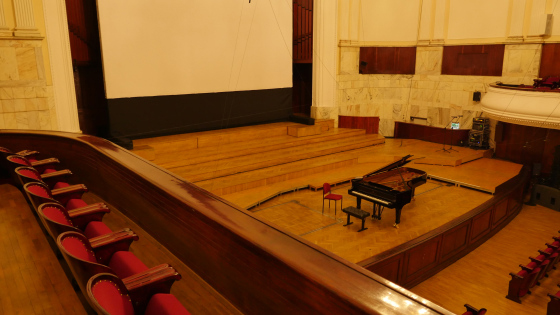
From October 27, 2010, held at the Sala Kameralna, Warsaw, Poland.
This concert honored the 75th anniversary of Andrzej's birth in 1935.
The complete program, page-by-page, is in the left column.
(2008)
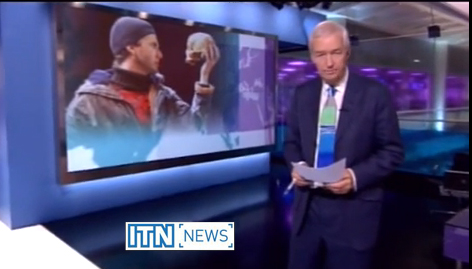
Television Broadcast about Hamlet and André's Skull
A television broadcast about the Royal Shakespeare Company bringing
Hamlet, and André's skull, to London. For the video, Click
Here. Click
Here for just the audio. Voices: Jon Snow, Stephanie West, Terry
Harrison, and Judy Arnold.
(2008)
Hi-Fi i Muzyka Magazine
The September 2008 issue of the Polish magazine, Hi-Fi
i Muzyka, featuring an excellent article about Andrzej Czajkowski,
written by Hanna Milewska. Click Here
to read this article as a PDF file (in Polish).
(2008)
Festival of Theatrical Music
From the Warsaw, Poland Festival
concert of May 19, 2008, featuring an all-Czajkowski program, with performers:
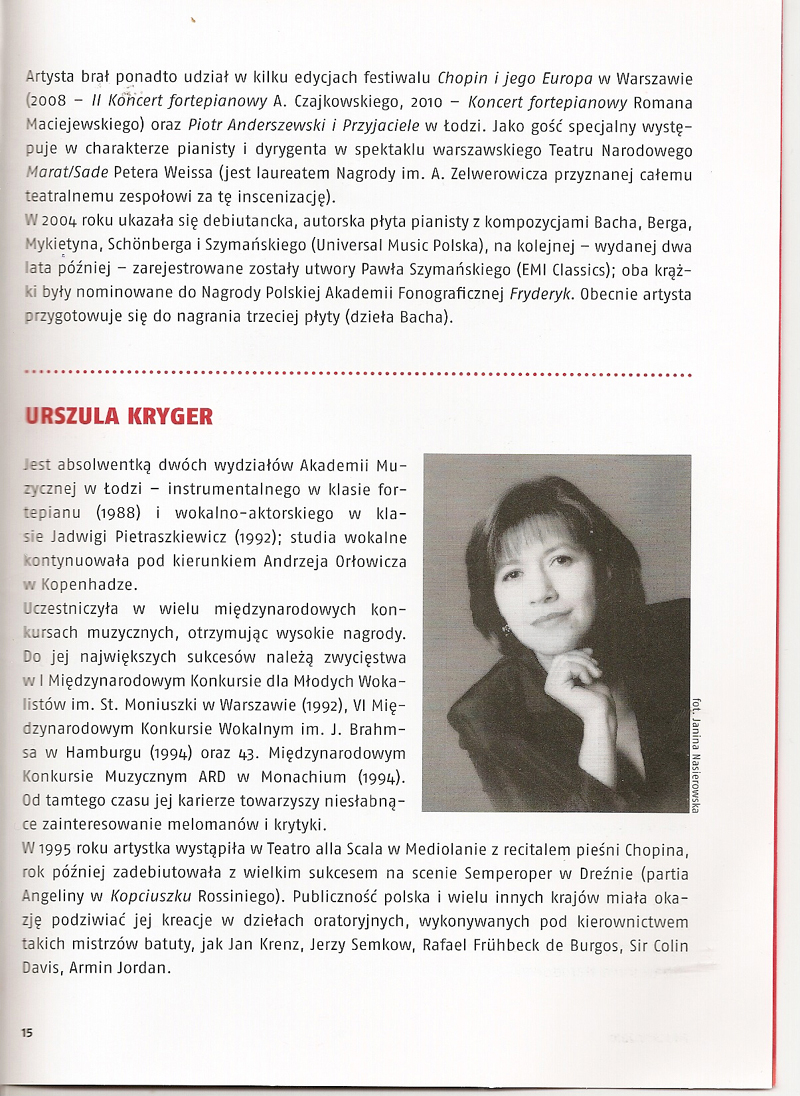
Urszula
Kryger - Mezzo Soprano
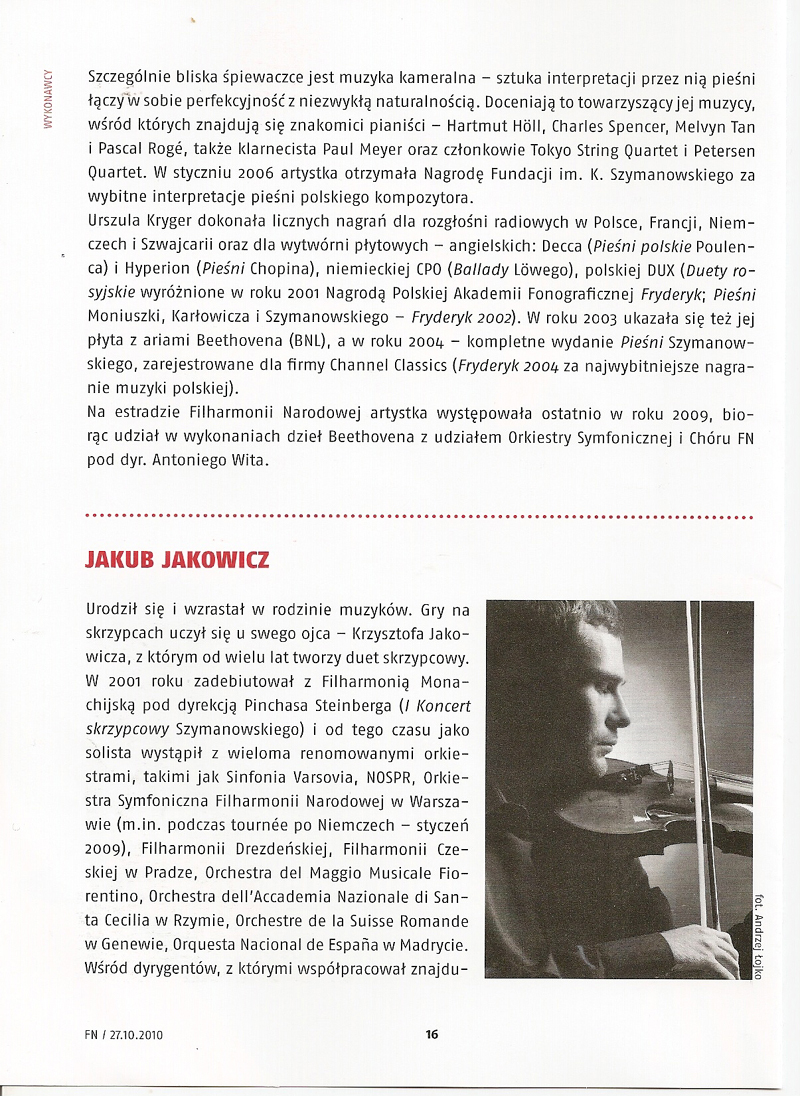
Krzysztof Zbijowski - Clarinet
Marcin Suszycki - Violin
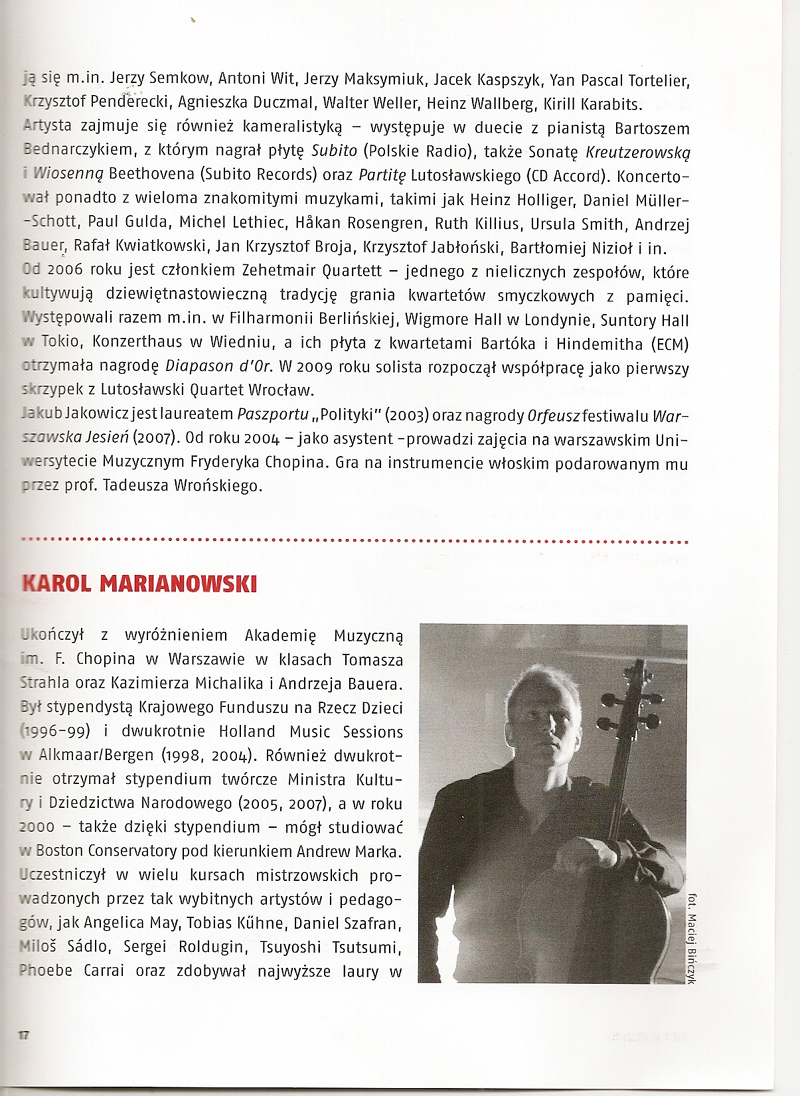
Karol Marianowski - Cello
Maciej Grzybowski - Piano
... and
compositions:
Sonata
for Clarinet and Piano (Grzybowski and Zbijowski)
The Inventions (Grzybowski)
Seven Sonnets of Shakespeare (Grzybowski and Kryger)
Trio Notturno ( (Grzybowski, Suszycki, and Marianowski)
...and
an essay on Andrzej Czajkowski written by pianist Maciej Grzybowski
available as PDF file in English or in
Polish. Click here
for PDF about Maciej Grzybowski.
(2008)
Polish Radio Broadcast
Polish Radio External Service "Focus - Rediscovering Czajkowski"
from Feb. 15, 2008, narrated by Michal Kubicki: rediscovering_czajkowski.mp3
This includes
a performance of Invention No. 9 from the André Tchaikowsky composition,
the "Inventions,"
as played by Maciej Grzybowski.
(2006)
Geniusz Zapomniany? (Genius forgotten?)
From the XII
Koncert Europejski in Olsztyn, Poland, Sala Koncertowa Filharmonii
Warminsko-Mazurskiej, a concert on March 24, 2006, featuring the compositions
of Andrzej Czajkowski. Performers are:
Urszula
Kryger - Mezzo Soprano
Krzysztof Zbijowski - Clarinet
Marcin Suszycki - Violin
Karol Marianowski - Cello
Maciej Grzybowski - Piano
... and
compositions:
Sonata
for Clarinet and Piano (Grzybowski and Zbijowski)
The Inventions (Grzybowski)
Seven Sonnets of Shakespeare (Grzybowski and Kryger)
Trio Notturno ( (Grzybowski, Suszycki, and Marianowski)
Click
here for PDF program notes (in Polish). Click
here for PDF about Maciej Grzybowski.
(2006)
The Woman from Hamburg and other True Stories
The English version of author Hanna Krall's book Dowody Na Istnienie
(Proofs of Existence) is The Woman from Hamburg and other True Stories.
As in the Polish version, the "Hamlet" story tells of Andrzej
Czajkowski (André Tchaikowsky), his struggle, his survival, and
his skull donation. (In English)
Of this
book, Publishers Weekly writes:
The grim
and the surreal portentously collide in Krall's 12 genre-bending pieces,
all shadowed by the brutal facts of the Holocaust. In "Hamlet,"
Andrzej Czajkowski, a Polish piano impresario and composer who survived
WWII as a child hiding in wardrobes, bequeaths his skull to the Royal
Shakespeare Company. ...These investigations are stitched with information
culled from diverse sources: interviews, an encyclopedia, state archives,
diary entries, photographs and letters. Krall's prose is compressed,
unadorned and journalistic. Braiding history with imagination, she
produces necessary accounts that incisively unveil and interrogate
the ruptured historical legacy of Jews after WWII.
Of the
"Hamlet" story, the New York Times writer Elena Lappin
reports:
''Hamlet,''
the story of Andrzej Czajkowski, a Polish-born gay Jewish pianist
who donates his skull to the theater, is the most fascinating, problematic
and personally revealing story in Krall's collection. Although they
never actually met, Czajkowski and Krall were contemporaries. She
addresses him as ''you'' throughout, telling him, a little judgmentally,
the story of his life as she sees it: grandparents, parents, his early
childhood in the Warsaw ghetto. Czajkowski was smuggled out to the
Aryan side with his grandmother, while his mother chose to stay with
her lover in the ghetto and later was murdered in Treblinka. The boy
grows up with an inner rage against his mother.
This book
is available from several online sources including Amazon.com.
(1996
2nd Edition) (1988 1st Ed.) Moj Diabel Stroz (My Guardian
Devil)
After leaving Poland for good in 1956, André began a life-long
correspondence with his good friend, Anita Halina Janowska who put together
a book of letters titled Moj Diabel Stroz (My Guardian Devil).
These amusing letters transverse wide-ranging feelings and sensibilities,
and can alternately be silly, serious, even devastating. First published
in 1988 under Anita Halina Janowska's pen name, Halina Sander, a newer
printing in 1996 shows the author's real name. Click
Here for Moj Diabel Stroz (in Polish) as a PDF file.
The Polish
Book Institute (Instytut Ksiazki) is a national institution established
by the Polish Ministry of Culture and exists to popularize the best
Polish books and their authors. They provided the following review (in
English) for Moj Diabel Stroz:
This
exchange of letters is one of the most fascinating books I have read.
Its subject is two people, a man and a woman, whose correspondence
lasts for over a quarter century. Anita Halina Janowska (Halina Sander),
who was born in 1933, a pianist, doctor of sociology, and writer,
and Andrzej Czajkowski (André Tchaikowsky), born 1935, an eminent
pianist and composer, meet each other, at ages seventeen and nineteen
respectively, at the conservatory in Warsaw, and they at once feel
a strong mutual attraction.
Although
they take their first steps on the same path together, Andrzej's international
career lures him forever to a life abroad. Their love, friendship,
and devotion to each other would be tended from then on in separation
and at a distance, and undergo on either side the most varied transformations
- from total emotional dependence through self-mythologization, to
the disappointment of mutual expectations and their "final break,"
the finality of which - a minor detail compared to their life-long
involvement -l lasted only four years... This authentic document,
this history "written by life," has become - through Halina's
edition and selection, with the consent of Andrzej - a work of literature.
The expressiveness,
uncompromising intelligence, capacity for critical self-reflection,
and the intellectual horizons and indisputable literary talent of
both authors allow us to read the book on two levels: as an intimate,
human confession confided in us alone, and as a compelling psychological
novel. I am sure that a history like this one - whose real-life protagonists
have had the strength and courage to live by their own intuitions,
to live through their own feelings (in sharp distinction from the
ubiquitous drabness of more common outlooks on life), and further,
to articulate those feelings intelligently and with humor (even if
the final outcome should end tragically) - will appeal to a wide audience.
The book's publication became an "event" thanks to the addition
of a CD-rom of music and performances by Andrzej Czajkowski.
Roswitha
Matwin Buschmann
Wislawa
Szymborska, the 1996 recipient of the Nobel prize for literature,
wrote to Anita Halina Janowska (Halina Sander) after the book was
published: "You have made me enormously happy with this book.
So little is known about Andrzej Czajkowski, that this correspondence
provides an invaluable source of information on him, as a musician
and as a person... Besides that, it is a genuine love story, about
the difficult, complicated, but constantly revived relations between
two remarkable people."
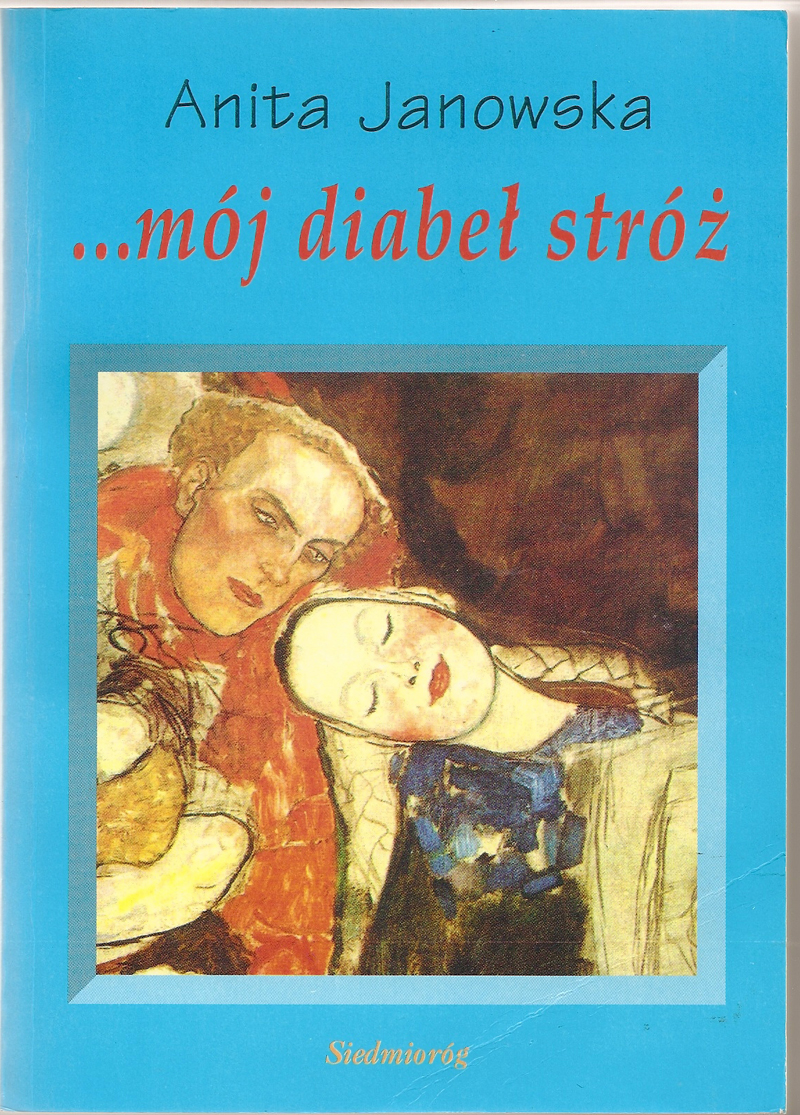
Andrzej
Czajkowski is the protagonist of a long and moving story by Hanna
Krall from her book "Proofs of Existence" (published in
Germany by Verlag Neue Kritik, Frankfurt). Polish edition by Wydawnictwo
SIEDMIOROG Anita Halina Janowska (Halina Sander) The Letters of Andrzej
Czajkowski and Halina Sander ...moj diabel stróz "...
my guardian demon" [A brief sample:]
Brussels,
12.10.56
Halinka, my darling, why haven't you written to me for so long? (...)
I love you like I've never loved you before, I cry like a baby, I
don't so much think about you as sense you. The only memories I'm
not afraid of digging up are our mutual ones. The only hope which
doesn't seem nonsensical is OURS. (...)
Halinka, I'm so sad here - how good that you're in this world.
Your Andrzej
[Radiogram
from Brussels] 21.10.56
We'll call our son Gaspard what do you think? Write soon.
Kisses, Andrzej
[Telegram
from Warsaw] 21.10.56
I want him to be called Daniel.
Kisses, Halinka
Warsaw,
26.10.56
To the presumed father of our putative children!
Thanks for the touching radiogram, but where did you get GASPARD from?
Are you aiming, creatively speaking, to complete with Ravel himself?
I'd prefer Daniel because there's a prophet, and a writer, and a defender
of the oppressed, and on top of that a Biblical figure, so the heritage
is right!
It's hard to believe that Daniel will leap out of your head like Pallas
Athene from that of Zeus, so you'll have to come back, darling. One
swallow doesn't make a summer (...).
New York,
8.11.57
My poor little Funnyface,
I came back to New York the day before yesterday and found your three
letters. (...). Halinka, it's quite simple: you can't leave Marek
now. (...). So, do marry Marek, but that doesn't mean you shouldn't
come to Paris in the summer. On the contrary, it could be a dream
honeymoon for you. (...). As Sacha Guitry puts it: "If you want
to punish your wife's seducer, the greatest revenge would be to let
him keep her." (...). I have an urge to hug you both and to give
you my blessing - I am very moved: to think that I came within a whisker
of ruining your life. (...). Your old Andrzej.
PS I was at Horowitz's He's old, sick and sad. His wife's eyes follow
him, and they're filled with love. They have not said a word to each
other in four years. I'd really like to die young.
A.
Translated
by Jacek Laskowski
(1996)
Dowody Na Istnienie (Proofs of Existence)
Books by Polish author Hanna Krall, such as Dowody Na Istnienie
(Proofs of Existence), center on the lives and fates of ordinary
people, with the Holocaust often as a backdrop. The chapter "Hamlet"
concerns André Tchaikowsky (Andrzej Czajkowski), his struggle,
his survival, and his skull donation. (In Polish)
(1992)
Radio Broadcast
Radio Broadcast "A Study in Contrast" from July 10, 1992,
narrated by pianist David Owen Norris: study_in_contrast.mp3
(1986)
de Musica Interview
Click Here for a PDF file (in Polish and
English) of an interview with David Ferré (author of the André
Tchaikowsky biography and webmaster for this website) and Anita Halina
Janowska (author of My Guardian Devil). This interview took place
in September 1986 for de Musica and also appears in the 2nd and 3rd
editions of My Guardian Devil.
(1985)
André Tchaikowsky (Music and Musicians)
Second of the original magazine articles written by David A. Ferré
in 1985, one of the articles that launched 25+ years of additional research.
(1985)
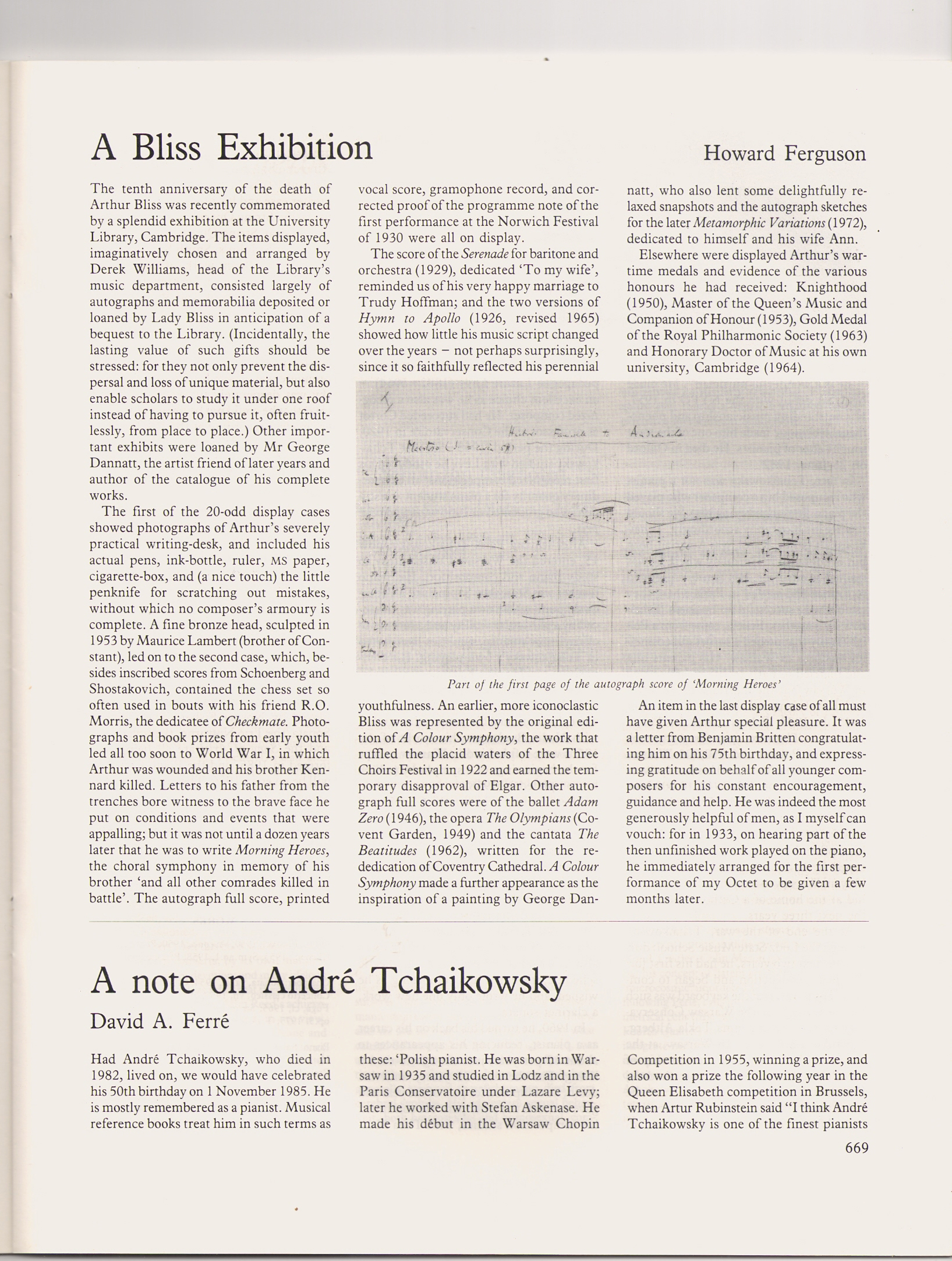
A Note on André Tchaikowsky (The Musical Times)
First of the original magazine articles written by David A. Ferré
in 1985, one of the articles that launched 25+ years of additional research.
(1982)
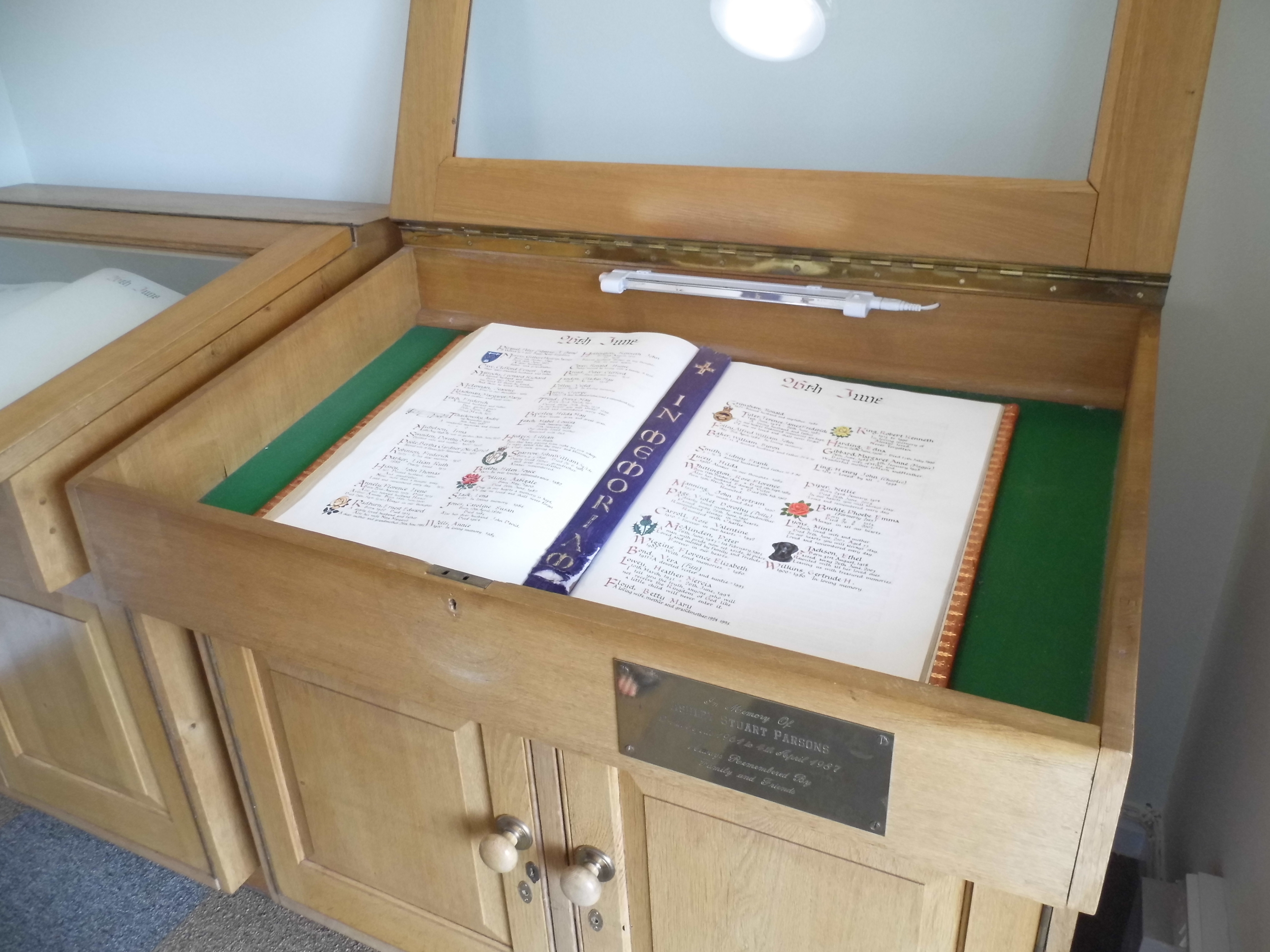
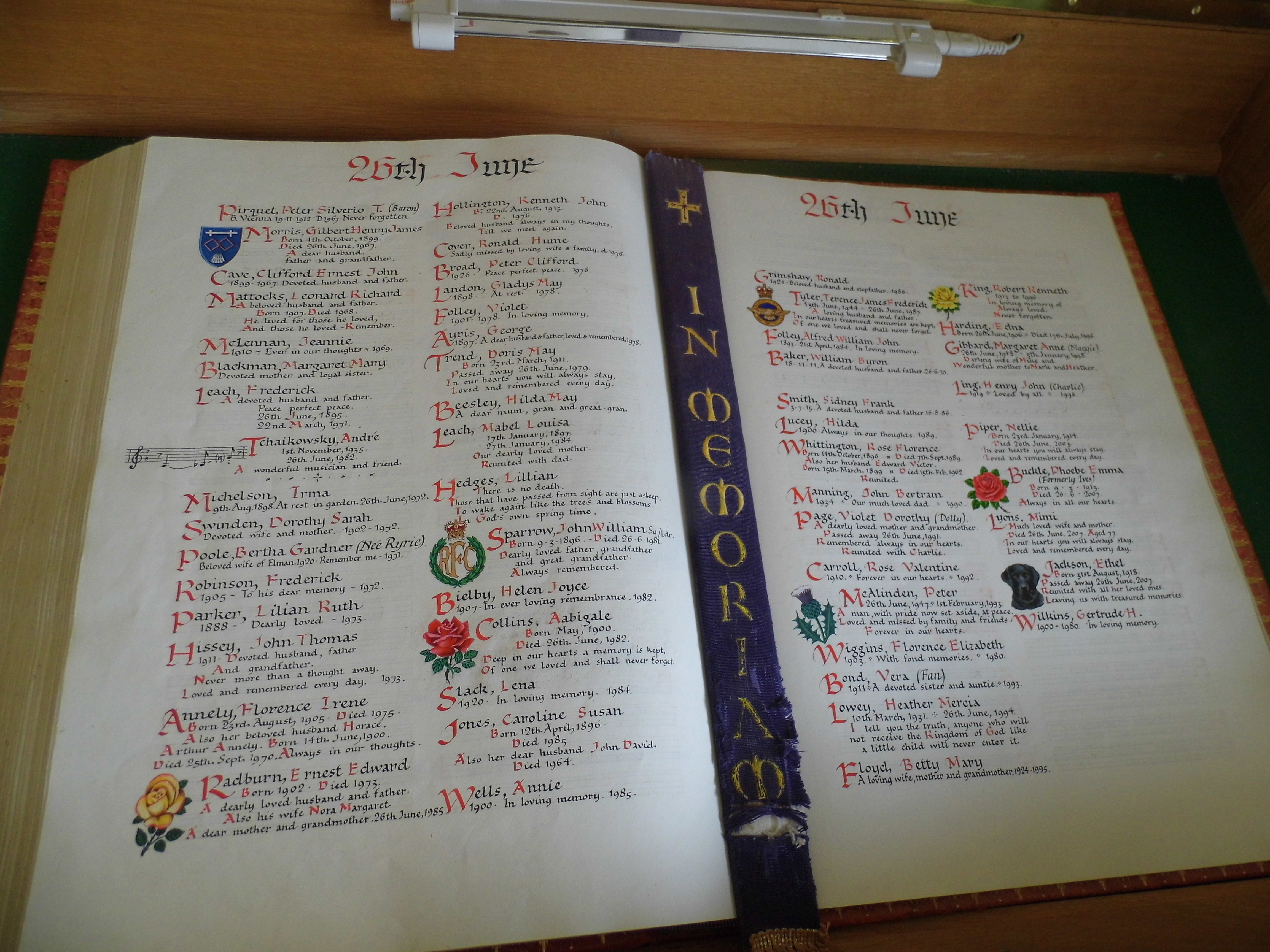
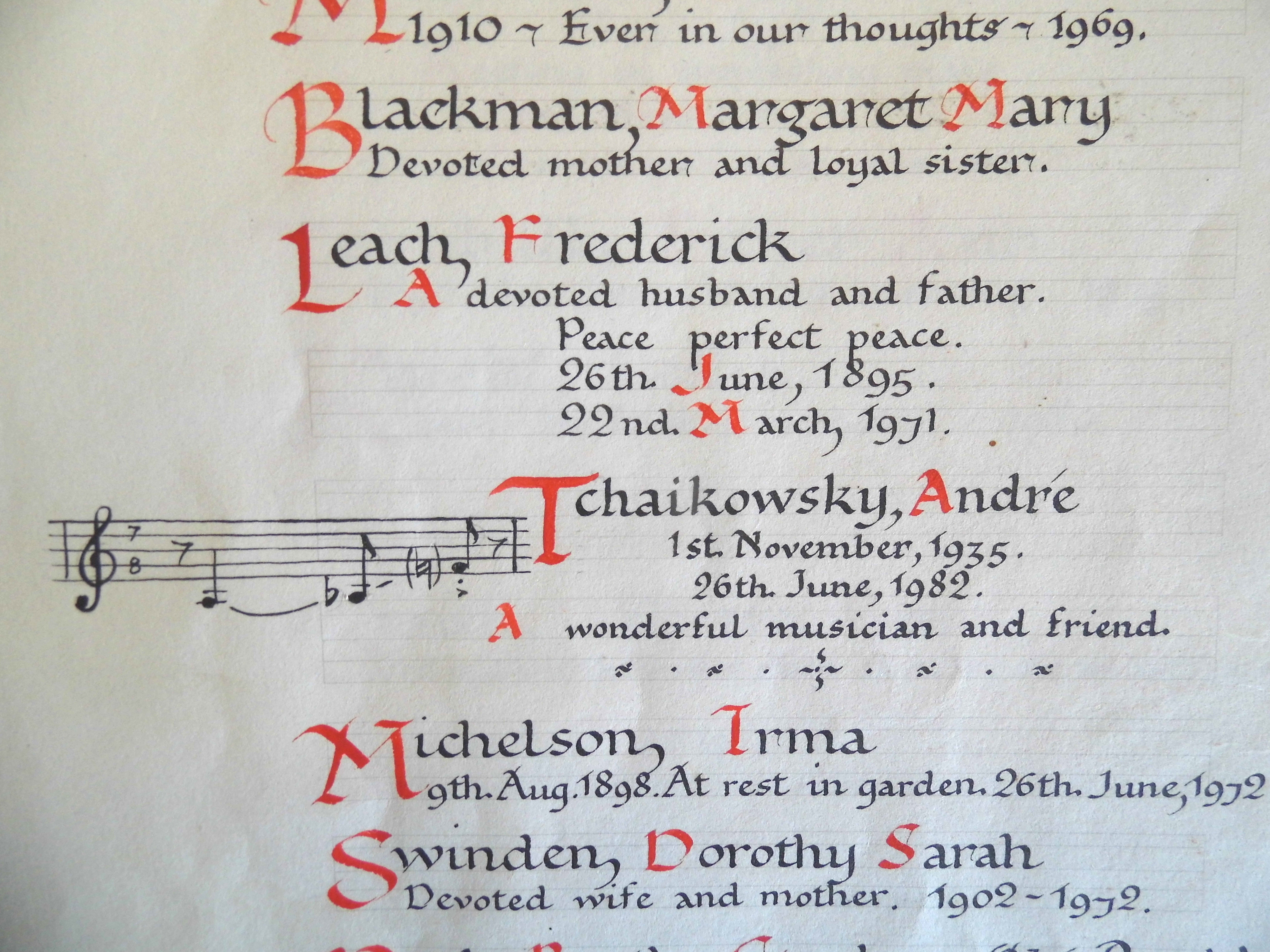
Book of Remembrance (Oxford Crematorium)
Images from the Book of Remembrance for the date June 26th, a book that
resides at the Oxford Crematorium where André was cremated. His
ashes were later scattered at a favorite Oxford park where André
was known to take long walks and a place he enjoyed very much. The musical
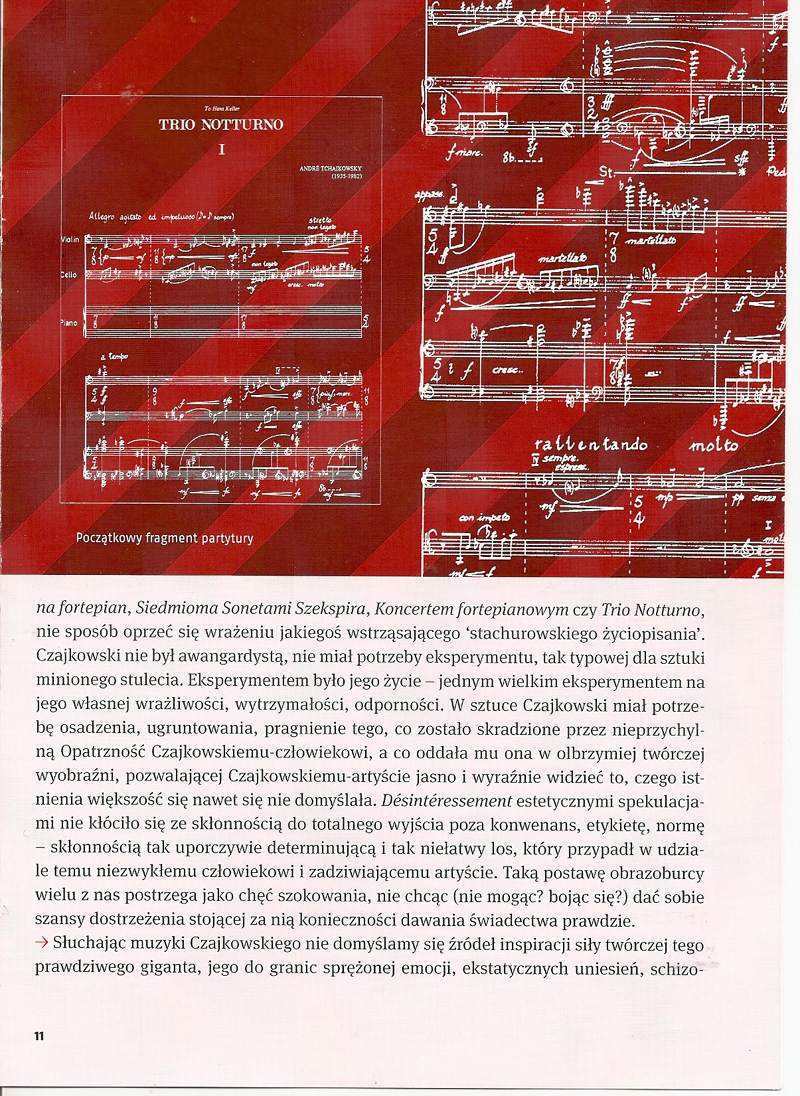
notes on the inscription are from André's composition, Trio
Notturno, a work performed at André's funeral on July 2,
1982. The world premiere performance was two days later at the Cheltenham
Festival on July 4th, 1982, an event that André was looking forward
to with great anticipation. Eve Harrison remembers:
"André was so looking forward to this performance but he
was so very ill and thin by now; none of his clothes fitted and I remember
driving from Cumnor to Oxford to buy him a new wardrobe for the event.
Sadly he died 8 days before this premiere. However, the BBC, specially
recorded the piece with Peter Frankl, György Pauk and Ralph Kirshbaum
on a tape cassette which Terry and I played to him the night before
he died. So, although he missed the concert he did get to hear the work;
and despite being heavily sedated, there was a very strong reaction
from him. It was an amazing and joyous moment."
A website
that reports Jewish-centric events on June 26th, including André's
passing - Click
Here.
(1980)
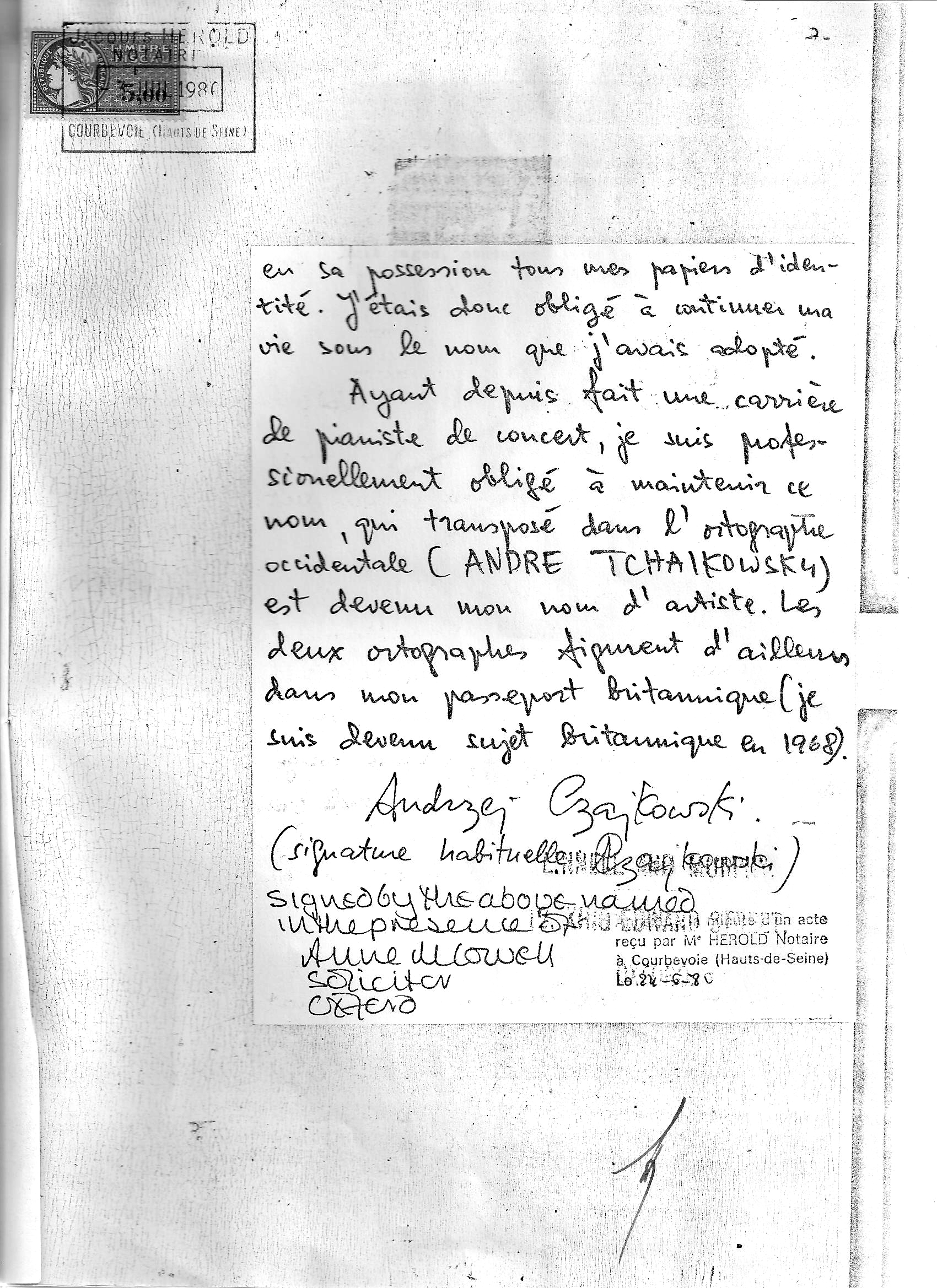
André Tchaikowsky legally recognizes his father
Because there was no supporting paperwork of André's actual birth,
legal papers were prepared to show, 1st, the marriage of his mother
Felicja Rappaport and Karl Krauthammer (marriage extract from 1934),
and 2nd, an explanation where the name Czajkowski came from (two handwritten
sheets by André). This paperwork was duly notarized and became
part of the public record.
(1971)
Radio New Zealand and Bum at the Keyboard
Let conductor Christopher Seaman tell this André story when he
was conducting in New Zealand in 1971.

"The
second half of the concert was the Siegfried Idyll by Wagner, and then
next came André with the Rachmaninoff/Paganini. André
said to me, 'I would love to hear the Wagner.' I told him, 'Well, you're
always back stage warming up. Why don't you take a gamble tonight? Don't
warm up if you want to hear it. Come and listen.' The Siegfried Idyll
is one of my favorite pieces. It has a wonderful atmosphere at the end,
very serene and tranquil.
"Suddenly
at the end; we've just finished the piece, and I suddenly heard, 'Bravo!
Bravo!' I turned around and there was some lunatic in a dirty raincoat
walking down the aisle. I focused my eyes -- it was Tchaik. He'd been
sitting right at the back. He made a real 'Is-there-a-doctor-in-the-house?'
entrance through the audience in his raincoat and jumped up on the stage,
knocking over some potted plants from the edge of the platform. I thought
maybe he had been drinking, but he hadn't. The audience didn't know
who it was until I removed this dirty, beige-colored raincoat. They
saw the man standing in his tails and they realized that it was the
soloist. Then they all clapped and he sat down at the piano. I was furious,
absolutely furious.
"We
then started the Rachmaninoff/Paganini and after about five minutes,
he started to play staccato where it was normally legatto. I thought,
'This is a bit odd.' I looked around and he's sitting there: 'Chris!
The pedal has fallen off the piano!' I thought, 'Serves you right, serves
you right.' I said, 'Do you want me to stop?' He said, 'Yes, yes!' So
I stopped and André stood up and said, 'Ladies and gentleman,
I'm afraid the pedal's fallen off the piano.' I said, 'Well, we'd better
put it back, hadn't we?' So I got under his piano on all fours and put
the pedal back on. It only took a minute or two. Then we got on with
the piece."
From the
archive of Radio New Zealand, hear broadcaster Peter Kingston tell the
story:
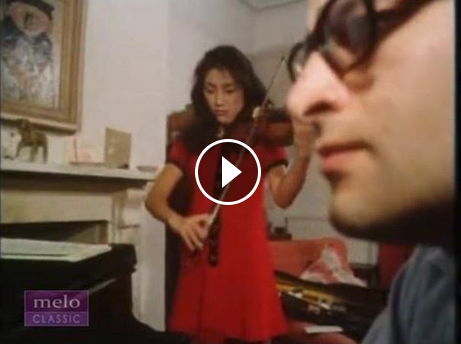
(1970)
Video
- André Tchaikowsky and violinist Kyung Wha Chung
This brief video shows André Tchaikowsky and violinist Kyung
Wha Chung in rehearsal with the Sibelius violin concerto. Thanks to
Meloclassic
for this amazing find. (For many more videos discovered by Meloclassic,
Click
Here.)
(1967)
Interview with André about piano competitions
Interviewed
in June 1967 by Radio New Zealand, André gives insight how piano
competitions can assist a pianist in developing their career. And the
dangers, all of which very much sounds like André's own story.
To
hear André Tchaikowsky play the piano concerto mentioned in this
interview (Defossez - Concerto for Piano and Orchestra, from the 1956
Queen Elisabeth Competition), Click
Here.
(1962)
Video of André Tchaikowsky playing the Prokofiev Piano Concerto
No. 3
Courtesy of Swedish Radio/Television is this full performance of André
Tchaikowsky playing the Prokofiev Piano Concerto No. 3 with the Swedish
Radio and Television Orchestre conducted by Sixten Ehrling. The broadcast
date was April 15, 1962.
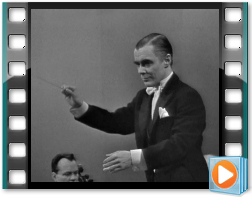
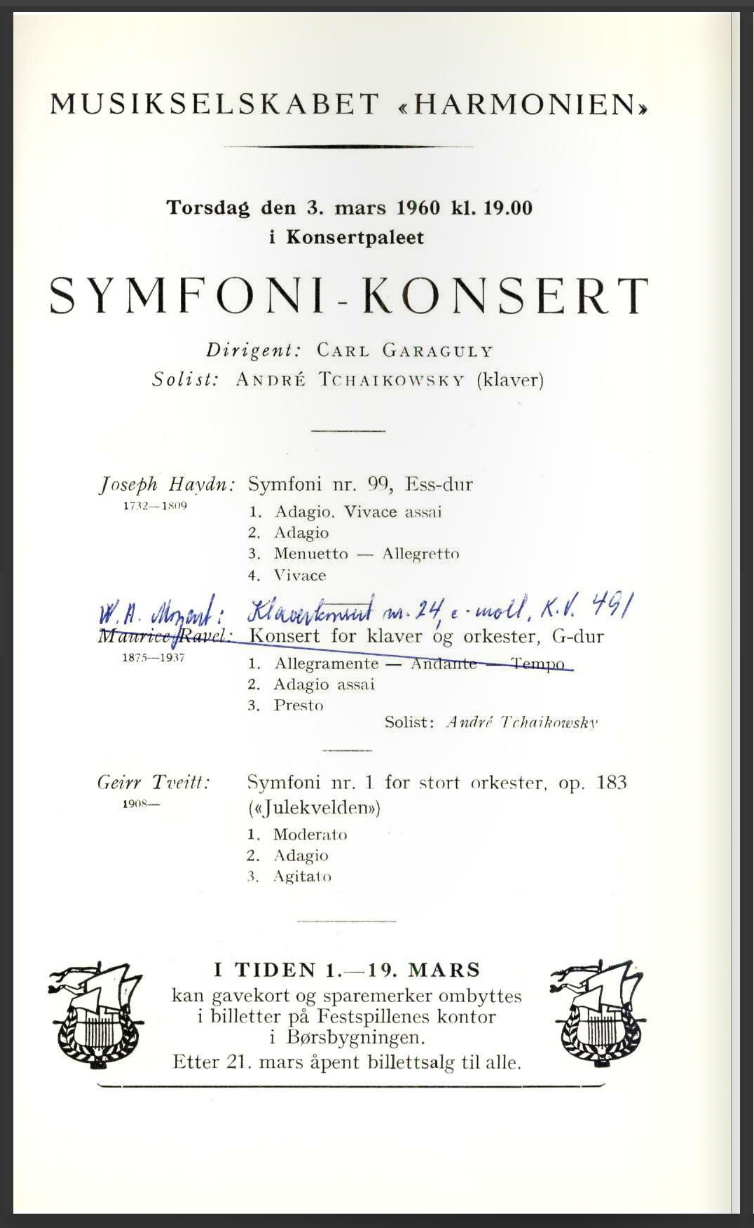
(1960)
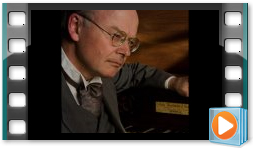
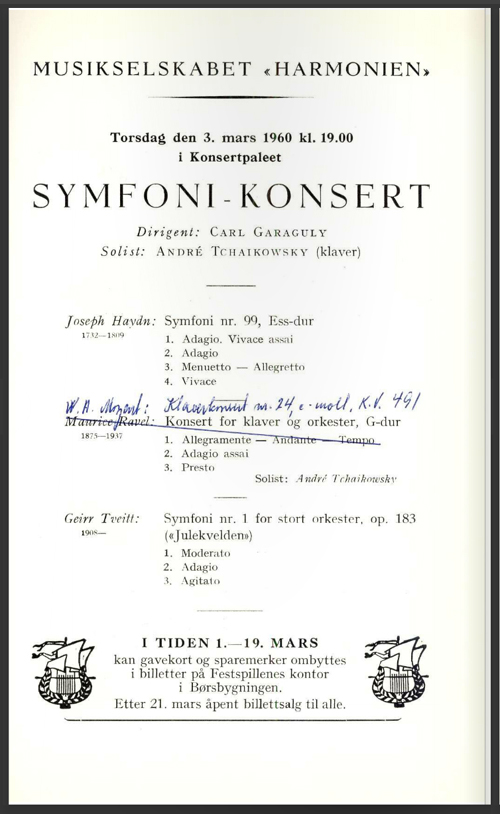
Video story of André playing the Ravel G Major Concerto (or not)
Introduced by pianist David Owen Norris is this André Tchaikowsky
story about his performance of the Ravel G Major piano concerto. The
story is told by Terry Harrison, André's former manager. The
Hungarian conductor, Carl Garaguly, conducted André in this concert.
The scene:
Bergen, Norway for a scheduled concert on March 3rd, 1960. André
arrives the day before the concert for a rehearsal of the Ravel G Major
piano concerto.
(1958)
Pontifical Catholic University of Peru "Bulletin" - André
Tchaikowsky Interview
Adela Barrio Tarnawiecki, a student at La Pontificia Universidad Católica
del Perú (PUCP), boldly asked André Tchaikowsky if he
would consent to an interview for the PUCP "Bulletin" student
newspaper. Tarnawiecki, and three other students, met André the
day after his concert for a cup of tea and to talk. Click
Here to read the complete interview (English).

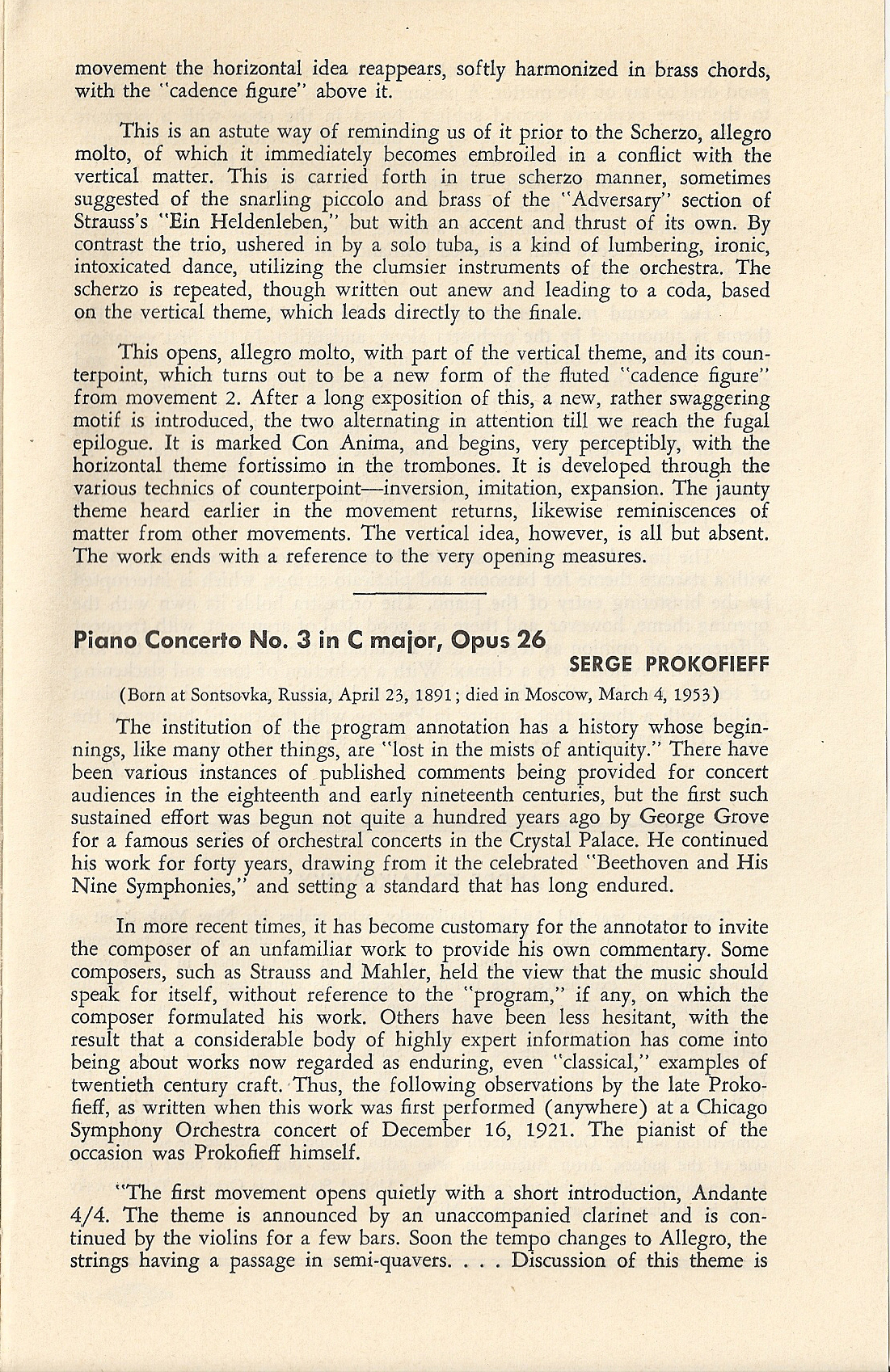
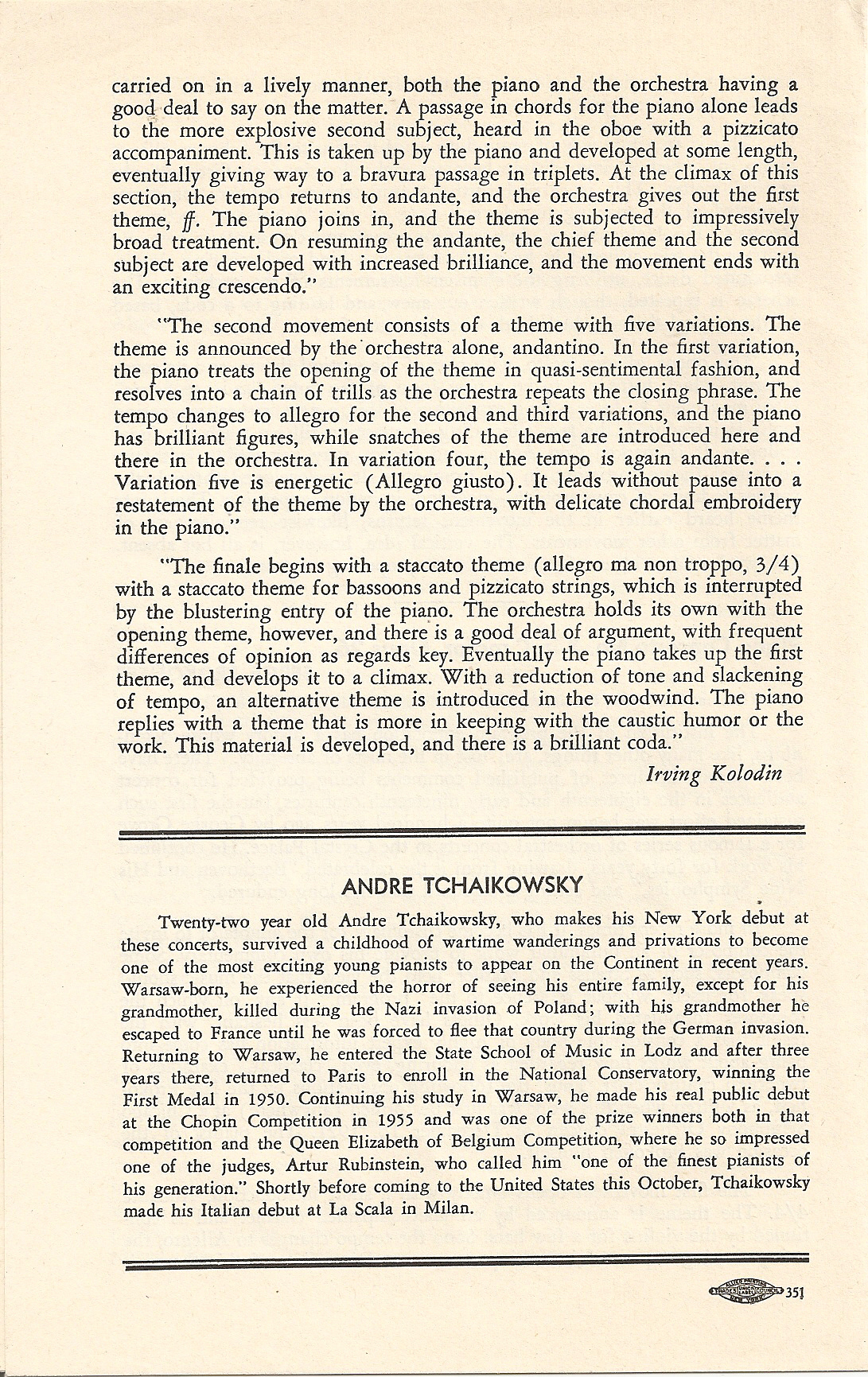
(1957)
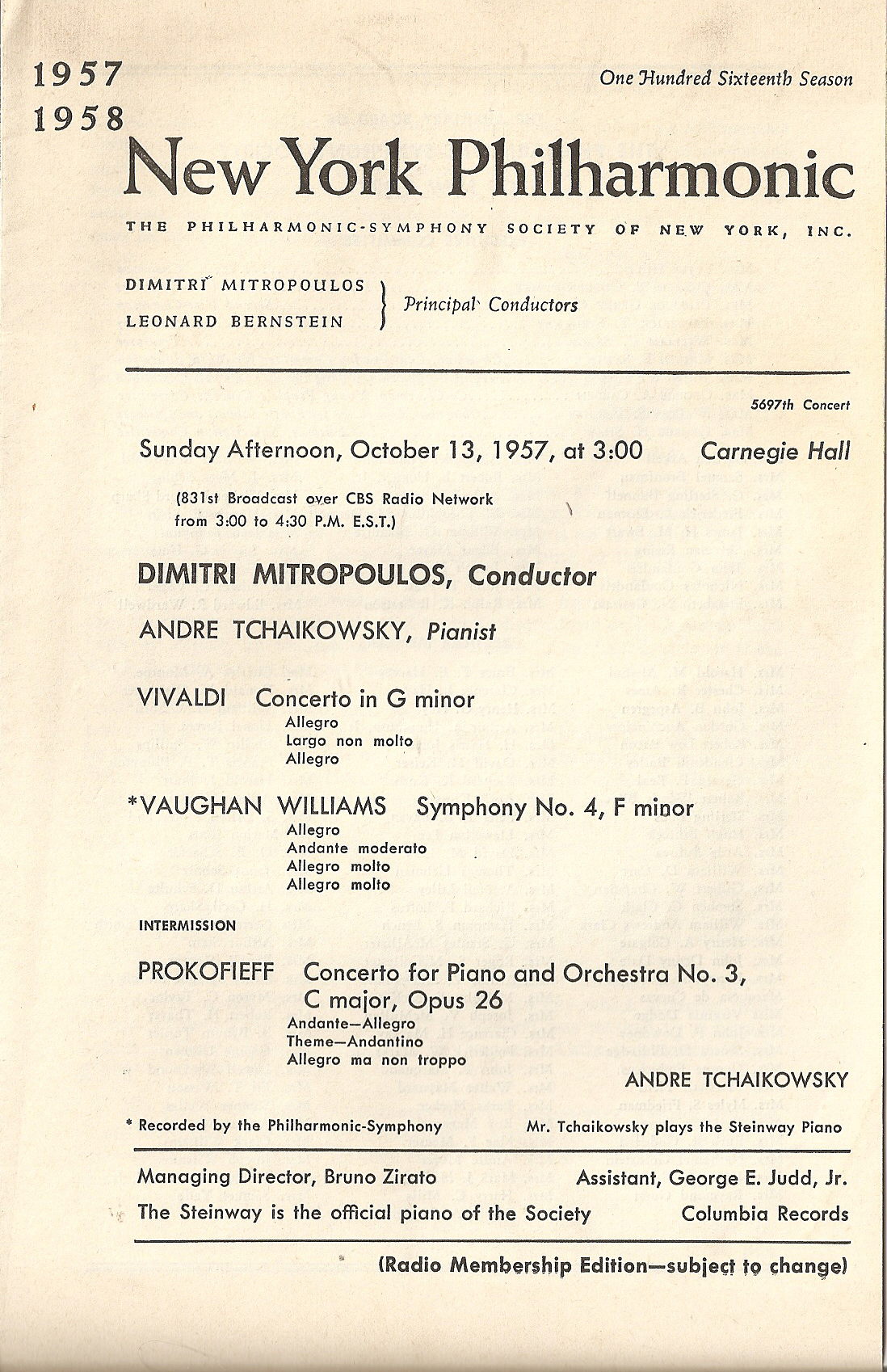
Program from André's 1st USA Concert
André arrived in New York City to start his first US concert
tour in October 1957. The first concert was with the New York Philharmonic
with Dimitri Mitropoulos conductor, playing the Prokofiev Piano Concerto
No. 3. The program below shows the true concert date of October 13,
1957, which was supposed to be October 10, 1957 but there was a delay
because of a musician's strike. Note that the short biography has the
usual errors: both his parents were not killed in the war; he did not
escape to Paris. Paris came later.
(1955)
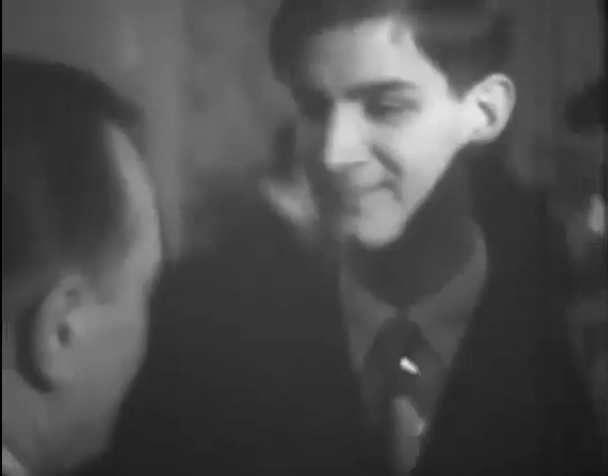
Brief video clip of Andrzej Czajkowski from 1955 Chopin Competition
Running just 2 seconds in the original video, here is a slow motion
clip of Andrze Czajkowski at the 1955 Chopin Competition. The original
source of the clip is from YouTube
(at 39 seconds). Click the image below to run the clip in Vimeo (https://vimeo.com/138024876).
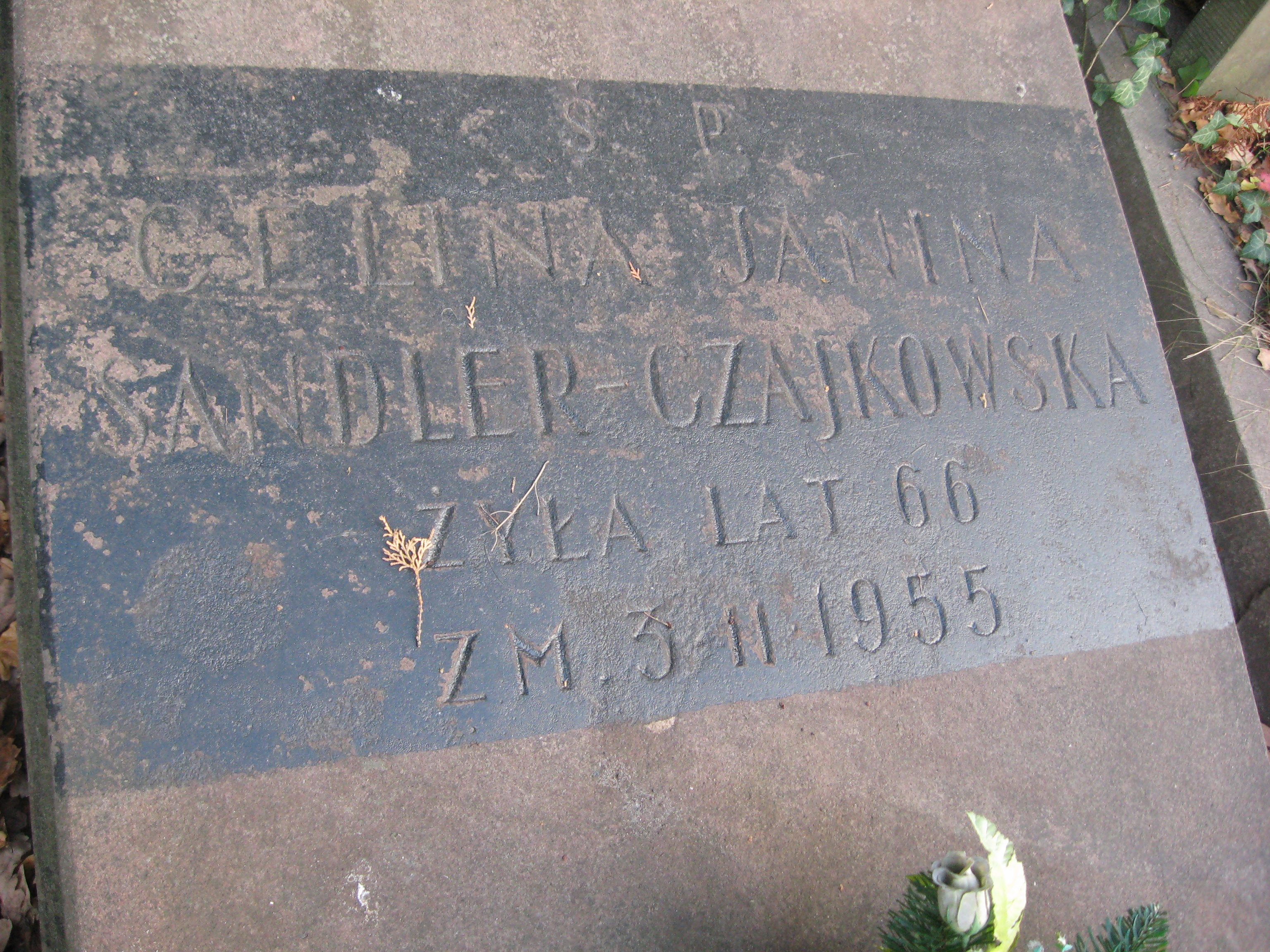
(1955)
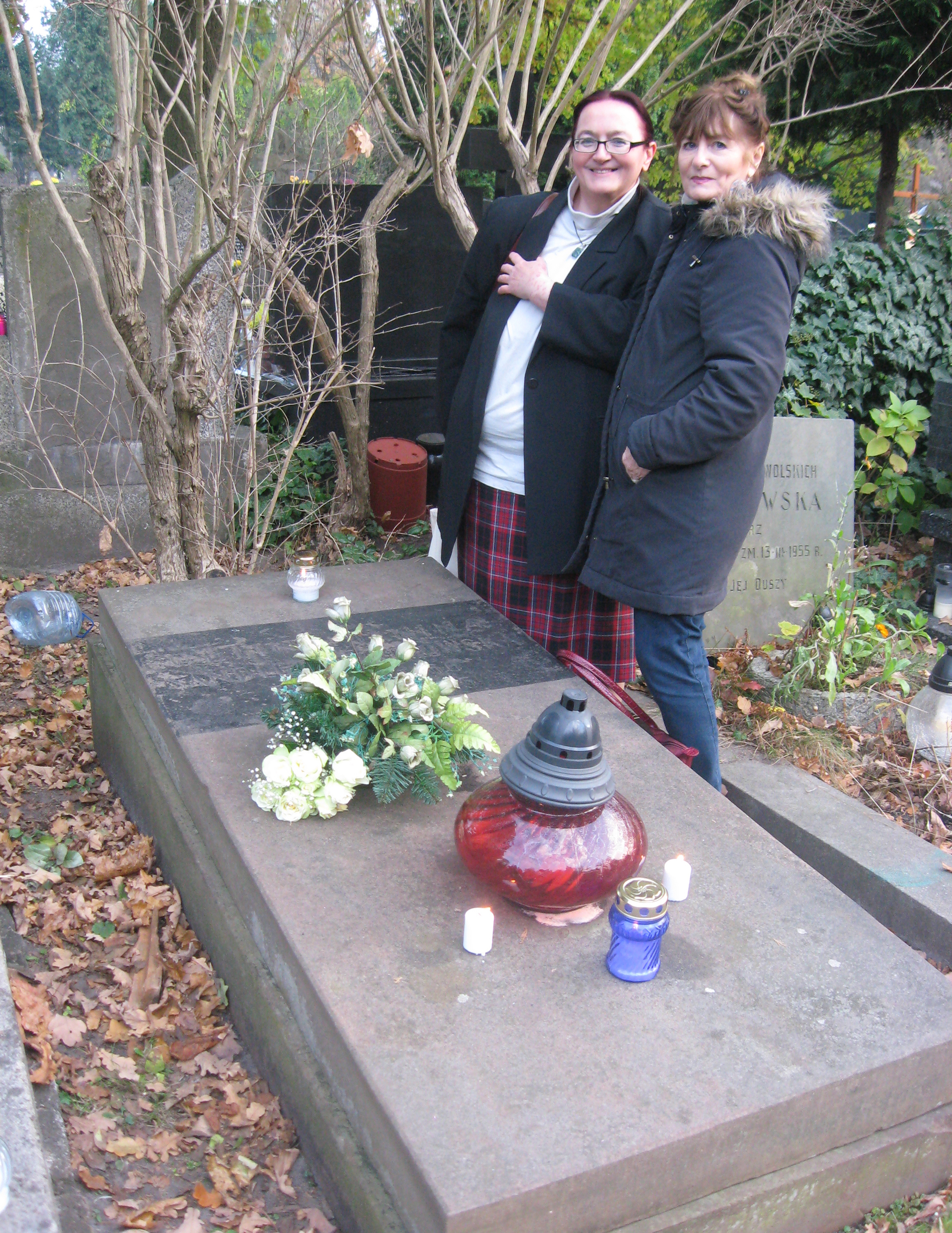
Grave of André's grandmother, Celina Sandler-Czajkowska
The grave of André's grandmother is located in Warsaw,
Poland, in Cmentarz Wojskowy (Powazki Military Cemetery), address:
Powazkowska 43. There is another cemetery on this same street of
the same name but not Wojskowy (Military). Bus 180 will take you
to the cemetery. Click
Here (PDF file) for detailed instructions for finding the grave.
The
original family home at Przejazd 1, did not survive WW2. A fountain
in front of Warsaw's Muranów
cinema stands on the site of his family home today.
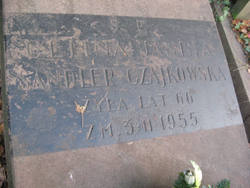
Celina Czajkowska Gravestone
|
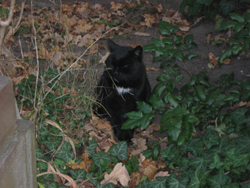
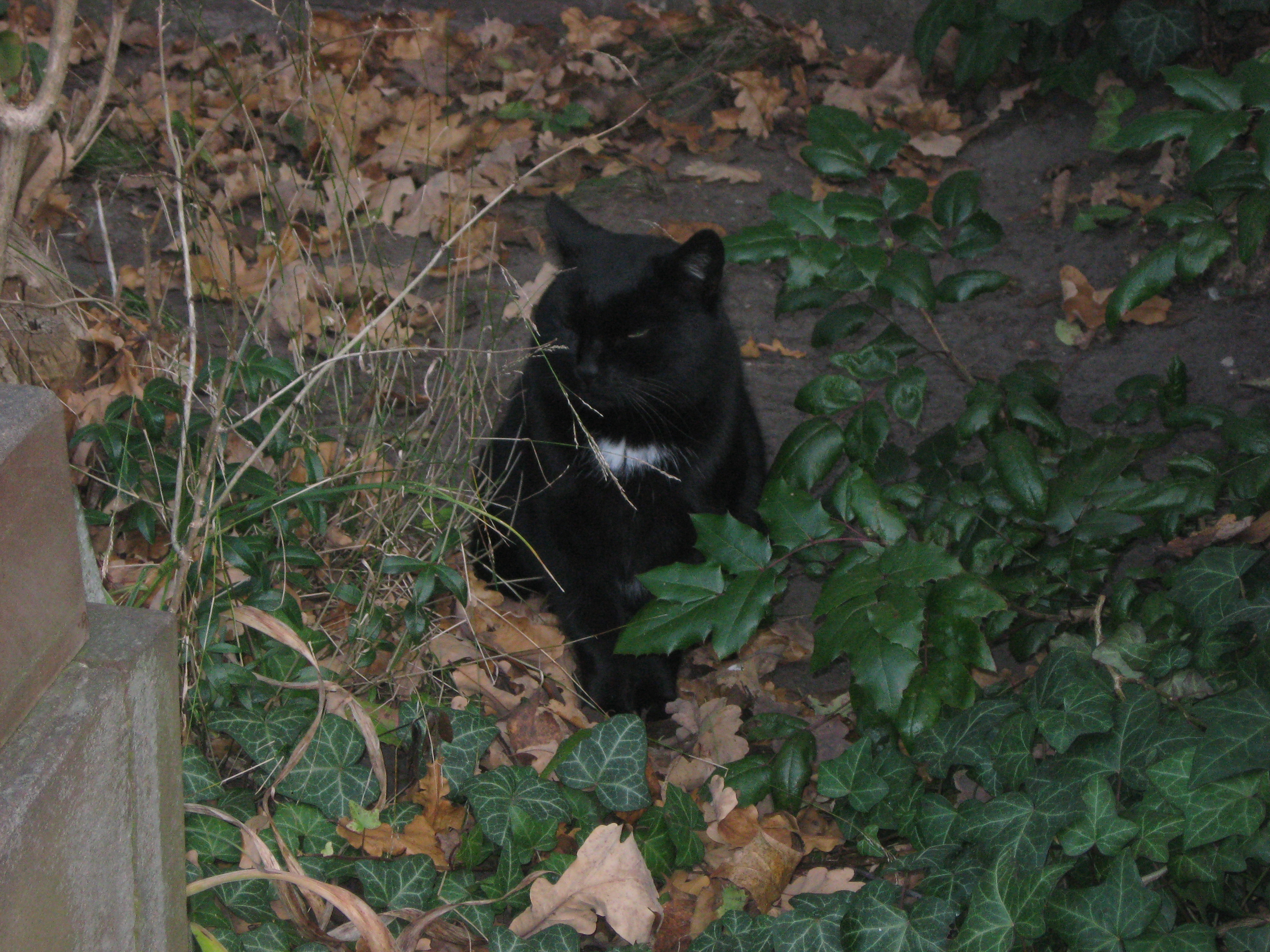
Feline seemingly standing guard
|
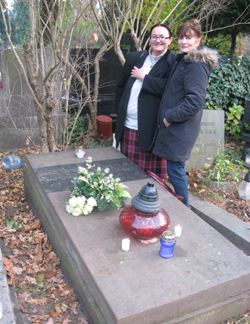
Hanna Milewska (l) and Eve Harrison |
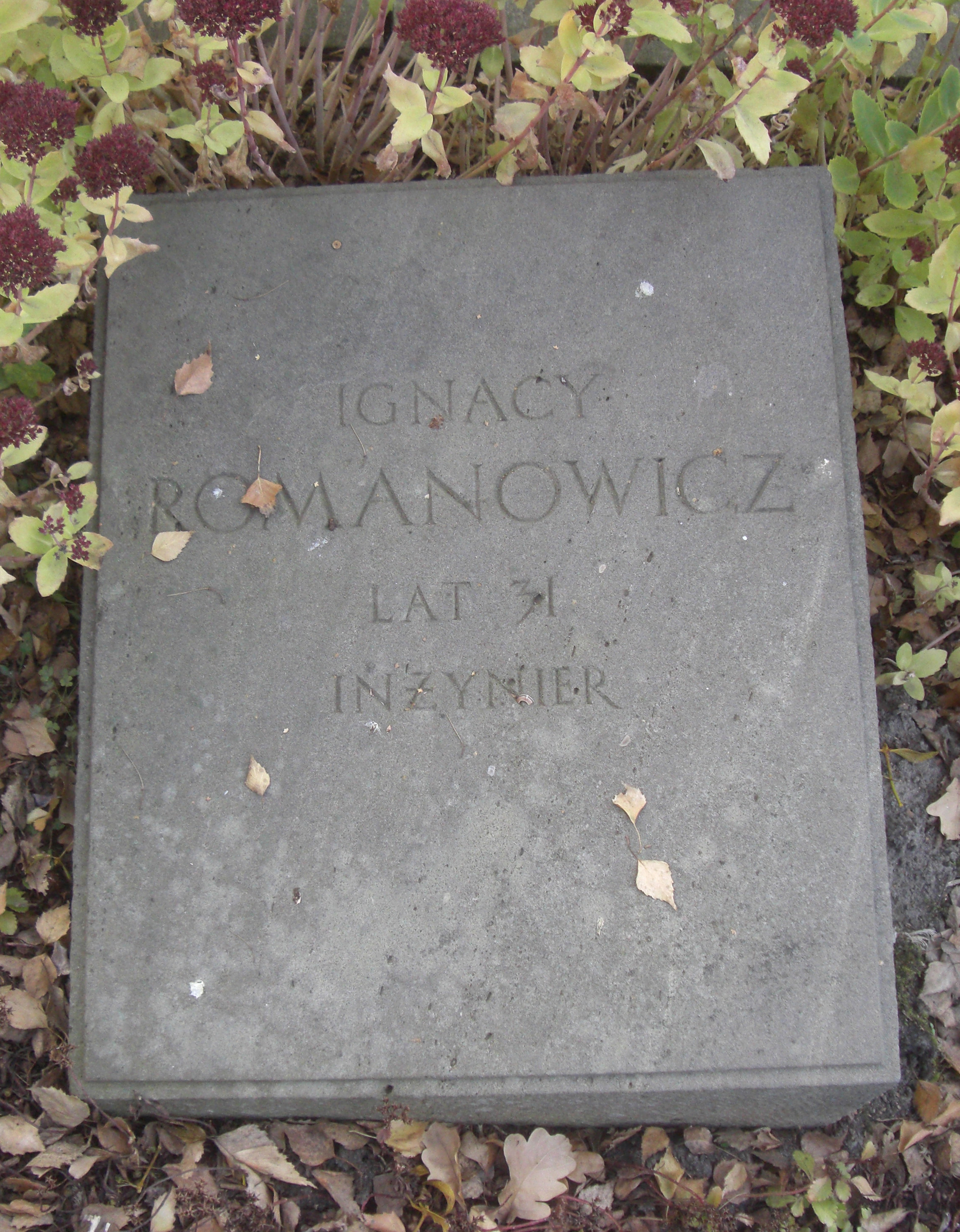
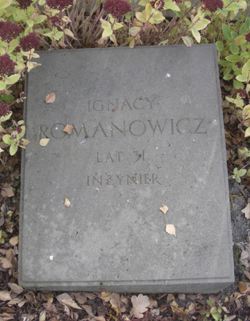 Ignacy
Romanowicz was Celina's son
Ignacy
Romanowicz was Celina's son
|
(1948)
Celina Janina Czajkowska Testimony
The 1948 testimony shows a Paris, France address (the address of
Celina's sister, Mala Zaiden) C. Sandler, 38 rue de Martyrs, Paris
IX, France. It was the time between the 1947 and 1948 testimonies
when André and Celina moved from Lodz to Paris so André
could start his piano studies. This testimony is in greater length
and is written mainly to try and help Mrs. Elza Zelichowska who
had fallen on hard times. Click
Here to read the 1948 testimony in English. Click
Here to read in Polish. (Courtesy
of the Jewish Historical
Institute of Warsaw, Poland)
(1947)
Celina Janina Czajkowska Testimony
The Jewish Historical Institute (JHI) was created in Warsaw in 1947
to, among other things, collect testimonials from survivors of the Warsaw
Ghetto. Similar to Andrzej Czajkowski, grandmother Celina Janina Czajkowska
gave testimonies to the JHI. The first testimony given in 1947 includes
the address in Lodz where Andrzej and Celina were living, specifically,
56/8 Piotrkowska Street. The 1947 testimony is brief and summarizes
the help Celina received from Mrs. Elza Zelichowska to escape the ghetto,
mentioning the bribe paid by Mrs. Elza Zelichowska on behalf of Celina.
Click Here
to read the 1947 testimony in English. Click
Here to read in Polish. (Courtesy
of the Jewish Historical
Institute of Warsaw, Poland)
(1947)
Andrzej Czajkowski [Krauthamer] Testimony
The Jewish Historical Institute (JHI) was created in Warsaw in 1947
to, among other things, collect testimonials from survivors of the Warsaw
Ghetto. Click Here
to read the testimonial given by Andrzej Czajkowski in 1947 (PDF file
in English) when he was age 12. Note that for JHI purposes, Andrzej
is known as Krauthamer and not Czajkowski. The photograph (below) is
part of the 1947 Testimony. (Courtesy of the Jewish
Historical Institute of Warsaw, Poland)
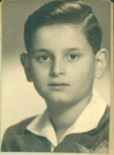 Photograph
taken during the 1947 testimony. Photograph
taken during the 1947 testimony.
The following
is the Testimony introduction by the recorder, Genia Silkes:
He did
not have any siblings, he was an only child. At present, he attends
school number 68 – the 6th form. He reads and writes in Polish,
English and a little in French (he learnt it himself).
A big boy with an open smiling face, with black eyes and black hair.
Very gifted, intelligent and well-read. His intellectual level is
many years ahead of his physiological development. He is talented
and shows great writing and musical skills. He creates, composes and
performs his own musical pieces. Very warm, good and childlike, and
at the same time very reasonable, tolerant and serious. Extremely
attached to his grandmother, the only person who he survived the occupation
with and to whom he is very attached. He is very absentminded, nervous
and impatient. He reads too much and associates too much with adults,
which has a negative influence on his personality
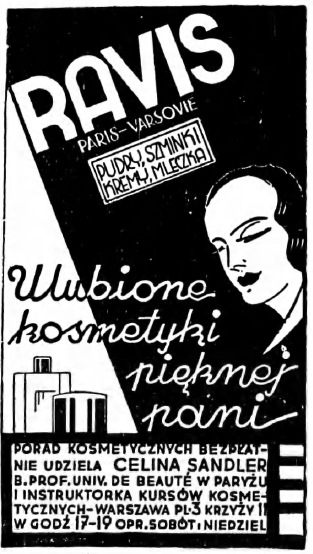
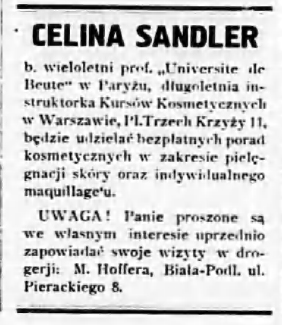
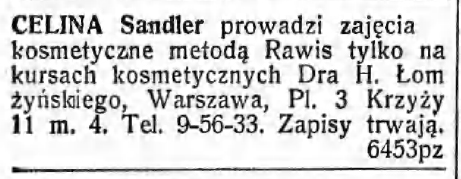
(1928
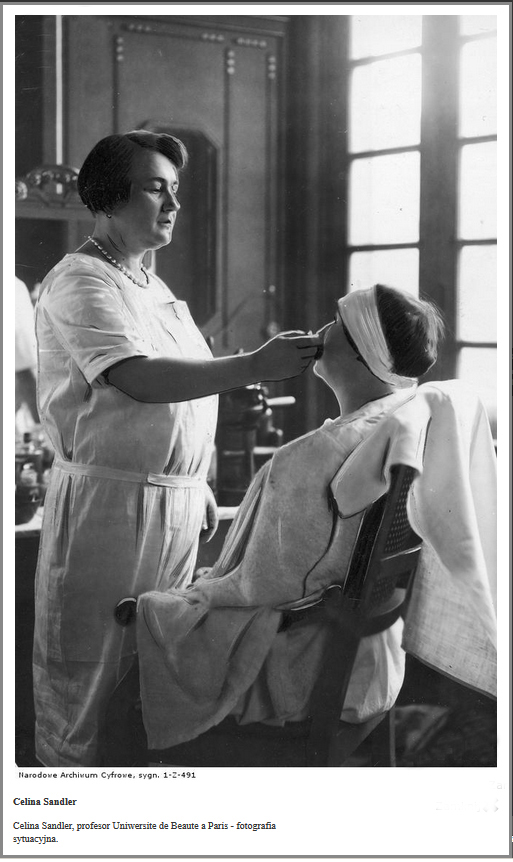
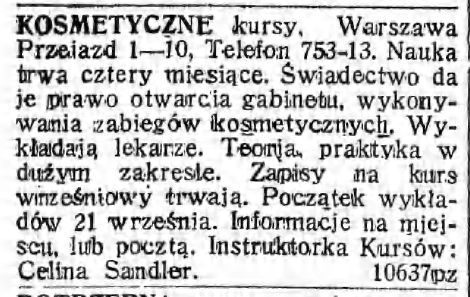
- 1938) Grandmother Celina Sandler as a Beautician
A bit of history. André's grandmother, Celina Sandler (later
Celina Czajkowska, and on her tombstone, Celina Janina Sandler-Czajkowska)
was a frequent visitor to Paris, and it was there that Celina had an
entrepreneurial idea to study the cosmetics industry in Paris and then
bring her training and skills back to Warsaw. For training in Paris,
she chose the Université de Beauté "Cedib" and
later the Service des Instituts de Beauté "Ravis."
As a graduate of these universities, she became both a beautician professor
and a franchise holder in Warsaw, and was, thus, fully qualified to
offer beautician diplomas to her Warsaw students. Further, her connections
included a Cedib chemist who came to Warsaw to train Celina's brother,
Michael Swieca, in the manufacture of the Cedib line of cosmetics. Celina,
then, did not only train beauticians in Poland but also sold them her
line of cosmetic products.
The full
effects of the worldwide depression from the late 1920s and into the
1930s came full-force to Poland as well and Celina's business was in
peril. In desperation, she took Cedib products manufactured by her brother
out the back door of the factory and sold them at below wholesale prices.
Celina also sold suits from her husband's closet to raise money to keep
her business alive. Michael Swieca, discovering the betrayal, demanded
full payment of the stolen cosmetics. Instead, Celina and daughter Felicja
(André's mother) escaped to Paris, to live with Celina's sister,
Mala. This was mostly likely late 1932 or early 1933. In January 1935,
Celina returned from Paris to resume her cosmetics school but this time
based on her training with Service des Instituts de Beauté "Ravis."
Felicja
was married in Paris to Karl Krauthammer in December, 1934 and did not
return to Warsaw with her mother in early 1935. A few months later,
Felicja was pregnant with André and decided to return to Warsaw
to have the baby. Karl was promised a job at Celina's husband's law
office and came to Warsaw as well, but when this didn't work out, Karl
returned to Paris to reluctantly work at the family fur trade business.
Once Karl had things setup for Felicja's return to Paris, he sent for
her but Felicja refused and decided on divorce instead, and stayed on
in Warsaw to have her baby on November 1, 1935.
The webmaster
is grateful to Piotr Nazaruk of Biala Podlaska, Poland, for his valuable
research that first discovered this trove of materials into the life
and times of Celina Sandler. The webmaster is also grateful to http://polona.pl
(National Library of Poland Archive) for their assistance. The advertisements
below were selected from 109 archival examples.
|
|
Université
de Beauté "Cedib" graduation photo of Grandmother
Celina Sandler (1928). |
|
|
October
28, 1928.
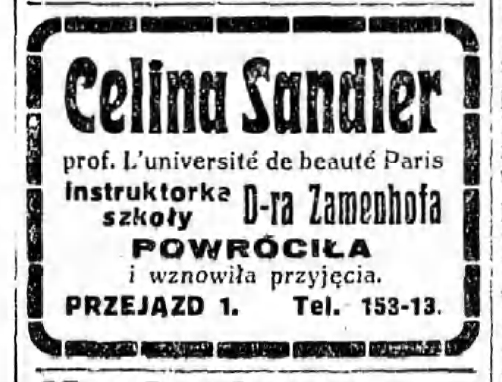
The first known advertisement by Celina Sandler. The address Przejazd
1, was Celina's home address. This ad appeared in the newspaper
Nasz
Przeglad ('Our Review'), which was a Polish-Jewish newspaper
but widely read.
Click
Here for a PDF of this issue of Nasz Przeglad. Celina's ad
is on page 10.
|
|
|
September
2, 1931
Advertisements
continued but now a simplified (and less expensive) classified
ad instead of a display ad. She is still operating her business
out of her home.
Click
Here for a PDF of this issue of Nasz Przeglad. Celina's ad
is on page 12.
|
|
|
August
7, 1932
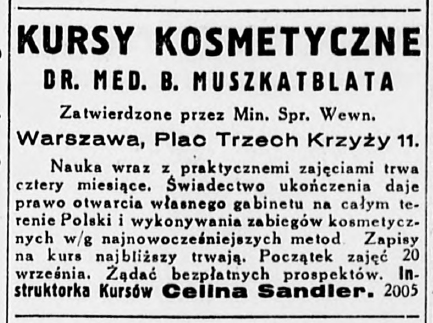
The
first advertisement with Celina's new address on the fashionable
Three
Crosses Square 11. Her business was no longer operated out
of her home on Przejazd 1. And it's the more expensive display
ad.
Click
Here for a PDF of this issue of Polska
Zbrojna. Celina's advertisement is on page 11.
|
|
|
August
30, 1932
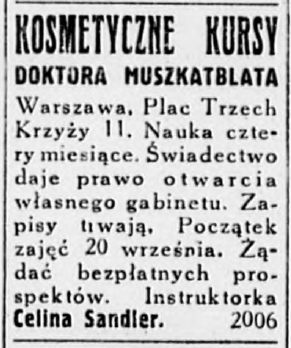
The
last known advertisement until Celina resumed her business in
January 1935. This gap in advertisements between 1932 and 1935
was due to Celina quitting her business and moving to Paris with
her daughter Felicja.
Click
Here for a PDF of this issue of Polska
Zbrojna. Celina's advertisement is on page 9.
|
|
|
January
6, 1935
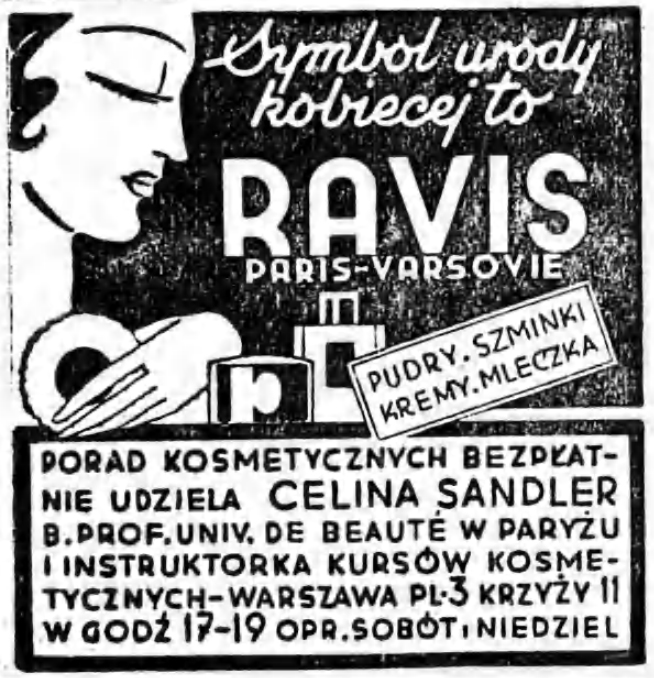
Celina
returned to Warsaw in early 1935 and only weeks after her daughter's
wedding to Karl Krauthammer in December 1934. Given the advance
dates required for advertisements, it must have been known well
in advance about Celina's return. And she comes back to Three
Crosses Square 11.
This
expensive display ad appeared in the January 6, 1935 issue of
Nasz Przeglad. Click Here
for a PDF of this issue. Celina's ad appears on page 14.
|
|
|
April
28, 1935
Continuing
her advertisements, this time in the Nasz Przeglad Illustrated
section, the display ad is increased in size and one would expect,
increased in expense as well.
Click
Here for the PDF of this issue of Nasz Przeglad Illustrated.
Celina's ad is on page 6.
|
|
|
January
17, 1936
Celina
also traveled extensively giving cosmology courses in cities that
included Lodz, Lwów, Wilno, and Biala Podlaska. This advertisement
is from the Biala Podlaska Bialer Wochenblat and is written in
Yiddish (except for this ad).
Click
Here for the PDF of this issue of the Bialer Wochenblat. Celina's
ad is on page 1.
|
|
|
September
28, 1938
This
is Celina's last known advertisement. It appeared in the Nasz
Przeglad and was a simple classified ad. Celina had a heart attack
in 1938 and this might have been about this time. In any event,
the business was closed.
Click
Here for the PDF of this issue of Nasz Przeglad. Celina's
ad is on page 34.
|
|
|
Celina
Janina Sandler-Czajkowska (1935)
One
must remember that Celina was somewhat known in Warsaw, who advertised
in Polish/Jewish newspapers, but when the Warsaw Ghetto was formed
and Jews had to enter the ghetto area and Aryans had to leave
the ghetto area, it was then that Celina passed herself off as
an Aryan and moved out. (The family home at Przejazd 1 was actually
within the ghetto walls.) As an Aryan, Celina was able to come
and go into the ghetto as she pleased, which many Aryan citizens
often did to buy items for sale in the ghetto at terrific bargain
prices. If she had been caught, the penalty was execution.
It
was during one of these trips when she was leaving the ghetto
that she was holding the hand of a small child, and either by
bluff or bribe, was able to bring this child out of the ghetto.
Their papers identified them both: Celina Czajkowka and Andrzej
Czajkowski.
|
|
|
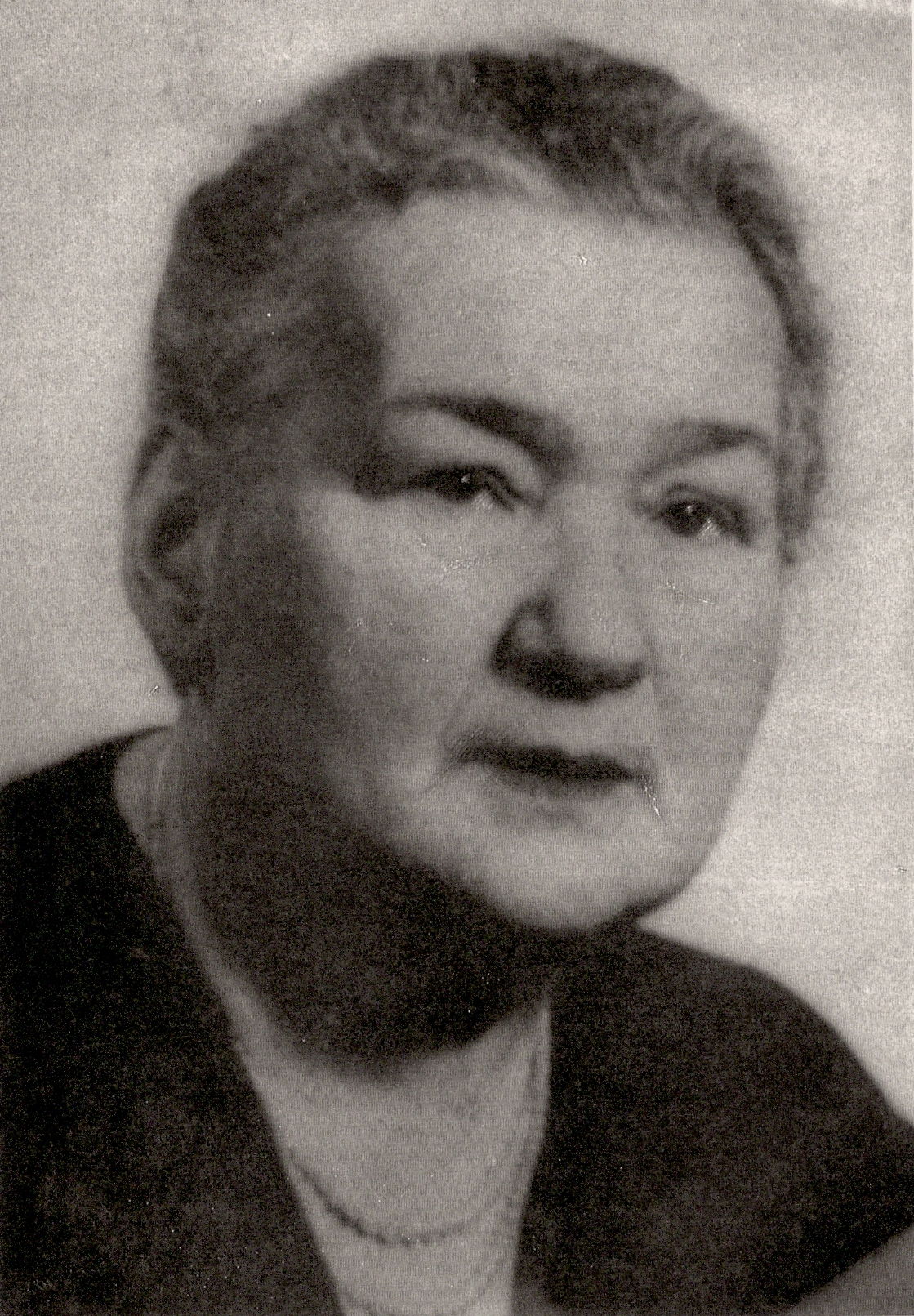
Celina
Janina Sandler-Czajkowska (1945)
When
Celina had her first heart attack in 1938, the doctor's advice
was to live a simple and stress-free life! Celina lost brothers,
sisters, and her two children in the war. Only Andrzej remained
and it was to him that she would dedicate the rest of her life.
After
Andrzej showed remarkable talent at the keyboard, Celina was informed
that Andrzej needed advanced training and best the piano teacher
in the world was considered to be Lazare Levy at the Paris Conservatory.
Penniless through she was, she also had a fantastic imagination
that somehow it could be worked out, and Andrzej could study with
Lazare Levy. And it did work out with Andrzej accepted into the
class of Lazare Levy at the age of 12. Later graduating from the
Paris Conservatory at the age of 15, Andrzej won first prizes
in performance and sight reading. As a gift to his teacher, Andrzej
wrote for Lazare Levy a composition with an original theme, and
with more than 30 variations.
|
|
|
Celina
Janina Sandler-Czajkowska (1952)
This
is the last known photograph of Celina. Three years later, she
would have her last heart attack and would die on February 11,
1955 at the home of Irena Paskowska. Irena had married Celina's
son, Ignacy, in 1939 but Ignacy was executed by the Nazis in 1943
after he was discovered making bombs for the Polish Resistance.
Irena remarried a few years after the war ended. Celina was 66
years old at the time of her death.
I
have always been deeply moved by the life of this remarkable woman.
One can hardly imagine the chances she took, the bravery shown
at every step, and her dedication to her grandson Andrzej Czajkowski.
|
|